The Trees Are Winning: Hydro Ottawa Is Using Remote Sensing to Fight Back
Key Highlights
- Hydro Ottawa responded to the 2022 derecho storm by compressing four years of emergency repairs into just 14 days, highlighting the need for more resilient vegetation management strategies.
- The utility’s pilot project with Overstory uses satellite imagery and AI to assess vegetation health and risk at scale, enabling targeted and efficient trimming operations.
- Risk-based prioritization led to a 44% reduction in tree-contact outages and an 18% decrease in high-priority spans, demonstrating the effectiveness of data-driven maintenance planning.
- The new approach aligns with sustainability goals by reducing unnecessary tree removals, fuel consumption, and crew travel time, while improving reliability and safety.
- Hydro Ottawa’s experience exemplifies how integrating remote sensing and asset intelligence can prepare utilities for the increasing frequency and severity of extreme weather events.
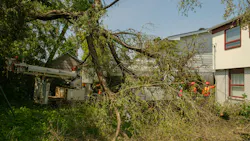
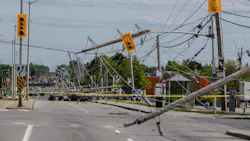
When 118-mph (190-km/h) winds tore across Ottawa in May 2022, trees fell on lines across the service territory, snapping poles and downing conductors. More than 180,000 of Hydro Ottawa’s customers lost power.
Restoration required an extraordinary effort, compressing roughly four years’ worth of emergency repair work into just 14 days. The derecho was a once-in-a-generation storm — but the vulnerabilities it laid bare reflected a persistent concern for utilities across North America.
Like most utilities, Hydro Ottawa, a municipally-owned electric distribution utility serving more than 372,000 customers, relied on fixed trimming cycles as directed by the Ontario Energy Board — rural circuits every three years, urban circuits every two — designed to deliver consistent coverage and predictable contractor schedules. But the 2022 derecho demonstrated that resilience in the modern era would require much more than a faster emergency response. The company needed a different approach to understand and manage risk.
Hydro Ottawa’s experience reflects a challenge playing out across North American utilities. The conditions that shaped traditional vegetation management practices no longer hold. Faster vegetation growth, invasive pests and disease, more frequent and intense storms and hotter, drier summers are all accelerating risk in ways that fixed trimming cycles were never designed to handle.
Across the industry, utility leaders are beginning to challenge long-standing assumptions and look for new ways to understand how conditions across their networks are changing. At Hydro Ottawa, they are part of a growing cohort embracing tools that allow utilities to better understand, predict and act on the most pressing risks.
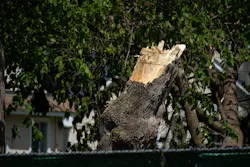
Rethinking the Cycle
Cycle-based trimming has been the industry standard for years. The approach is conservative, predictable and relatively easy to manage. However, it assumes vegetation conditions across a network are consistent. In reality, that’s rarely the case. A corridor with fast-growing trees gets the same attention as one with little vegetation. A dying tree outside the trim envelope goes unnoticed.
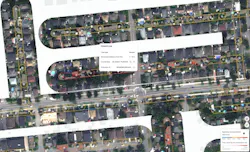
In 2022, Hydro Ottawa initiated a pilot project with technology company Overstory. The technology harnesses AI and high-resolution satellite imagery to derive indicators of vegetation height, health and location alongside detailed asset data, including pole and span locations.
For the first time, planners could evaluate vegetation conditions and tree health across the system at scale rather than relying solely on subjective ground patrol assessments and historical outages.
Maureen Chude, who was the manager of contractor management at Hydro Ottawa at the time, saw the change immediately.
“With this intelligence, at the click of a button, we could see our entire service territory and plan our targeted trimming for the areas of high risk,” Chude said.
Within days of launching the pilot, the derecho wind storm struck. The destruction it left behind didn’t stall the initiative — it proved the point. In the months that followed, the utility used Overstory’s Vegetation Intelligence to guide targeted post-storm trimming. Spans were evaluated not only on grow-in risk but also on the number of customers affected if an outage occurred. Pairing these two factors allowed planners to focus resources where they could ensure reliability for the greatest number of customers.
As the team expanded the program across their service territory, they also defined clear operational goals for how the technology would support planning and reliability improvements.
“By the time we had a full-territory scan, we knew what we wanted out of Overstory and had a plan for how to measure success,” Chude said.
From Reactive to Predictive
The shift didn’t abandon the cycle; it introduced flexibility. Circuits with higher vegetation density or greater outage impact could be put first in line, while lower-risk spans could be deferred without compromising reliability.
Satellite-derived indicators also flagged individual dead or declining trees that posed elevated risk, even outside of the right-of-way. Regional heat maps provided visibility into broader tree health trends, giving the utility a forward-looking perspective on where risk was evolving over time.
The technology also improved contractor oversight. Instead of auditing small field samples, they could verify performance across the territory using imagery and geospatial overlays. This reduced windshield time and drove more transparency and accountability for crews.
Key Pilots' Findings At a Glance
- 44% reduction in tree-contact outages
- 18% reduction in high-priority spans
- 27% increase in clear spans
Measurable Reliability Improvements
By 2024, the preliminary results of the pilot program began to emerge. Compared with the two-year average before the May 2022 storm, early data showed the utility had reduced tree-contact outages by 44%.
Equally important, risk mapping suggests a 18% decrease in high-priority spans, 14% decrease in medium-priority spans and a 27% increase in clear spans.
Operational Impact
Vegetation management is one of the largest controllable operations and maintenance expenses for distribution utilities. Under a purely time-based model, some low-risk areas receive unnecessary trimming, while high-risk spans are likely to see costly emergency work between cycles.
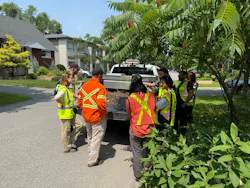
Risk-based prioritization allowed Hydro Ottawa to better align contractor deployment and forestry resources with reliability objectives. By focusing on spans with the highest combination of encroachment risk and customer impact, the utility reduced unnecessary work and prevented avoidable outages.
Aligning Reliability and Sustainability
Condition-based vegetation management also aligns with the organization’s sustainability goals. Targeted trimming reduces unnecessary removals and avoids excessive activity in low-risk areas. Optimized crew routing and planning can also reduce fuel consumption and improve team safety by minimizing windshield time.
A Model for a Changing Climate
Extreme weather events are becoming more frequent and more severe. With this, resilience depends increasingly on proactivity rather than reaction.
Hydro Ottawa’s experience demonstrates that integrating satellite imagery, remote sensing and asset intelligence into daily operations can transform vegetation management from a routine maintenance program into a strategic reliability tool.
The benefits the utility has seen during this pilot project include a 44% reduction in tree-contact outages, significant decreases in high- and medium-priority spans and a 27% increase in clear spans. By continuing to test and refine these remote sensing tools, Hydro Ottawa is working to ensure its system is prepared for the challenges of tomorrow — one data point at a time.
About the Author
Alex Kemp
Alex Kemp is the vice president of system operations and program execution for Hydro Ottawa. He has more than 18 years of experience in the utility sector.
Combining a background in electrical engineering technology with an MBA, Alex bridges technical expertise with advanced strategic decision-making and business analytics.
Throughout his career with both Hydro Ottawa and Hydro One, Alex has established a proven track record of driving operational excellence, safety protocols and large-scale organizational transformation. Committed to continuous innovation, Alex remains focused on meeting the evolving needs of the energy landscape.