Beyond Inspections: Building a More Current View of the Grid
Key Highlights
- The Spokane-area fires displaced an estimated 65,000 people and damaged or destroyed more than 900 structures.
- Investigators say the Old Trails Fire was deliberately set, underscoring that utilities cannot control every source of ignition.
- Traditional inspection cycles can miss rapid changes in vegetation, weather, and infrastructure conditions..
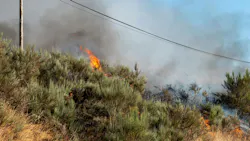
Three weeks after the Spokane-area fires began this past August, the evacuation orders had been lifted, and the immediate emergency had passed. What remains was the difficult work of recovery.
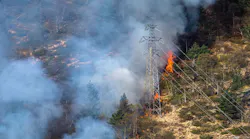
The Old Trails, Autumn Lane, and Fairview fires burned roughly 10,000 acres across Spokane County, damaged or destroyed more than 900 structures and forced an estimated 65,000 people from their homes. More than 1,700 firefighters responded, and the cost of suppression reached into the tens of millions of dollars. For thousands of families, the process of figuring out what comes next is only beginning.
We also know something about how the Old Trails Fire started. Investigators say it was deliberately set, and a 37-year-old man has been charged with multiple counts of first-degree arson. Court records indicate that the fire was planned in advance and that weather conditions were considered when choosing when to start it.
That detail is important for those of us who work in the electric industry.
The ignition itself was not caused by a utility asset. But the circumstances are a reminder of something utilities cannot control: where and when the next spark will come from. What they can control is how prepared the grid is when that happens.
How much vegetation is surrounding a line? Which areas have the greatest exposure? What infrastructure could be affected by a fast-moving fire? And once the danger passes, how quickly can crews determine what has changed and safely begin restoration?
My first concern, of course, is for the families who lost their homes and for the firefighters and emergency crews who spent days working under extremely difficult conditions.
But the fires also raise a larger issue for everyone responsible for maintaining critical infrastructure. The environment in which utilities operate is changing faster than many of the systems and processes designed to manage it.
The Old Maintenance Model is Being Challenged
For decades, utilities relied on scheduled inspections to understand the condition of their networks. Crews would inspect lines, collect information, produce a report and move on to the next cycle.
That approach made sense when conditions changed relatively slowly.
Today, they can change dramatically between inspections.
Vegetation grows. Trees fall. Weather patterns shift. Drought changes fuel conditions. Wind can turn a manageable situation into a serious threat in a matter of hours.
A three-year-old inspection may still be useful historical information, but it cannot tell a utility exactly what is happening along a particular span today.
This is where the idea of a living digital model of the grid becomes increasingly important.
A traditional inspection gives you a snapshot. A living digital model gives you a way to track and understand changes over time.
Digital models that combine geospatial information, LiDAR and imagery can give utilities a more detailed view of infrastructure and surrounding vegetation. When updated with new inspection data, these models can help teams identify changes across the network and determine where additional attention may be needed.
That distinction matters. Utilities should not have to start from scratch every time a new inspection is completed or a risk standard changes. The information collected over time should continue to provide value.
Wildfire Preparation is Becoming an Intelligence Problem
For utilities operating in areas with significant wildfire exposure, better information can change how decisions are made.
Vegetation management, for example, does not have to be treated simply as a recurring maintenance cycle. Utilities can use current data to identify where clearances are narrowing, which vegetation is changing quickly, and where vegetation risk overlaps with critical infrastructure and populated areas.
That allows limited crews and budgets to be directed toward the areas where they can have the greatest impact.
The same principle applies when utilities are evaluating whether portions of the grid need to be de-energized during extreme conditions.
The goal should not be to make those decisions based on the broadest possible geography. It should be to understand the network at a much more precise level and determine where the actual risk exists.
That precision matters to everyone affected by an outage, from hospitals and water systems to businesses and families.
Better information also matters after a fire.
Crews returning to damaged infrastructure need to know what has changed. Are poles damaged or leaning? Have conductors shifted? Are structures still in their expected locations? Which assets require inspection before the system can safely be restored?
When utilities have a continuously updated view of their network, those questions can be answered much faster than when teams have to piece together information from separate inspections, reports, and field observations.
Technology does not replace firefighters. It does not replace vegetation crews, emergency managers or meteorologists. And no software platform can prevent every wildfire.
What it can do is give the people responsible for protecting and restoring the grid better information when they need it.
What We Should Learn from Spokane
The Spokane fires are a painful reminder that wildfire risk is not something utilities can address once a year and then move on from.
The person accused of starting the Old Trails Fire may ultimately be held accountable for that decision. But the larger conditions that allowed an ignition to become a catastrophic event are not going away.
Wind, heat, drought, and accumulated fuel will continue to create challenging conditions. The next ignition could come from a person, equipment, lightning or something else entirely.
Utilities cannot eliminate that uncertainty.
They can, however, improve their understanding of the infrastructure and vegetation they are responsible for protecting.
That means moving beyond static inspections and disconnected datasets toward a more current, connected view of the grid.
The challenge for the industry is to ensure that the information used to manage the grid keeps pace with the changes happening across it. That requires better integration of inspection data, geospatial information and asset intelligence, along with processes that allow utilities to act on what they learn.
Spokane is a difficult reminder of why that matters.
The grid does not get to be static anymore. Neither can the way we understand it.
About the Author
Chris Beaufait
Chris Beaufait is CEO at Sharper Shape.