Protecting Mount Hood: PGE’s Wildfire Prevention and Power Reliability Initiatives
Key Highlights
- Mount Hood generates $500-$600 million annually from recreation, supporting local jobs and businesses.
- PGE has reduced wildfire-related outages by over 60% through targeted investments like undergrounding power lines and vegetation management.
- A two-year project is underway to move seven miles of overhead lines underground near Government Camp to prevent wildfires and improve power reliability.
- Collaborations with local fire districts and federal agencies are key to wildfire prevention efforts in the region.
- Reliable power is essential for local businesses, tourism, and the community’s safety, especially during severe weather and fire seasons.
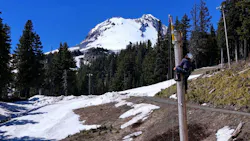
Outdoor recreation generates billions of dollars each year across Oregon, supporting jobs, local businesses and rural communities. Within that broader economy, few places are as near and dear to Oregonians’ hearts as Mount Hood.
Mount Hood National Forest and the broader Columbia River Gorge region generate an estimated $500 million to $600 million annually in recreation-related spending, while drawing millions of visitors. For generations, the national forest has been the backdrop for ski trips, summer hikes, weekend escapes and lifelong memories.
As wildfire risk intensifies across Oregon, the forest’s economic and ecological importance has come into sharp focus as state, federal and public agencies collaborate to help reduce the risk of human-caused ignitions. Increasingly dry conditions and extreme weather have heightened concerns that a single spark could threaten not just the forest, but the communities and livelihoods built around it.
Trending in the Right Direction
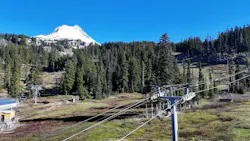
Portland General Electric has reduced the frequency of power outages in areas at greater risk for wildfire, like the Mount Hood corridor.
Through targeted investments such as undergrounding power lines, enhanced vegetation management and system hardening, overall outage frequency in these higher-risk areas has dropped more than 60% from 2021 to 2025. The result is fewer outages and a safer, more resilient system for customers year-round.
That work carries particular significance in places like Mount Hood, where reliability and wildfire prevention are directly tied to the region’s economy and way of life.
Too Precious to Lose
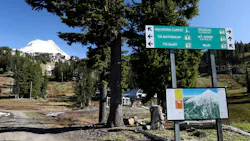
A PGE wildfire prevention project is now underway to help prevent wildfire and protect the beloved region. The two-year project to move approximately seven miles of overhead power lines underground along U.S. Highway 26 near Government Camp, is an effort designed to reduce the risk of ignition while improving year-round power reliability.
“Uncontrolled wildfires have the potential to spread quickly and into areas surrounding people and our infrastructure,” said Heather Ibsen, a public affairs officer with the U.S. Forest Service. “Anything that reduces the chance of ignitions can help reduce the chance of uncontrolled wildfires.”
In addition to wildfire prevention, moving power lines underground in higher-risk areas helps protect against outages caused by winter storms, heavy snow, ice and high winds, conditions common in the Mount Hood region.
Collaborating with Partners
PGE works year-round with local, state, Tribal and federal partners, as well as emergency responders and fire districts to help prevent wildfire across its service area. Hoodland Fire District Chief, Brian Henrichs, said removing potential ignition sources is a critical step in protecting communities from wildfire danger.
“Fire safety is extremely important to me. I live here in this community. My kid goes to school right behind our fire station here,” said Henrichs. “It might seem like a daunting task, but you have to start somewhere and just take a little piece at a time. Everybody has to start somewhere, and it's going to take everybody.”
Henrichs added that the Mount Hood corridor area is susceptible to wildfire because of long-term drought conditions, an overgrown forest and unmitigated underbrush.
“That just adds to the potential for a catastrophic fire to happen here. In an east wind event, all it takes is one spark, and that wind is going to drive that fire, and nobody's going to stop it. So, when we get those power lines underground it's a huge benefit to us,” Henrichs said.
Supporting the Community
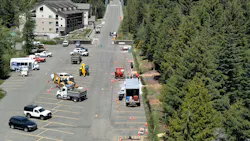
Like many national forests, the Mount Hood region provides economic benefits to many different areas from the tourism services like restaurants, hotels, outfitters and guides to forest and timber products. Businesses across the Mount Hood corridor rely on both a healthy forest and safe, reliable power to serve visitors year-round.
“I see this project benefiting Timberline in two specific ways. One is simply reducing the exposure to wildfire; health and human safety, resource preservation, keeping the building safe,” said John Burton, director of marketing and public affairs. “The second thing is business continuity and guest experience. The power stays on, there’s no disruption and the community continues to thrive.”
Mike Quinn, vice president and general manager at Mt. Hood Skibowl, said the project also brings added reliability in an environment where severe weather impacts operations.
“We're really excited about the opportunity to get our overhead power lines underground. That's one less risk that we have to worry about when we get to fire season,” said Quinn. “This is one more notch of reliability in an environment that can be challenging.”
Anna Holgate, a spokesperson for Mount Hood Meadows equates the mountain to a playground, a place where people can get away from the hustle and bustle of the city.
“Reliable power really, really matters to us, it is essential to our company. It keeps our operation going and our chairlifts turning. It keeps us selling lift tickets, passes, cheeseburgers and hot cocoa,” said Holgate. “This mountain and the forest are important to our business and our community. And if this burns down, it's gone. And there's no coming back from it for potentially decades.”
A Broader Commitment
The Mount Hood Undergrounding Project reflects PGE’s broader commitment to building a safer, more resilient energy system to help keep communities and customers safe.
PGE has been installing underground power lines for decades. Over half of the distribution system is already underground and the company routinely evaluates where additional undergrounding could help improve reliability and mitigate wildfire and outage risks, but there is no one-size-fits-all approach.
In addition to undergrounding power lines, PGE’s wildfire prevention efforts include enhanced vegetation management, equipment inspections in high-risk areas, and a growing network of weather stations, sensors and fire detection cameras that help identify hazards quickly. Together, these investments help make the grid stronger so it can better withstand threats from extreme weather and wildfire while continuing to serve customers safe and reliable power.
Those efforts are delivering measurable results. In the areas of higher fire risk, outages linked to vegetation and equipment (two of the leading potential ignition sources) have dropped in the last five years. By focusing on the most preventable causes, PGE continues to systematically lower wildfire risk across its service territory.
For residents, businesses and the millions who visit Mount Hood each year, the goal is simple: preserve a place that supports livelihoods, recreation and communities for generations to come.
“I'm proud to be working for PGE right now as we're doing this project, because we're protecting the national forest for the next generation. Maybe not just my kids, but my kids’ kids,” said Darling.
About the Author
Ben Felton
Ben Felton is the executive vice president and chief operating officer of PGE. With more than 30 years of energy industry experience, Felton held positions with Consumers Energy, NiSource Inc. and DTE Energy prior to joining PGE. He most recently served as the senior vice president of energy supply at DTE. He held a variety of senior leadership positions, including leading electric operations and power delivery at NIPSCO, a subsidiary of NiSource, and the electric systems operations and maintenance at Consumers Energy.