New Jersey Joins Growing VPP Movement in PJM Region to Aid Power Grid Capacity
State-regulated utilities are stepping in to establish virtual power plant (VPP) programs amid rapid load growth and the need to balance reliability for large energy users alongside existing businesses and residents.
While hyperscalers have turned to behind-the-meter (BTM) and bring-your-own-capacity (BYOC) strategies to bypass long interconnection queues with grid operators, state regulators are taking a parallel track to protect ratepayers. In New Jersey, the New Jersey Board of Public Utilities (NJBPU) took its first step toward creating a framework that drives energy affordability by paying residents and businesses to support the PJM Interconnection grid.
PowerUp NJ, a new opt-in program announced this month, will turn customer-owned distributed energy resources (DERs), such as smart thermostats, home batteries, EV chargers and smart water heaters, into tools that reduce strain on the grid.
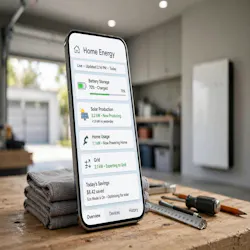
Once launched, the program aims to offer financial incentives to participants and lower customer costs for New Jerseyans during peak demand hours, according to an NJBPU release.
PowerUp NJ is set to initially start with four investor-owned electric utilities in October 2027. Those utilities are Atlantic City Electric (ACE), Jersey Central Power & Light (JCP&L), Public Service Electric & Gas (PSE&G) and Rockland Electric (RECO).
These interim programs will reportedly run for two years to build on technologies and demand response programs the utilities already operate. The goal of these four utilities will be to deliver measurable and verifiable peak demand reductions through gathered data, improving reliability and customer affordability toward a long-term VPP framework for the N.J. program.
The NJBPU Board Staff’s preliminary analysis estimates that a 3% cut in peak demand could avoid roughly $60 million a year in system capacity costs, directly resulting in energy bill savings for all ratepayers. In addition, the agency noted that the program can slowly decrease the state’s reliance on fossil-fuel generation, reducing greenhouse gas emissions and other air pollutants.
“PowerUp NJ turns the smart devices customers already own into powerful tools to reduce grid costs, drive down energy bills and empower customers,” NJBPU President Ben Hertz-Shargel said in a statement. “We will develop this program carefully, learn from real-world results and expand it over time, growing the earnings opportunities for residential and business customers.”
The program’s creation followed Executive Orders No. 1 and No. 2 by New Jersey Gov. Mikie Sherrill on Jan. 20. The measures declared an energy affordability emergency and directed the NJBPU to develop a VPP program as part of the solution.
Hyperscalers vs. regulated utilities: Growing VPP battleground in the PJM wholesale market
According to global research firm Wood Mackenzie (WoodMac), regional transmission organization (RTO) PJM and independent system operator Electric Reliability Council of Texas (ERCOT) continue to have the largest utility commitments to data center capacity and the greatest disclosed VPP offtake capacity.
VPP capacity in North America increased roughly 26% year-over-year to reach just over 47 GW of BTM flexible capacity, WoodMac detailed in its 2026 North America Virtual Power Plant Market Report.
Meanwhile, PJM, the largest grid operator in the U.S., has faced mounting strain to secure enough generation for households, businesses and incoming data centers.
The PJM board previously filed several actions with the Federal Energy Regulatory Commission (FERC) over the summer to mitigate surging power demand from hyperscalers and AI data centers. But FERC largely rejected that data center curtailment framework in October, leaving states and utilities to shoulder more of the load-management burden.
FERC’s subsequent rejection came the same month as a federal power grid emergency order from the U.S. Department of Energy directing PJM to manage tight electricity supply conditions across 13 states and Washington, D.C.
As private hyperscaler VPPs and regulated utility VPPs compete to sign up the same pool of residential DERs and commercial loads across PJM, the next major regulatory battleground comes ahead of FERC Order 2222.
The FERC order enables DERs to participate alongside traditional resources in the regional wholesale energy markets through aggregations, opening the broader U.S. wholesale electricity market to competition from smaller, aggregated distributed grid resources. To implement the rule, regional grid operators must revise their tariffs to establish DER aggregations as a “distinct category of market participant.”
This growth reportedly presents opportunities for more resilient energy systems, but it also introduces new complexities for utility planning departments. Those complications include deciding whether a homeowner's battery belongs to their local utility's affordability program, a tech giant's private BYOC contract, or an independent FERC Order 2222 aggregator in the PJM wholesale market.
Parallel utility VPP rollouts across the largest RTO market
Utility provider ComEd received approval from the Illinois Commerce Commission in October for its proposal to launch a new scheduled dispatch virtual power plant (SDVPP) program. The SDVPP, anticipated to begin in March 2027, aims to increase battery storage capacity across northern Illinois that can be deployed during times of high electricity demand.
Along with Illinois, Maryland also has a regulator-mandated utility VPP program rolling out across PJM in 2027. Under the Maryland Public Service Commission’s utility VPP and vehicle-to-grid pilot programs, part of the state’s DRIVE Act proceeding, BGE, Pepco, Delmarva Power and Potomac Edison are targeting roughly 186 MW of peak load reduction ahead of the 2027 summer season.
The Maryland PSC in May advanced VPP and grid modernization efforts to give licensed FERC Order 2222 aggregators access to utility-held DER data by 2028 to support broader VPP deployment, PJM wholesale market participation and grid reliability.
About the Author
 Eric Moody
Staff Writer
Related

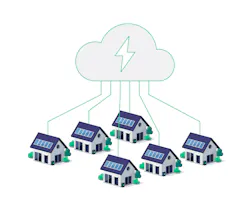
 The VPP technology makes it possible to harness thousands of distributed energy resources and makes them perform like a single generating source.