The DER Dilemma: Aligning Utility Planning Models with a Decentralized Energy Future
Key Highlights
- The growth of residential solar and other DERs is outpacing traditional utility planning capabilities, creating blind spots in demand forecasting and grid management.
- Legacy models, designed for one-way power flows, are inadequate for managing the complexities of bi-directional energy flows from thousands of decentralized sources.
- Modern solutions like automation, advanced analytics, and DER management systems are essential for real-time visibility and proactive grid control.
- Utilities are shifting from static, long-term planning to adaptive, scenario-based management to better accommodate DER variability and enhance grid resilience.
- Customer engagement strategies, including time-of-use rates and virtual power plants, are transforming the relationship between utilities and DER owners, fostering a collaborative energy ecosystem.
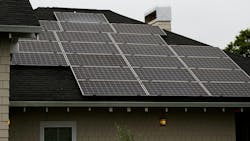
The North American energy industry is undergoing a fundamental transformation, driven in part by the rapid expansion of distributed energy resources (DER). This growth presents exciting opportunities for cleaner, more resilient energy systems, but it also introduces new complexities for utility planning departments. With residential solar installations alone increasing more than 20% year over year, utilities are working to keep pace with adoption and their capacity to adapt.
The challenge lies not just in integrating larger quantities of renewable power, but in aligning traditional planning approaches with the characteristics of a decentralized, dynamic and bidirectional grid. While DER installations are becoming increasingly common across rooftops, parking lots and industrial properties, many utilities continue to rely on legacy planning models developed for a very different world characterized by one-way power flows and stable demand profiles.
In short, the industry is trying to manage a 21st-century grid with 20th-century tools and frameworks. Recognizing and addressing this gap is essential to unlocking the full potential of DERs and supporting the transition to energy systems of the future.
The Regulatory Push That's Forcing Change
For many years, utilities understandably focused on other pressing challenges, which meant that comprehensive DER integration often took a back seat. Today, however, the accelerating pace of DER adoption and changing grid dynamics have made proactive integration a more urgent need. With the implementation of FERC Order 2222 gaining momentum and state governments expanding DER mandates, the regulatory landscape is marking a clear transition from gradual formation to immediate action.
Timing could not be more critical. As the gap between DER adoption levels and utility planning ability widens, the risks mount: grid reliability concerns, revenue recovery issues, customer satisfaction issues and the risk of costly infrastructure investments based on faulty assumptions. The question is no longer whether utilities need to alter their planning practices but how quickly they can do so before the consequences become significant.
Where Traditional Load Forecasting Fails
At the heart of utility planning is load forecasting – the method of forecasting future electricity demand to guide investment in infrastructure, planning for maintenance and buying resources. Years ago, these models were adequate. Demand patterns were relatively stable and simple to predict using weather, economic growth and population changes. Electricity flowed one way: from massive, centralized power plants through transmission and distribution lines to consumers.
DERs have moved the proverbial goalposts. When customers numbering in the thousands are now both consumers and producers of electricity, traditional models of forecasting can develop blind spots. So, for example, even if a utility is seeing declining demand in specific periods of the day, that doesn't necessarily mean customers are using less electricity. They might be producing it, for example, from solar panels on their roofs. The evening peak could shift later because batteries are consuming stored solar energy. Meanwhile, charging electric vehicles (EV) can create new peak load not previously observed.
These blind spots have real-world consequences. Utilities can under-invest in infrastructure that's operationally strained or over-invest in capacity that's no longer required. They won't know how to anticipate voltage issues or power quality issues that occur when numerous DERs are running simultaneously. Above all, they will fail to capitalize on DERs as grid assets rather than see them as issues to be addressed.
The DER growth introduces a level of variability and intricacy that older forecasting models were not designed to handle. Without new forecasting methods, including DER-level forecasting and visibility into what's happening behind the meter, utilities are essentially planning in the dark.
Bi-Directional Flows Uncover Grid Monitoring Gaps
The difficulties extend from forecasting to the operation of the distribution grid itself. The one-way, passive flow design was the conventional way of doing distribution systems. The philosophy has carried this design through grid monitoring and control systems, where visibility and control were all concentrated at the transmission level and in large distribution substations.
Two-way power flows flip all of this on its head. When solar installations generate more electricity than a home consumes, the surplus flows back onto the grid. Multiply that by thousands of installations, add battery storage systems that can charge and discharge based on multiple inputs, and EVs that can act as rolling storage devices, and the grid begins to resemble a dynamic, multi-way marketplace rather than a simple delivery system.
This creates serious voids in grid control and monitoring. Most utilities lack real-time, end-to-end visibility into distribution-level conditions. They cannot see, for example, voltage fluctuations, phase imbalances or reverse power flows until they cause problems. They lack the communication infrastructure and control capabilities to coordinate DER operations with grid conditions. And they typically lack the fine-grained analytical tools needed to manage the vast quantity of data that extensive grid monitoring generates.
The result is reactive rather than proactive management. Utilities respond to problems after they have occurred, rather than taking a proactive approach to foresee and prevent them, routinely imposing blanket limits on DER interconnections rather than dynamically tailoring them to real-time conditions. The full potential of DERs for grid support, peak load reduction and enhanced resilience is not yet being fully realized.
From Static Planning to Adaptive Management
Forward thinking utilities are embarking on a fundamental change in their way of thinking: from fixed, long-range planning cycles to adaptive, real-time management of resources. This shift has several facets.
They're first investing in automation technologies for distribution and advanced metering infrastructure (AMI) that provide granular visibility of the status of the grid. Smart meters, intelligent sensors and automated switches create a nervous system for the distribution grid, so utilities can see what's happening at the edge of their networks in near real time.
Second, they're using next-generation analytics platforms that can process this data to find trends, predict problems and optimize operations. Machine learning algorithms can detect anomalies, forecast local demand such as behind-the-meter generation and simulate the impact of various DER scenarios on grid operations.
Third, they're developing distributed energy resource management systems (DERMS) that are able to optimize and coordinate DER operations. Rather than treating DERs as wildcards that utilities can't control, these platforms enable utilities to dispatch, curtail or modulate DER production in real time on the grid – with adequate customer protections and incentives.
Fourth, they're transforming their organizational processes and structures. The traditional separation between generation, transmission and distribution planning disappears when distribution circuits can receive as well as supply power. Cross-functional teams, responsive planning processes and continuous scenario modeling replace rigid departmental silos and static 20-year planning horizons.
Real-World Transformations
Several utilities are demonstrating what this shift entails in practice. Some have implemented dynamic interconnection studies that consider time-varying grid conditions rather than worst-case conditions, which allow for more DER connections without requiring infrastructure upgrades. Others have deployed DERMS platforms that manage thousands of residential batteries and solar deployments to provide grid services.
Pioneering utilities are transforming customer relationships, focusing on DER owners as partners rather than problems. Time-of-use rates, demand response programs and virtual power plant opportunities put customer incentives in line with grid needs. Community solar and shared battery storage allow customers who lack suitable rooftops to participate in the clean energy transition. The most sophisticated utilities are coordinating DER planning with more comprehensive infrastructure resilience and decarbonization strategies. They're using DERs to slow-expense upgrades, enhance power quality and keep the lights on during grid outages while modeling ways to high-DER futures.
In 2026, distributed energy innovation will accelerate in highly populated metropolitan areas seeing prolific adoption of new electrified technologies. Significant progress is also expected across midwestern and rural utilities, fueled primarily by economic pressures and coal retirement mandates. While California and New York showed early promise, the real transformation story of 2026 will unfold in states like Missouri, Illinois and Colorado.
Midwest advantages include fewer regulatory barriers, pressing infrastructure needs and pragmatic technology adoption. In 2026, expect the most sophisticated utility programs to emanate from America's heartland.
Powering Ahead
The DER revolution isn't slowing down – if anything, it's gaining speed. Declining technology costs, sustainability imperatives, customer preferences and policy mandates all point towards accelerating fast growth. Utilities that cling to old-fashioned planning practices will be unable to match reliability, manage costs or satisfy customers.
Let's be clear: the transformation required is extensive, necessitating technology outlays, process redesign, organizational change and cultural shifts. Yet, the choice of holding on to planning and operating on the premise that the grid is still centralized and one-way is no longer sustainable. The successful utilities in this new era are those that embrace complexity, invest in the capability to work with it and comprehend that DERs are a threat as well as an opportunity.
The planning gap behind DER adoption is not imaginary and is increasing. But it's not unbridgeable. With proper investments, approaches and attitude, utilities can bridge the gap and develop planning systems sufficient for the distributed, dynamic, decarbonized grid of tomorrow.
About the Author
Nick Tumilowicz
Thought leader, strategist, and recognized expert in DER management, including solar, storage, and EV technology leveraging decades of unique industry experience to advance global markets toward a clean energy future. In his current capacity as Itron's Director of Product, Nick leads the Distributed Energy Management business unit, accountable for global product development of Demand Response, DER, EV, and Forecasting solutions enabling access to flexible customer energy resources. Nick holds a variety of positions on advisory councils: Department of Energy (NREL, Building Technologies Office, Solar Energy Technologies Office), Department of Defense (Naval Research Laboratory), General Services Administration, California Energy Commission, Grid Forward Leadership Committee, Incubate Energy Labs, Saudi Gulf Cooperation Council Interconnecting Authority, and regularly informs Public Utility/Service Commissions across the U.S.