5 North American Energy Providers Team Up on V2G Testing in Massachusetts to Advance Reliability Solutions
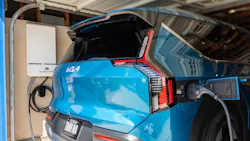
A newly formed partnership among some of North America’s largest virtual power plant (VPP) platform and utility providers is launching a collective expansion into the residential vehicle-to-grid (V2G) sector in Massachusetts to enhance grid reliability and affordability.
The group of five companies—Eversource, National Grid, EnergyHub, Sunrun and The Mobility House announced Thursday they are enrolling qualifying customers with V2G-capable electric vehicles in a program called ConnectedSolutions, according to a release. The existing program, managed by utility provider National Grid, aggregates energy from connected distributed energy resources (DERs) such as smart thermostats, energy storage and industrial equipment to reduce grid strain during peak demand periods.
“ConnectedSolutions is an important part of our strategy to deliver safe, reliable and affordable service,” said David Roman Ubeda, senior program manager at National Grid, in a statement. “V2G may provide additional opportunities to customers in support of managing their energy bills while advancing long-term sustainability across Massachusetts.”
While standard charging pulls energy from the grid for an EV, V2G systems branch from a larger industry "vehicle-to-everything" concept. The framework can involve your home or even charging a cell phone—but instead, a vehicle is utilized in V2G as the focal point to provide electrical power to an external device.

National Grid and utility provider Eversource will leverage ConnectedSolutions to test how their Distributed Energy Resource Management System (DERMS) operates when deployed among residential customers and their EVs by offering incentives to send stored energy back to the grid. Those incentives can reportedly earn participants an average of $1,200 annually (up to $275 per average kilowatt) by turning their parked EV into a vital tool for a more reliable energy system.
Participants pay nothing for their V2G setup and retain full ownership of the equipment after the program ends, the companies state. However, enrollment requires a capable EV and home charging system that both meet the technical criteria of the Massachusetts Clean Energy Center’s “Vehicle to Everything Demonstration Projects”—which leverages the existing version of the V2G program.
The V2G program explains that this hardware must support bidirectional charging—allowing batteries to both consume electricity and discharge it back out to the grid. Massachusetts officials highlighted in a 2025 report that over 150,000 EVs are on the state's roads, with a growing number of them featuring bidirectional capabilities.
"Electric cars and buses with bidirectional charging have a valuable capability to provide emergency backup power and vehicle-to-grid," said Russell Vare, vice president of vehicle-grid integration at The Mobility House North America.
Vare added that the ConnectedSolutions program provides an excellent model that incentivizes customers to interconnect their EVs to support these efforts.
VPP providers EnergyHub, Sunrun and The Mobility House are working to bridge the gap between VPP software and consumers. By combining VPP technical solutions with direct customer engagement, these companies aim to streamline the program’s targeted outreach overall.
"ConnectedSolutions is the gold standard for how utilities can scale virtual power plants by unifying diverse energy assets into a single, cohesive program,” added Seth Frader-Thompson, president of EnergyHub.
About the Author
 Eric Moody