Transforming the Grid: Why Scaling VPPs Is the Next Big Step for Utility Sustainability

A “first-of-its-kind” program in Illinois is drawing attention to the momentum of distributed energy resource (DER) systems and utilities' active deployment of them to support grid reliability. At the same time, ratepayer affordability has been top of mind to scale these solutions amid the rise in electrification demand from AI data centers nationwide.
Last month, utility provider ComEd received approval from the Illinois Commerce Commission for its proposal to launch a new Scheduled Dispatch Virtual Power Plant (SDVPP) program. It replaces a previous limited virtual power plant (VPP) proposal that ComEd withdrew late last year.
Under the direction of Illinois’ Clean and Reliable Grid Affordability Act, the SDVPP aims to increase the amount of battery storage available across northern Illinois that can be deployed during times of high electricity demand.
A virtual power plant aggregates customer-owned DERs, such as solar, batteries, EVs and smart loads, and uses software to coordinate them as a flexible grid resource. VPPs work alongside utility providers to support and stabilize the broader grid.
Expected to be online in 2027, ComEd's program will allow participating customers to earn incentives by sending stored energy from their devices back to the grid during pre‑defined times when the system is most strained. ComEd adds that it will expand on this first VPP offering by 2029 to include other DERs such as electric vehicles.
“ComEd is focused on advancing innovative solutions that strengthen the grid while helping customers better manage their energy use and costs,” said Andrew Plenge, vice president of strategy and energy policy at ComEd, in a statement.
Advancement beyond Illinois
CEO Michael Grasso of Grid Rails AI, an enterprise VPP platform and energy tech company, explains that this decision matters beyond Illinois because it demonstrates VPPs are moving from pilot projects into mainstream utility planning.
“Illinois is one of the largest electricity markets in the U.S., so this sends a strong signal to other utilities and regulators that distributed energy resources can be integrated as dependable grid assets,” Grasso told T&D World. “As electricity demand continues to rise, utilities across the country will be watching how ComEd scales customer participation, dispatches distributed resources and compensates customers.”

If successful, Grasso, a former distributed energy executive at Sunnova, suggests it could become a blueprint for similar nationwide program rollouts for how utilities prepare for the next phase of grid modernization. But he adds that the DER hardware is only half the equation.
“Without the (VPP) software layer that can securely connect, coordinate, dispatch and settle millions of distributed assets in real time, those resources remain isolated devices rather than functioning grid infrastructure,” Grasso added. “Utilities need visibility into available capacity, confidence that assets will respond when called upon, and automated settlement so customers are compensated accurately.”
According to Grasso, this critical software layer is what makes the millions of available DER assets intertwine, establishing a reliable VPP capable of supporting grid operations at scale.
The core driver behind the integration of these VPPs and this software orchestration is to relieve pressure on both the regional grid and growing ratepayer affordability concerns nationally. Utilities requested $18.6 billion in rate increases through the second quarter of 2026, including $9.2 billion in Q2 alone, according to utility research firm PowerLines' Utility Bills Are Rising Q2 2026 report.
PowerLines highlights that investor-owned utilities will invest at least $1.4 trillion in capital expenditures by 2030. This impact is expected to be felt for years to come through future rate increase requests, as these massive capital projects routinely pass these costs onto ratepayers. More than 66% of people surveyed are seeing increases in their electric bill this year, with 75% expressing concern over future rate hikes.
Making renewables dispatchable
To combat these rising costs, Grasso notes that the industry must shift its primary focus from merely deploying renewable energy infrastructure to maximizing what is already online—as VPPs begin to gain widespread attention from utility providers.
The U.S. has made significant investments in solar, batteries, EVs and other distributed resources, yet many of these assets still operate independently. A large capacity gap exists with only about 20% of DER capacity enrolled in VPP programs, leaving significant potential untapped for grid optimization.
This dilemma has influenced alternative utility-led VPP initiatives aimed at demand management and infrastructure cost savings, such as Xcel Energy's Capacity*Connect project. Unlike customer-owned DER aggregation models, Xcel’s program uses utility-controlled, front-of-the-meter batteries—deployed in 1 MW to 3 MW increments—at commercial and nonprofit host sites across its Minnesota territory by 2028.
“Electrification is accelerating demand faster than utilities can build new generation and transmission. Virtual power plants help bridge that gap,” Grasso added. “The next phase of the energy transition isn't just adding more clean energy—it's orchestrating the assets that already exist.”
By doing so, he states that those utilities will be better positioned to manage rising demand, improve resilience during extreme weather events and defer costly investments in traditional infrastructure.
“Utilities should begin treating distributed energy resources as integral components of grid planning rather than optional demand-side programs,” he explained. “That means investing in digital infrastructure capable of real-time orchestration, modernizing interconnection and data systems, developing market mechanisms that reward customer participation and working with regulators to establish clear frameworks for measurement and compensation.”
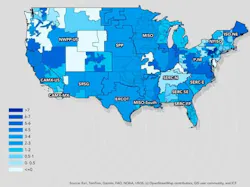
According to international research firm ICF, the U.S. overall power grid currently has only about 3% (26 GW) of excess generating capacity above minimum resource adequacy requirements. These thin margins are expected to tighten further as the nation’s electricity demand is projected to increase 39% by 2035 from 2026 levels.
This is why Grasso views grid modernization as an evolution in utility software, coordination and settlement integration—not just DER hardware infrastructure.
About the Author
 Eric Moody