How PowerNet Uses Destructive Testing to Improve Wood Pole Asset Management
Key Highlights
- PowerNet built a destructive pole testing rig to validate field assessments and understand actual pole strength across different conditions and species.
- The use of portable THOR Poletest technology allows for quick, consistent, and non-destructive condition assessments in remote rural areas.
- Field inspection results are integrated into a centralized data system, enabling real-time review, trend analysis, and informed decision-making.
- Objective testing has revealed discrepancies between visual assessments and actual pole strength, leading to improved inspection criteria and asset management policies.
- The combination of destructive and non-destructive testing enhances the accuracy of asset condition evaluations, supporting safer and more cost-effective network maintenance.
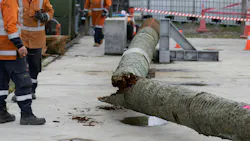
At PowerNet, our interest in understanding wooden pole condition is driven by the need to accurately identify failure modes and their severity during field inspections. Several years ago, we built our own destructive pole testing rig, which allows us to break decommissioned poles and determine their remaining strength. The rig provides objective data that helps us refine our internal standards and ensure our asset management policies accurately reflect the relationship between observed condition and actual structural performance. Selective destructive testing provides a means to validate the results of network-wide non-destructive field testing of wooden poles, while the resulting findings help shape our approach to managing wooden pole assets throughout our networks.
Building Understanding Through Evidence
PowerNet is one of the largest electricity distribution businesses in New Zealand, managing large networks predominantly throughout southern rural regions. About 20% of our poles are wooden. Our inspection cycles run on a five-year schedule, and historically the interpretation of pole health has relied on what could be observed in the field: surface condition, sound changes during probing, or visible cues indicating deterioration. These methods are informative but subjective, especially for softwood poles where internal decay can progress without clear external indicators.
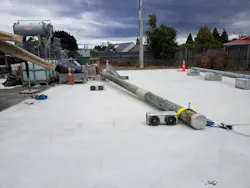
Our engineering team wanted greater certainty and objective results, which led us to trialseveral non‑destructive wooden pole testing options and ultimately selected THOR Poletest for our first‑pass routine pole inspections. To further understand how accurately our field asset condition assessments reflected real pole strength in both wooden and concrete poles, we built a destructive pole testing facility at our Balclutha depot—a purpose‑built rig capable of loading a pole until structural failure. By doing so, we can measure remaining strength and evaluate how field assessments compared with actual performance outcomes. It has provided insights that are difficult to obtain through field inspections alone. Breaking poles might sound extreme, but it provides an opportunity under controlled conditions to evaluate how deterioration patterns across species, ages, and environmental conditions affect pole strength.
Introducing Non-Destructive Testing at Scale
Our inspection team is small and generally operates solo. Given the terrain they cover, any tool we introduced needed to be portable, simple to use, and easy to interpret. The Poletest non-destructive testing technology meets those operational requirements. It allows us to perform a quick, non-destructive assessment using stress wave propagation, giving each pole a classification - green, amber, or red — based on measured condition rather than visual assessment.
While efficiency is important, consistency in assessment is equally valuable. Because each reading follows the same process, we are confident that results are repeatable at each pole, regardless of who is completing the test. Capture of standardized results allows us to focus investigation resources where they are most needed.
Softwood poles, in particular, benefit from this approach. Internal decay is not usually identifiable from external appearances, so a first-pass assessment helps guide when follow-up testing should occur. For hardwood poles where decay tends to progress from the outside inward, we use non-destructive test results alongside excavation when needed to understand and grade external degradation patterns.
Being Deliberate With Time in the Field
Because our inspectors operate alone and must cover long distances, we aim to be clinical about where time is invested. A green classification means the pole is performing as expected, allowing the inspector to move on quickly rather than spend time probing or excavating without cause. Amber and red classifications prompt additional investigation, either by the same inspector or through a specialist follow-up process. The classification system allows us to easily see where follow-up actions are required and either complete them during the site visit or flag the pole for further investigation.
Supporting Work Across Remote Areas
The portability of the system is important. We operate throughout large rural areas, and inspectors often work on foot. The THOR kit weighs less than two kilograms and fits into a backpack, making it practical for the varied terrain our team encounters. In regions where access can take more time than the inspection itself, having a lightweight tool helps field crews maintain productivity. This ease of deployment makes it feasible for us to integrate non-destructive testing across routine cycles rather than limiting it to specialist teams.
Data Management That Supports Daily Work
An important benefit is the ability to integrate field inspection results into a centralised data management system. Field data uploads automatically, which means results are available in real time for review. The portal allows filtering, mapping, and trend analysis without exporting spreadsheets or manually matching records.
The portal is used daily to review the previous day’s inspections. It provides a clear view of where follow-up work is required, how certain areas are trending, and whether any patterns warrant further engineering attention. For networks of our size, this visibility is essential. The data is being used to evaluate asset condition in a structured and repeatable manner and to support longer-term asset planning decisions.
The consistency of the dataset also enhances long-term planning. Having comparable measurements across multiple inspection cycles gives us the ability to track changes and evaluate deterioration rates in a way that visual-only methods could not provide. This data helps inform asset end-of-life modelling for our wooden poles and enables accurate future works programs and budgeting.
Connecting Field Results to Engineering Decisions
The value of introducing non-destructive testing became clear when we began destructively testing poles. We tested a range of poles removed from the network, both those deemed to have condition issues during inspection, either by non-destructive testing or visual inspection, as well as a control group of poles thought to be in good condition but removed from the network for other reasons, such as line relocations or removals.
The learnings so far have been significant. We have observed that some poles removed based on visual assessments still retain considerable residual strength. Others with seemingly good external condition failed much earlier than expected. This reinforces that no single indicator tells the whole story, and that external inspection and internal condition must both be considered when determining the asset condition of wooden poles.
By comparing non-destructive testing results to actual breakage outcomes, we have gained a deeper understanding of our asset condition threshold settings, deterioration profiles, and how both hardwoods and softwoods respond to long-term exposure in our southern region. This feedback loop has allowed us to refine our criteria for follow-up investigation and adjust our internal guidance on when poles should be removed, monitored, or reassessed.
This research has improved consistency in asset condition assessment throughout our network, with inspection decisions now being based on a foundation of accurate data provided by both non-destructive testing and visual assessment, and validated by engineering results from the testing program.
Final Takeaway: A Stronger Inspection Toolbox
Building our own pole testing facility has given us objective data to compare field condition assessments with actual structural performance. Our deeper understanding of wooden pole behaviour has informed both our inspection and asset management processes.
For us, incorporating non-destructive testing into our inspection toolbox has supported a more objective, evidence-based approach to wooden pole management. It helps us prioritise where attention is needed, informs engineering decision-making, and contributes to a data-driven asset assessment and management process throughout our networks.
About the Author
Ange Eady
Ange Eady is an Overhead Asset Analyst at PowerNet Limited, New Zealand.