Finding Powerline Faults Before They Become Wildfire Risks
Key Highlights
- Electrical deterioration can produce partial discharge or intermittent arcing that may be difficult to reproduce during a field inspection.
- High-frequency monitoring detects radio-frequency emissions associated with electrical activity and can help narrow down where a problem is occurring.
- Combining asset condition with changing weather and vegetation conditions can help utilities prioritize interventions on high-risk circuits.
- PG&E’s 2026–2028 Wildfire Mitigation Plan includes radio-frequency monitoring to identify electrical degradation, arcing and vegetation encroachment.
- Continuous monitoring complements inspections and other mitigation measures by improving visibility into how equipment behaves in service.
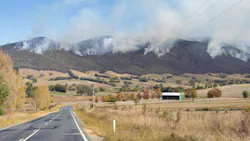
The United States experienced another difficult wildfire season in 2026, with more than 9.4 million acres burned nationwide. Although wildfire activity has declined with the arrival of cooler fall weather, several large fires remain uncontained.
For electric utilities, wildfire risk has become an increasingly important factor in day-to-day grid operations and long-term investment decisions. Utilities are expanding vegetation management and inspection programs, strengthening or relocating vulnerable infrastructure, and using weather data and fire-risk modeling to inform operating decisions. In some areas, that also means turning to Public Safety Power Shutoffs when conditions warrant.
These measures provide utilities with a much clearer picture of when and where wildfire risk is elevated. Increasingly, utilities can also draw on information about how the network itself is behaving, including electrical changes that can emerge as equipment begins to deteriorate.
What Happens Between Inspection and Failure?
A utility may inspect a line and find it serviceable, but the conditions affecting that line continue to change. Conductors move with wind, vegetation grows, insulation deteriorates and connections loosen, while components are continually exposed to heat, contamination and mechanical stress.
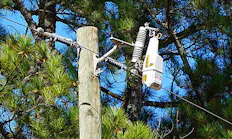
As equipment deteriorates, it can produce abnormal electrical activity. Damaged insulation, for example, can produce partial discharge, while vegetation contact or conductor movement can result in intermittent arcing. These events may be brief and difficult to reproduce during a field inspection, but they can still be detected electrically.
I began researching this area more than two decades ago in high-voltage engineering, looking at how this activity could be distinguished from the normal electrical noise of an operating network and what it might tell us about the condition of the infrastructure.
Over time, that work led to the development of an early fault detection system designed to identify and locate developing electrical problems. The engineering challenge remains much the same today, with the focus on extracting useful information from a complex operating network early enough to act before a problem becomes more serious.
From Detection to Useful Information
Modern electricity networks already produce enormous amounts of data about load, voltage, equipment operation and faults. High-frequency monitoring provides a different view by detecting radio-frequency emissions associated with electrical activity such as partial discharge and arcing.
Analyzing that activity can help determine what may be occurring and narrow down where it is coming from. This is particularly useful for intermittent problems, where the condition may have disappeared by the time a crew arrives.
For an engineer investigating a long feeder, reducing the search from miles of line to a particular section can make inspection and maintenance considerably more targeted.
Understanding Risk as Conditions Change
That information becomes particularly valuable because the condition of an asset is only one part of wildfire risk.
Weather stations, cameras, satellite data and fire modeling provide utilities with information about the environment surrounding their networks. Inspections provide information about physical asset condition, while protection systems respond to defined electrical conditions. Continuous monitoring adds another perspective by showing how equipment is behaving in service.
Consider a component showing signs of deterioration under normal conditions. It may require planned maintenance. If the same activity is detected as the circuit enters a period of high winds, low humidity and critically dry vegetation, the potential consequence has changed considerably.
That relationship between asset condition and its operating environment creates an opportunity for more precise risk management. Instead of viewing an entire high-risk circuit through the same lens, utilities can increasingly use asset-level information to help determine where investigation or intervention should be prioritised.
This approach is beginning to appear more explicitly in utility wildfire planning. PG&E's 2026–2028 Wildfire Mitigation Plan, for example, includes radio-frequency monitoring to identify electrical degradation, arcing and vegetation encroachment, with further deployment planned through 2028.
The broader development is more significant than any individual technology. Information about how assets are behaving in service is becoming another input into decisions about wildfire risk, maintenance and network operations.
A More Observable Grid
There is a broader asset-management shift taking place here. Scheduled inspection and maintenance remain fundamental, but continuous monitoring gives engineers greater visibility of what happens between those interventions.
For utilities managing wildfire risk, that information can provide another basis for deciding where attention and investment are most needed. It does not replace established mitigation measures, but it can help make their application more informed and targeted.
Having observed electricity networks across different regions, I believe much of the value lies in how that information is used. Collecting more grid data is not an end in itself. What matters is whether it helps engineers identify a problem, understand its significance and make a better-informed decision.
We will not detect every equipment failure before it happens, and electrical infrastructure is only one source of wildfire ignition. But where deterioration can be identified while there is still time to investigate and respond, utilities have an opportunity to address one more source of risk before it escalates, helping to protect lives, communities and the networks they rely on.
About the Author
Alan Wong
Founder and CEO of IND Technology, Professor Alan Wong, is a leading specialist in high-voltage electrical insulation and smart sensor technology. With over 15 years of experience working with power industries in Australia, Asia, and the US, he also leads the high-voltage research group at RMIT University.