Building a Safer, Smarter Grid: MPE’s Response to Wildfire Risks and Future Challenges
Key Highlights
- MPE responded to the 2020 wildfire by enhancing vegetation management, adopting a four-year trim cycle, and utilizing drone technology for detailed system inspections.
- The cooperative partnered with FEMA, local agencies, and utilities to restore power within days and complete full system recovery over four years, demonstrating resilience and collaboration.
- Transitioning from Tri-State to Guzman Energy has increased MPE’s renewable energy flexibility, supporting Colorado’s 80% renewable goal by 2030 and promoting sustainability.
- MPE emphasizes a people-first safety culture, achieving four years with zero lost-time injuries, and prioritizes crew safety and community well-being.
- Investments in broadband infrastructure and AI applications are positioning MPE for future growth, improved outage management, and enhanced customer engagement.
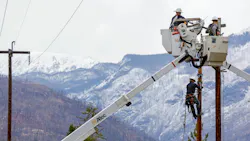
Six years ago, the second-largest wildfire in Colorado’s history swept through Mountain Park Electric’s (MPE) service territory with unprecedented speed and force. Wind gusts reached 110 mph, creating a firestorm that leveled entire neighborhoods and disrupted power to thousands.
In the wake of the 2020 wildfire, which appeared to be started accidentally by a hunter or backcountry camper according to reports, MPE was forced to shut off all its Grand Lake load for nearly a week. About 366 homes were lost, and millions of dollars in infrastructure required repair or replacement.
Despite the devastation, the cooperative restored power to every customer who could safely receive it within seven to 10 days. Full system restoration took nearly four years, a testament to MPE’s perseverance and its reliance on partnerships with FEMA, local governments and fellow utilities.
This fire shaped MPE’s recent history, redefined risk and became a turning point. It underscored the urgency of vegetation management and system hardening. MPE responded by rethinking its approach from the ground up.

From Service to Innovation
Nestled in Colorado’s rugged Rocky Mountain region, MPE was established in 1946 and headquartered in Granby, Colorado with a service center in Walden, Colorado, and another in Kremmling, Colorado. This not-for-profit electric cooperative serves about 18,000 members across more than 23,000 meters and 1,900-line miles.
While the cooperative has grown and evolved over the past 75 years, its mission has remained constant: to deliver safe, reliable, affordable and sustainable energy and services while supporting the communities it serves. Today, MPE is tackling challenges that test the limits of modern infrastructure, from wildfire risk to extreme weather and renewable integration. But its approach, rooted in proactive planning, community engagement and technological innovation, is ensuring that even in uncertain terrain, progress is always possible.
As a member-owned cooperative, MPE operates on principles that emphasize democratic control, community involvement and long-term sustainability. These values guide every decision, from rate structures to energy sources to investments in grid reliability.
MPE is part of the Touchstone Energy network, aligning with more than 700 other co-ops across the country to share best practices and advocate for rural energy needs. Locally, MPE’s impact goes beyond electricity. The cooperative supports robust scholarship and rebate programs, hosts community events and actively volunteers time and resources to causes throughout the region.
In recent years, the cooperative has also invested in broadband development, working with its Fiber-to-the-Premises (FTTP) partner, Conexon Connect, to bring high-speed internet to homes and businesses across the territory. By leveraging its middle-mile infrastructure, MPE is helping bridge the digital divide in a region where geography often hinders connectivity.
A New Era of Vegetation Management
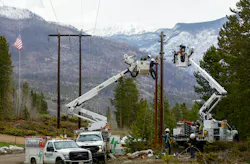
Before the fire, some areas in MPE’s system followed a five- to 10-year vegetation trim cycle. In the aftermath, the cooperative made a bold decision: to adopt a uniform, system-wide four-year trim cycle, paired with a mid-cycle inspection and annual hazard tree reviews.
This approach, led in partnership with ACRT, focuses on proactive maintenance and rapid response. ACRT manages planning and notifications across MPE’s entire system, and their utility foresters play a hands-on role in day-to-day operations. Len Jagelski, a consulting utility forester, has become known for his persistence in tracking down hard-to-reach property owners. With roughly 75% of homes in MPE’s service area being second or vacation homes, reaching customers for permissions and notifications often requires what ACRT staff call a “private eye” mindset, scouring county records, attempting phone calls and sending certified letters to ensure safe access for tree work.
The updated program also includes the use of American-made drones, flown by certified pilots, to support inspection efforts. These drone surveys capture detailed imagery of the terrain, particularly useful in areas where satellite imagery falls short due to tree cover, shadowing or resolution limits. By combining drone views with ground-based audits, MPE can create a layered understanding of system vulnerabilities.
This work is coordinated through a cloud-based dashboard that allows crews and foresters to see which jobs are in progress, which permissions are still pending, and where high-risk areas are located. The transition from paper to digital records has not only improved efficiency, but it’s also created accountability and transparency throughout the workflow.
Technology with a Human Touch
While innovation is key, MPE believes that no technology can fully replace people. MPE acknowledges that while drones are valuable tools, they are not a daily solution. Boots on the ground remain essential for accurately assessing the terrain and maintaining system reliability. The team conducts hands-on inspections throughout the year, often in harsh conditions and remote locations, to ensure nothing slips through the cracks.
This people-first approach extends to all areas of operation. The cooperative recently celebrated a milestone of four years, as of March 2026, with zero lost-time injuries — a reflection of the safety culture that’s been cultivated over time. MPE places the highest priority on crew safety, with a strong focus on ensuring that every team member returns home safely at the end of each day.
Other concerns include supply chain limitations, particularly for specialized parts. MPE is well-stocked for now, but as infrastructure needs continue to grow, securing essential materials will remain a top priority.
Energy Transformation in Action
On Feb. 1, 2025, MPE completed a major transition from Tri-State Generation to Guzman Energy. Under its previous supplier, MPE was restricted to a 5% self-generation carve-out. Now, with Guzman, the cooperative has far greater flexibility to procure or produce renewable energy that meets member needs and state mandates.
This shift will enable MPE to meet Colorado’s goal of 80% renewable energy by 2030 and it positions the cooperative for even greater sustainability in the years ahead. The Guzman partnership allows for long-term rate stability, innovation in procurement and the ability to participate in distributed energy markets.
Supporting this effort are grants from state and federal sources. These funds are used to improve system resiliency, invest in community development, and prepare the grid for MPE’s next 75 years.
Growth, AI and the Next Chapter
As MPE charts its path forward, it’s embracing the unknown. Artificial intelligence is one area with massive potential, though the specific applications are still emerging. Whether it’s predictive maintenance, outage management, workforce scheduling or customer engagement, AI is expected to play a growing role in utility operations.
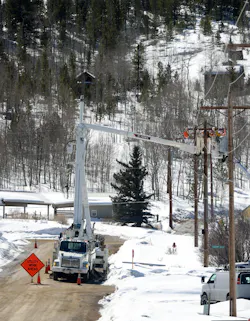
Load growth is also a major factor in planning. The Winter Park, Colorado, area continues to expand, with more homes, more infrastructure and more energy needs. MPE is preparing for this growth by building capacity now, investing in protective technologies and prioritizing system planning to avoid future bottlenecks.
Cooperative Power, Mountain Strong
In the end, Mountain Parks Electric isn’t defined by its infrastructure, its rate structure, or even its trim cycle — it’s defined by its people. From lineworkers scaling poles in snowstorms to member service reps solving billing challenges, every part of MPE reflects the cooperative’s mission to serve with care, precision, and purpose.
By blending technology with tradition, foresight with flexibility, and accountability with innovation, MPE is clearing a path to a future that’s stronger, safer and more sustainable, for the mountains and for the members who call them home.
About the Author
Adam Paulson
Adam Paulson is the vice president of operations at Mountain Parks Electric. He began in the industry as a groundman for Asplundh Tree Experts 20 years ago and worked his way up to a general foreman, where he managed more than 20 crews, coordinated large-scale storm response and handled utility audits and fleet logistics across multiple states. After topping out as a journeyman at Mountain Parks Electric, he became a crew foreman and general foreman. He now oversees dispatch, SCADA, substations, line operations, fleet services and contractors.