Transforming Vegetation Management: From Compliance to Ecosystem Stewardship
Key Highlights
- Training focused on desirable vegetation and biological control improves long-term stability and reduces unnecessary interventions.
- Combining online learning with in-field experience enhances plant identification skills and operational understanding.
- Incentives tied to certifications motivate crews and elevate work quality, fostering pride and confidence.
- Pre-work planning clarifies expectations, leading to more targeted treatments and consistent outcomes.
- Regular vegetation assessments track progress, demonstrating measurable ecological improvements and cost savings.
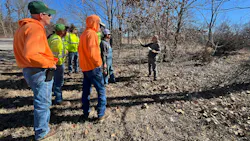
Vegetation management programs are often evaluated by what is removed: trees cleared, miles maintained and violations avoided. Yet the most consequential decisions shaping long-term right-of-way (ROW) conditions are made at ground level, by crews deciding what to cut, what to treat and, just as importantly, what to leave behind. When those decisions are guided primarily by compliance checklists rather than understanding, the results are predictable: overtreatment, inconsistent outcomes, higher costs and missed opportunities to stabilize vegetation communities.
At Liberty in our Arkansas, Kansas, Missouri, and Oklahoma electric service areas, we began asking a different question. Instead of focusing on how to enforce compliance more tightly, we shifted to how crews could better prepare to make informed decisions in the field. The question was not whether training carried risk, but whether the greater risk was failing to train the people who ultimately remain on the system. The answer led to a shift in how we designed, delivered and rewarded Integrated Vegetation Management (IVM) training.
From Compliance to Judgment
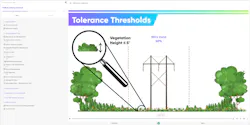
Traditional vegetation management training tends to emphasize what crews should not allow: tall-growing woody species, incompatible trees and vegetation that threatens conductor clearance. While necessary, this approach can unintentionally create a default assumption that unknown plants are undesirable. The result is a tendency toward broad treatment rather than selective management.
Liberty chose to reframe training around the concept of desirable vegetation, species that are compatible with infrastructure, functional within the ecosystem, and most importantly, stable over time. The utility trained crews to recognize vegetation that contributes to biological control by competing with incompatible species, reducing the need for repeated mechanical or herbicide prescriptions. This shift required moving beyond one-time, annual training events and toward continuous workforce development.
Building a Workforce Development Model
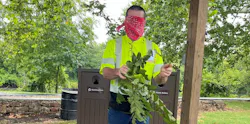
The training model combined online learning modules with immersive, in-person field sessions focused on plant identification during both dormant and growing seasons. Crews worked directly with naturalists and vegetation specialists to learn not only how to identify species, but also why those distinctions matter operationally. Plant families were introduced as practical learning tools, helping crews understand that compatibility does not always equate to desirability and that even low-growing species can carry implications for safety, regulatory compliance or long-term maintenance.
To reinforce engagement and retention, we tied training completion to tangible incentives. Certifications, including herbicide applicator licenses, International Society of Arboriculture certifications, and internal habitat management-focused qualifications, were linked to pay progression. This approach positioned knowledge as a career asset rather than an administrative requirement.
Planning Before the Work Begins
Training alone is insufficient without clear expectations. Liberty emphasized preplanning to ensure contractors were not sent into the field with open-ended directives. Work plans identified species to retain, species to target and areas requiring additional care. Communicating these expectations up front reduced uncertainty and improved consistency across crews.
This planning framework supported a more selective application of best management practices. By relying more heavily on biological control and less frequent intervention, crews could maintain compliance while reducing overall disturbance. Over time, this approach contributed to more resilient vegetation communities that required fewer corrective actions.
Measuring What Matters
A critical component of the program was the commitment to measurement. Baseline ROW surveys established vegetation composition before maintenance activities, followed by post-treatment assessments. Tracking percent cover by vegetation type allowed the utility to evaluate whether desirable species were increasing and whether incompatible categories were declining.
In multiple locations, surveys showed measurable reductions in tall-growing woody vegetation and invasive species, accompanied by increases in grasses, forbs and other compatible plant groups. These shifts supported the underlying IVM objective: stabilize vegetation communities so they resist reinvasion and require less frequent intervention.
Measurement also extended beyond vegetation structure. Improved plant identification led to the documentation of previously unrecorded species and new population records for rare plants. These findings were submitted to state conservation and botanical organizations, demonstrating that operational vegetation management can contribute meaningfully to scientific knowledge without compromising reliability.
Extending IVM Beyond the ROW
Liberty extended the same principles applied along ROW corridors to substations and other facilities. The utility converted areas previously maintained as turf to low-maintenance pollinator habitats where appropriate. These conversions reduced mowing frequency, lowered long-term maintenance demands and improved aesthetics for neighboring communities. The company transitioned more than 80 acres to habitat-focused management, reinforcing that IVM principles are scalable beyond linear corridors.
Empowerment Over Enforcement
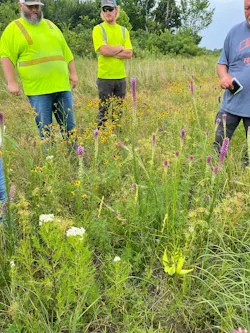
Throughout the program, contractor relationships were approached through the lens of empowerment rather than enforcement. Contractors were treated as partners performing employee-level risk work, and training investments reflected that reality. Rather than emphasizing penalties for missteps, the program emphasized confidence, judgment and pride in workmanship.
This approach helped address persistent challenges such as turnover and variability in field performance. Crews who understood the reasoning behind treatment decisions demonstrated greater consistency and engagement. For utilities, this translated into more predictable outcomes and reduced rework.
Aligning With Emerging Industry Standards
While Liberty’s success has been driven by locally developed training and certification pathways, the approach aligns with broader industry trends. Emerging concepts such as Infrastructure Land Stewardship (ILS) certification reflect growing recognition that vegetation management requires specialized expertise in stewardship and biodiversity-oriented practices. Industry surveys indicate strong interest among both ROW managers and contractors in professional certification focused on land stewardship.
Liberty’s experience suggests that utilities do not need to wait for national standards to act. Local training programs can deliver immediate benefits while positioning organizations to align with future credentials as they mature.
Lessons Learned
Several lessons emerged from Liberty's experience:
-
Training that develops judgment is more valuable than training that reinforces rules alone.
-
Incentivizing knowledge supports retention and elevates work quality.
-
Measuring vegetation outcomes builds credibility and informs continuous improvement.
-
Selective management reduces long-term costs by stabilizing vegetation communities.
-
Empowered crews make better decisions, improving safety, reliability and stewardship.
A Call to Action
For utilities evaluating their vegetation management programs, the implications are clear. It is time to rethink how contractors are trained, moving beyond compliance toward workforce development. It is time to start measuring desirable vegetation, not just clearing distances. And it is time to build a business case for training investment, one grounded in safety, reliability, cost control and environmental stewardship.
The question is no longer whether training carries risk. The greater risk may be failing to invest in the people who shape the future of the ROW every day.
About the Author
Jason Grossman
Jason Grossman is the manager of vegetation management for Liberty - Central, where he leads innovative strategies that balance reliability, environmental stewardship and technology. With nearly two decades in utility forestry, he has been at the forefront of integrating data analytics, ecological principles and modern tools to improve vegetation management programs.
Jason holds a degree in agricultural science and natural resource management from Oklahoma State University and is passionate about pushing the industry forward through collaboration and continuous improvement. When he's not developing forward-thinking solutions for utility corridors, he enjoys fishing, kayaking, beekeeping, gardening, winemaking, and being silly with his kids.