Bridging the Gap: Addressing Workforce and Infrastructure Challenges in Modern Power Systems
Key Highlights
- The energy industry is experiencing a significant workforce retirement wave, risking loss of decades of institutional knowledge crucial for grid modernization.
- Rapid demand growth and technological innovation are outpacing the industry's capacity to plan, build, and maintain new infrastructure.
- A coordinated approach involving innovation, workforce development, and early project planning is essential to close the capacity and knowledge gaps.
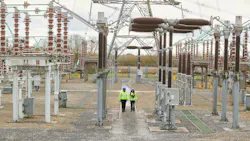
A few months ago, I was standing in the middle of one of our industry's larger conferences, surrounded by everything the grid is becoming: battery storage platforms, AI-driven asset management, virtual power plants, panel after panel on the innovation reshaping how we generate, store, and move power. Yet in the middle of it, I found myself in a conversation about something the show floor wasn't really talking about: how many people who actually know the inner workings of these utility systems, who understand the substations and the switching logic and the decades of institutional judgment calls that don't show up in any manual, are retiring. For good. And they're not being replaced at the rate they're leaving.
That contrast has stuck with me since. We are innovating faster than we are staffing, and in many cases faster than we are planning and building. Innovation itself is not our bottleneck. Our ability to actually deliver it, is becoming one.
Illinois is a clear example of the gap between demand and a plan to serve it. As Crain's Chicago Business reported this July, ComEd is currently managing roughly 100 large-load applications representing about 33 gigawatts of potential demand, nearly 40% more than the utility's all-time system peak. At the same time, peak demand across Illinois is projected to climb significantly by the end of the decade, while Northern Illinois is expected to become increasingly dependent on power imported from elsewhere in the regional grid. PJM is already showing signs of that regional strain, with its most recent capacity auction clearing roughly 6.8 gigawatts below its reliability requirement.
This isn't unique to Illinois. We're seeing the same pattern with a utility client in the South facing more than 10 gigawatts of proposed new demand from hyperscalers. The economic development opportunity is obvious, and there is good reason for regions to be excited about that kind of investment. But what doesn't exist yet is a complete picture of the generation mix required to support it, how much new generation, storage, and demand response will ultimately be needed, and how the transmission and distribution systems underneath all of it get built out to carry that load reliably and safely. Different region, same gap between what we've said yes to and what we've actually figured out how to deliver.
And even once a plan exists, there's a second constraint right behind it: who builds it. Over the last several years, we've watched utilities scale back internal engineering staff and lean more heavily on outside engineering firms to fill the gap. That's a reasonable response to a real problem, but it also means utilities across the country are increasingly competing for the same limited pool of qualified firms, engineers, and construction professionals at exactly the moment demand for those resources is climbing fastest.
So what actually closes this gap? I don't think it's any single fix, and I'm wary of framing it as one. These aren't the only levers available, but they're the three I've seen matter most from where I sit: it's not interconnection reform or workforce investment or permitting coordination. It's all three, moving together and on the same timeline.
We need an innovation strategy on the generation and storage side, with batteries, new generation technologies, virtual power plants, and other emerging solutions genuinely evaluated and deployed, not just showcased. At the same time, we need real investment in workforce development and training pipelines, because all of that technology still has to be designed, integrated, permitted, constructed, and maintained by people who understand the systems they're working on.
We also need to think differently about where additional engineering capacity can come from. There are small and diverse engineering firms already positioned to absorb some of this capacity crunch, but only if utilities and larger firms are willing to partner with them at scale rather than using them as narrowly scoped subcontractors. If the industry needs more qualified engineering capacity, creating a larger pool of firms capable of leading and delivering major infrastructure work is a business and capacity strategy.
Finally, municipalities, utilities, and other entities involved in permitting and construction need to start planning projects together much earlier. We should be reviewing multi-entity infrastructure work in parallel wherever possible rather than defaulting to the sequential, siloed construction windows we've gotten used to. One agency completes its work, another comes behind it months later, and then someone else opens up the same area again. Those timelines are already inefficient, and they become even harder to justify when demand growth is moving faster than the infrastructure underneath it.
None of this is a five-alarm fire, maybe a three-alarm, but it's a pattern worth naming clearly while we still have some room to plan for it rather than react to it. The people retiring out of this industry right now built many of the systems we're all trying to modernize, and they carry decades of knowledge that can't simply be recreated in a training module. At the same time, we're bringing enormous amounts of new technology, investment, and demand onto the grid.
The question worth sitting with is whether we're building the next generation of capacity, technical, human, and institutional, fast enough to meet what we've already said yes to.
About the Author
Kimberly Moore
Kimberly Moore is president & CEO of KDM Engineering.