Building the Grid of Tomorrow: Challenges and Opportunities in Power Engineering
Key Highlights
- Power demand is expected to reach record highs globally, prompting industry leaders to innovate for reliability, resiliency, and affordability in future grid designs.
- The deployment of 765 kV high-voltage systems is accelerating, offering greater efficiency and capacity, but challenges like tower size and land use remain significant considerations.
- Workforce development is critical; utilities are adopting labor-saving technologies and emphasizing training to address talent shortages and support grid expansion.
- Utilities are shifting from deterministic to probabilistic planning to adapt to unpredictable load growth and generation variability, ensuring projects remain on track and within budget.
- Partnerships with data centers are vital; utilities must collaborate early to manage rapid load growth and maintain grid stability amid increasing large-scale digital infrastructure demands.

Around the world, power engineering professionals are focusing on not only reliability and resiliency, but also affordability when designing the grid of the future. As the cost of living continues to rise along with the desire for non-stop power, the time is now for innovation and execution.
Over the next five years, the electricity consumption will reach record highs in many regions of the world, and electricity demand will outpace economic growth, according to a new report from the International Energy Agency (IEA). The study found that the “Age of Electricity has arrived, underpinned by strong demand growth.”
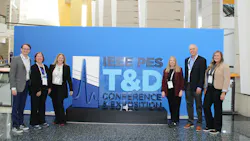
To discover how to meet this surge in demand, more than 18,000 attendees joined forces in early May in Chicago for the 2026 IEEE PES T&D Conference & Exposition, hosted by ComEd. Power engineers and utility professionals traveled to the Windy City from 89 countries to evaluate industry trends and obstacles, share technologies and best practices and attend technical tours and networking sessions.
To launch the event, Professor C.Y. Chung, president-elect of IEEE PES T&D, encouraged the registrants to attend as many technical panels, Super Sessions and networking receptions as possible to learn how to overcome the many energy challenges today and in the years ahead. He said engineers are now specializing in big data analytics, cyber security, artificial intelligence, renewable forms of energy and building more resilient and reliable grids.
“Make no mistake — this is a new era for power and electrical engineers,” he said during the keynote to kick off the first day of the conference. “This should inspire all of us of the amazing opportunity in energy ahead.”
Chris Kofinis, CEO of Park Street Strategies, inspired the audience to let their voices be heard and educate the public about energy issues.
“The public — not just in one country but around the world — want to hear from you more,” he said. “Don’t sacrifice that opportunity. Seize it. The more that you can, the more you will help to achieve the transformation that you are working so hard to accomplish in your respective homes.”
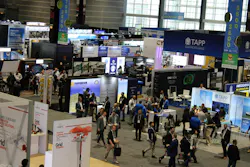
As we listened and learned during technical sessions, browsed the immense show floor at the McCormick Place and attended the networking events, five key themes rose to the surface.

By the Numbers: Inside 2026 IEEE PES T&D
- More than 18,000 professionals, including utility executives, engineers, infrastructure planners and technology providers attended the event. This represented a 20 percent increase in utility attendance compared to the 2024 IEEE PES T&D.
- A total of 89 countries were globally represented across the exhibition and technical programs.
- A total of 933 exhibitors showcased grid technologies, software, heavy equipment, services and more on the show floor. About 36 percent of the exhibitors were new to the event in 2026.
- Attendees could sit in on presentations at four floor stages highlighting Data Centers, Grid Edge tech, Innovation and Resilience and Renewables.
- The conference had more than 100 sessions with more than 600 speakers.
1. Zone in on Affordability, Not Just in America, but Globally. As the cost of products and services continues to rise, IEEE PES T&D is looking for ways to build a more resilient, reliable and affordable grid through its research project, Vision 2050.
“Our global research project is exploring what IEEE PES members, experts and people around the world think about some of the most important energy issues our world faces,” Chung said.
During the keynote, Dr. Shay Bahramirad, vice president of transmission and distribution engineering at Pacific Gas & Electric (PG&E) and past president of IEEE PES, shared some of the initial findings from the project.
“Regardless of our respective titles, we are all decision makers, and to that end, we must take heed of what experts, members and people that we serve think and use that knowledge to shape our collective future,” she said. “Vision 2050 is an unprecedented global research project that was undertaken to better understand the views and the opinions of all of those who shape and impact the energy sector.”
During the interviews shown on the big screens during the presentation, the cost of energy came to the forefront, as consumers worldwide are struggling with putting food on the table let alone paying electrical bills. Case in point: more than half of the respondents voiced affordability as a leading energy concern, and 90 percent of PES members are concerned consumers will be burdened by the costs of needed investment.
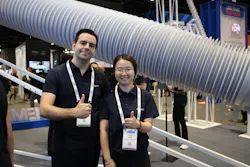
2. Meet the Intensifying Demand for Higher Voltage Systems. As we walked the floor and met with exhibitors, we learned that 765 kV power is not a technology of the future — it is here today and ready to expand nationwide. For example, Jeff Butler, principal engineer-transmission at Hubbell Power Systems, said his company is helping with a large project underway in Texas for Oncor, and AEP has been installing 765 kV for decades. While states like Texas have wide-open spaces, other cities like Chicago are more constrained, so it’s beneficial to use the same piece of land to get more power transmitted from the generation to the load centers, he said.
“The advantages for 765 is that in the same right of way, you can get magnitudes more power than you can with multiple lines of 345 or 500 kV,” Butler said in the Hubbell booth at the IEEE PES T&D show. “The efficiency of using the space, which is limited here in the U.S. is one of the key advantages of 765. Over the next five years, over 4.000 miles of line are expected to be built here in the United States.”
One of the challenges, however, is the size of the structures.
“In the U.S., there has been some limitations, not the least of which is giant towers that no one really wants in their backyard, so we are trying to re-use current right of ways and space,” he added.
On the trade show floor, we also caught up with Héctor de Santos, the global CTO for Shemar. Inside the booth, we could watch videos of high-voltage systems from around the world and see an actual 765 kV insulator. During our visit, he shared his company’s expertise with high voltage systems internationally as well as Shemar’s plans to build a new manufacturing plant in the United States to meet demand.
The impact of increased demand for more transmission is also rippling down to other industries, including those that support the construction of these lines. For example, during our visit to the Sterling Site Access Solutions booth, we learned of a looming mat shortage from Brent Sedlacek, director of sustainability.
“The reason why site access is so important right now in the transmission industry is just the scale of the buildout of 345 and 765 kV lines on top of all the traditional transmission construction that is happening,” he said in his booth next to a replica of the TerraCross bridge. “What we’re seeing over the next decade is the amount of mats needed are far expanding what has ever been needed in the past. From a transmission construction standpoint, more of the focus is on transformers and other equipment with long lead time items, and what hasn’t been thought about by as many contractors and utilities is planning site access.”
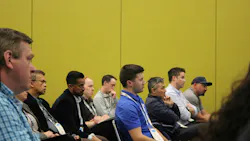
3. Focus on the Workforce Amid the Looming Labor Shortage. Beyond the need for more materials to support the grid expansion projects, the electric utility industry will also need to ramp up its workforce. During his presentation, Kofinis shared one of the recommendations of Vision 2050, which was to treat workforce development as critical infrastructure. The IEEE PES found that an adequate workforce is needed to design and implement upgrades as a talent gap creates generation-long bottlenecks.
We need to strengthen that workforce,” he said. “When that knowledge is gone, it is not easily replaced.”
On the show floor, exhibitors were also showcasing labor-saving technologies and tools to help the field and office workforce to streamline tasks, minimize labor hours and get more work done in less time to meet the demand for more power, improved reliability and a resilient grid.

4. Expect the Unexpected. To keep projects on track and within budget, utilities are taking a proactive approach to the design and construction of new infrastructure during grid modernization projects. For example, during the panel discussion, “Affordably Designing the Resilient Grid of the Future,” Jackie Becker, vice president of transmission engineering and construction for Ameren, said within her service territory, she’s seeing a shift from deterministic planning to probabilistic planning.
“In today’s environment, there’s so much change both on the load side, but also on the generation side,” Becker said. “With generators wanting to connect, but then they back out later in the process, we’re moving to where we are looking at lots of different scenarios that could occur, and then we’re seeing what projects continue to show up and rise to the top. We’re not looking only at what do we need right now, but also what we’ll need in 10 to 15 years, which supports affordability. We are trying to focus on the right solution in the right place.”
Utilities are now seeing the emergence of an extreme load growth, which is creating a different dynamic, said Patrick Smith, chairman and president of Ameren Illinois, during the Super Session, “Carbon Goals vs. Grid Reality.”
“It’s not just about the scale, but it’s a different type of load growth,” Smith said. “We’re having to make quicker decisions about how much and where, and it’s not typically what you would do when we forecasted load back in the old days. Even five or six years ago, you would know about projects, you could see the pipeline and there was clarity, but right now, we’re negotiating the future instead of forecasting the future.”

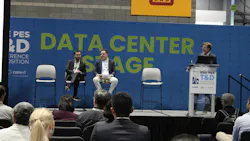
5. Forge a Partnership with Data Centers from the Start. Throughout the event, the need for grid modernization, but also data centers also became a significant part of the conversation both on the show floor and during the educational sessions. Because the hyperscale data centers and large load customers are coming up to speed a lot more quickly, utilities must discover ways to adapt to the rapid pace of the projects, Smith said.
“Data centers are demanding more of what we are accustomed to in our generation and transmission development cadence,” he said. “They have outpaced that, so we will have to understand how to move at this pace of customers in this new era. You might have enough capacity on your system, but depending on where these places want to build, it can create real risks in concentration and become disruptive to the local grid.”
Jeff Bladen, head of energy at Verrus Energy, said the grid is the gold standard of reliability for data centers, but utilities need to make sure they are part of the solution rather than part of the problem. To that end, Verrus has partnered with NERC to develop the stability grid architecture.
“I think the greatest opportunity in front of us — that we are still missing — is how can we, from the very beginning, interconnect data centers in a way that contemplates, if not expects, that kind of partnership in maintaining the reliability of the bulk power system,” he said.
Through his nearly 30 years in the power industry Bladen has learned the importance of finding good friends and partnering with them.
“Flexibility is the bridge between the grid we have and the grid we need,” he said. “If we want to build that bridge faster, we need to stop studying and interconnecting every large load from a generic profile, and we need to have beneficial, verifiable and flexible loads that bring their own capacity. We need to give them a faster path to connect to the grid than those who are not.”
Matt Parker, vice president of electric transmission engineering and field operations for Dominion Energy agreed, saying that while it would be preferable if data centers could bring their own new generation, ultimately, utilities and large load customers need to find a way to work together.
“Utilities don’t know all about data centers, and we are not data center experts,” he said. “We’ve got to come together. No one group is going to solve this problem. This has got to be a partnership.”
Editor’s Note: For more coverage of the 2026 IEEE PES T&D Conference and Exposition, including photo galleries, videos, articles and more, go to the event page on the T&D World website. You can also listen to podcast episodes about the event by tuning in to the Line Life Podcast or the T&D World Live Podcast.
Listen to the Line Life Podcast for More Show Coverage

Tune in and subscribe to the Line Life Podcast at linelife.podbean.com to listen to two new episodes about the 2026 IEEE PES T&D Conference and Exposition. Also, stay tuned to the T&D World Live Podcast, which will feature a conversation between Nikki Chandler and Amy Fischbach of T&D World about the event.

About the Author
Amy Fischbach
Electric Utilities Operations
Amy Fischbach is the Head of Content for T&D World magazine and manages the Electric Utility Operations section. She is the host of the Line Life Podcast, which celebrates the grit, courage and inspirational teamwork of the line trade. She also works on the annual Lineworker Supplement and the Vegetation Management Supplement as well as the Lineman Life and Lineman's Rodeo News enewsletters. Amy also covers events such as the Trees & Utilities conference and the International Lineman's Rodeo. She is the past president of the ASBPE Educational Foundation and ASBPE and earned her bachelor's and master's degrees in journalism from Kansas State University. She can be reached at [email protected].