Midwest to West Coast: How US Utilities Are Broadening Industry Standards Around SF6-Free Power Systems
Utility provider ComEd advanced its Midwest operations this year with initiatives like its new Scheduled Dispatch Virtual Power Plant (SDVPP) program approved by the Illinois Commerce Commission.
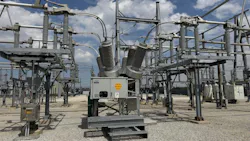
Alongside its distributed energy resource measures, ComEd also began piloting high-voltage sulfur hexafluoride (SF6)-free switchgear circuit breakers in partnership with grid equipment providers Siemens Energy and Hitachi Energy. These 138-kV clean-air insulated vacuum circuit breakers by Siemens Energy and 345-kV SF6-free transmission circuit breakers deployed by Hitachi Energy aim to increase grid reliability ahead of future emissions rules in the U.S.
Vacuum interruption technology has been used for decades at lower voltages. But ComEd explained that applying it at 138-kilovolt transmission-voltage levels represents one of the industry’s newer approaches for reducing greenhouse gas emissions while maintaining system reliability.
Getting ahead of potential widespread SF6 equipment phaseouts
ComEd is expanding its ongoing partnership with nonprofit energy research firm the Electric Power Research Institute (EPRI). In October 2025, the two collaborated on an Agriculture Pods Pilot Program to bring fresh produce to northern Illinois. Now, EPRI will collect data to monitor and evaluate ComEd’s SF6-free equipment deployments under real testing conditions as regional phaseouts expand.
As the U.S. Environmental Protection Agency (EPA) notes, the California Air Resources Board finalized regulatory amendments in 2022 to phase out SF6 use in gas-insulated equipment starting in 2025. Similar to the California regulation, New York rules implement a voltage-based phaseout of SF6 gas-insulated equipment beginning in 2027, limiting acquisition of new SF6 equipment without an approved exemption.
Illinois is enabling ComEd to get ahead of these possible supply chain bottlenecks by de-risking unproven tech without risking blackouts over new equipment designs interrupting the grid. These live field tests allow companies like ComEd to avoid stranded assets and massive grid infrastructure rebuilds by moving closer to installing SF6-free equipment today.
Clean-air breaker adoption boosting grid reliability in Illinois
ComEd outlines that electricity flows across roughly 74,000 miles of transmission and distribution lines in its northern Illinois territory, passing through thousands of substations and millions of smart meters.
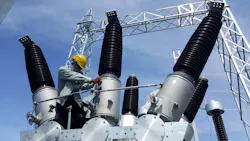
Within this vast network, ComEd detailed that high-voltage circuit breakers perform a critical and familiar function. Unlike household breakers, units on ComEd’s transmission system must interrupt electrical current under extremely high-voltage conditions.
“High-voltage breakers are similar to the small-scale breakers people have in their homes,” senior ComEd engineer Cesar Castillo explained in a company report. “Just like when a breaker trips inside your house, if there’s a fault or an issue on the grid, the breaker opens to protect equipment and prevent further damage.”
A key reliability factor tested by the independent grid reliability authority, the North American Electric Reliability Corporation, is how traditional SF6 gas can liquefy at extremely low temperatures, reducing its insulating ability. By contrast, clean-air and CO2/oxygen mixtures maintain their insulating performance in freezing weather without fire hazards, as highlighted by Siemens Energy's Blue Clean Air vacuum technology for switchgear circuit breakers. This technology pairs vacuum switches with clean air to safely stop electrical surges at high transmission voltages without using harmful gases.
In addition, built-in digital monitoring in modern SF6-free breakers uses advanced sensors to track gas density in real time, helping utilities prevent failures before they occur.
The climate case for replacing SF6 with zero-GWP alternatives
The electric utility industry has long relied on SF6 in high-voltage circuit breakers because of its strong insulating and current-interrupting properties. However, it is labeled as the most potent greenhouse gas ever evaluated by environmental officials.
With an atmospheric lifetime of greater than 1,000 years, even a relatively small amount of emitted SF6 has a significant impact on global climate change. In addition, SF6 has a 100-year global warming potential (GWP) of approximately 25,000, compared with carbon dioxide, which has a GWP of 1, according to the EPA.
While states like Illinois have not widely adopted similar clean-air breakers for the grid, ComEd envisions that “it may be just a matter of time.” Driven by its own emphasis on reducing emissions, the utility is working alongside the state to build a zero-emissions power grid without relying on SF6. ComEd has begun these efforts in its northern Illinois service territory.
Scaling SF6-free substations in Southern California
In Southern California, French multinational energy company Schneider Electric is deploying new substation technology in the U.S. at scale. Schneider Electric and Southern California Edison (SCE) are scaling SF6-free, gas‑insulated switchgear for utility operations in electric substations. The first two projects, which have a planned installation schedule for 2027, will take place at the Great Lakes substation in northern Los Angeles County's Antelope Valley region and the Running Springs substation in the San Bernardino Mountains.
As T&D World reported, both projects are set to deploy GMAirSeT switchgear using pure air and vacuum instead of SF6 to help double capacity within existing footprints. These medium-voltage, gas-insulated switchgear installations will support SCE's broader, longer-term modernization and decarbonization initiatives across its 15-million-person service area.
This West Coast momentum highlights nationwide efforts by major utilities looking to establish clean emission guidelines ahead of the possibility of greater federal regulatory standards.
About the Author
 Eric Moody