Perspective: The Grid-Edge Revolution Is Already Installed
Key Highlights
- Utilities are turning to batteries, EVs, HVAC and other customer-side resources to help replace retiring generation and manage grid constraints.
- Conservative, phased deployments are helping utilities activate existing capabilities while managing operational and regulatory risks.
- AMI and demand-response teams are increasingly working together, recognizing that meter infrastructure can support both grid operations and customer programs.
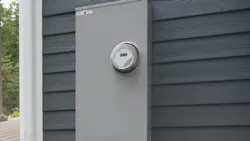
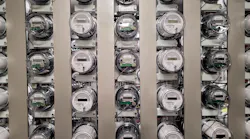
There's a quiet revolution sitting inside the grid, and most utilities are sitting on the switch. Utilities have millions of meters deployed across their service territories, and an increasing number of those devices have capabilities that extend well beyond traditional metering. Itron has 15 million meters running a Distributed Intelligence (DI)-enabled technology stack, out of more than 300 million deployed globally. These aren't measuring devices anymore. They're computers, sitting outside customers' homes, capable of running many applications, including outage prediction, neighborhood-scale load balancing and real-time visibility extending to the edge of the grid.
Most utilities have turned on only a few of those features. Now, that's not a technology gap. It's a velocity gap, and the next 12 months is where we can expect to see that gap start to close.
We Can't Run this Grid Like We Used to
For years, the industry has talked about the "triple D" - decarbonization, digitalization and decentralization. That's still true, but I'd frame it a little differently based on the conversations I'm having with utilities right now, mostly the large investor-owned utilities and Distribution System Operators in the U.S., Australia and Europe. What they're really describing is one thing: we are in the middle of the energy transition, and we cannot run the grid the way we used to.
Take one such utility in the middle of the country. The utility is retiring its last big coal generators over the next few years. That's several gigawatts of supply disappearing. Where does that capacity get created or managed instead? Increasingly, the answer is aggregation, virtual power plants and grid-edge intelligence — solutions that let utilities manage the grid using resources that already exist at the customer's home, rather than waiting years for new generation or transmission to get built.
Utilities increasingly need secure and scalable control systems to orchestrate edge resources in response to real-time grid conditions. As utilities retire generation to decarbonize, they're looking to distributed resources to help address that changing supply picture — batteries, EVs, HVAC, water heaters, rooftop solar - that live at the very edge of the grid, where visibility has traditionally been weakest.
Layer reliability on top of that, and you get to the metric every utility executive actually loses sleep over: customer satisfaction. Reliability is what customers notice. Nobody knows or cares whether a coal plant fired up on schedule this morning. But if the hot shower or the air conditioning goes out, the utility hears about it immediately. The whole challenge of the energy transition is activating all of this flexibility at the edge of the grid while making it completely invisible to the customer.
Why the Capability is still Sitting Dormant
If the technology already exists in millions of deployed meters, why isn't it turned on? Utilities have historically run very conservative approval processes, and for good reason - moving too fast and breaking things erodes the trust you need with regulators and customers alike.
But that paradigm is shifting. Late in 2025, we launched a 2,000-unit battery energy storage program with a utility. A month later, we launched a follow-on virtual power plant program building on that same fleet. There's another phase planned a month or two after that. That kind of iterative, staged rollout, as opposed to one big-bang deployment, is how conservative utilities are learning to move faster without abandoning the caution that's served them well.
The other shift is organizational. Historically, distribution and transmission operators had almost no contact with the program administrators running energy efficiency, demand response and e-mobility programs, even at the same utility. Now that the same meters, load-control switches and Distributed Energy Resource Management Systems (DERMS) software serve both functions, we're starting to see those groups literally move down the hall from each other.
I've seen one utility on the East Coast where the head of customer service overseeing Advanced Metering Infrastructure (AMI) now sits near the head of customer solutions overseeing demand response programs, with shared reporting lines forming underneath. When that happens, it clicks: the AMI you already paid for can directly move your customer satisfaction scores. I'd estimate the industry is about a quarter of the way through that kind of reorganization.
Not All DERMS are Built the Same
Part of the confusion in the market comes from a term getting stretched to cover very different things. There's grid DERMS, which is largely a distribution management system extension built to handle front-of-meter, utility-scale wind and solar that traditional Distribution Management System platforms weren't designed for. And there's edge DERMS, where platforms focus on managing the true edge of the grid: the HVAC systems, pool pumps, water heaters, EVs, rooftop solar and storage sitting behind the customer meter. What's still underappreciated is the role AMI plays in all of it. The meter is the sensing and control layer that makes edge DERMS possible in the first place. I'd say the analyst community is catching up to that value proposition, but slowly. For example, three years ago, this contribution barely showed up in market reports. Today, it's harder to ignore.
Adoption is Regional, but the Gap is Closing
Adoption tracks wherever progressive thinking and grid stress show up first. Germany saw it a decade ago with the prosumer concept. Australia is dealing with it now, managing an oversupply of rooftop solar so severe that utilities are working to avoid literally turning on stadium lights at midday just to balance the grid.
In the U.S., it's tempting to assume this is purely a coastal story, and there's some truth to that — high-density, high-income areas tend to get new technology first. But Denver is a useful counterexample sitting right in the middle of the country, with four million DI-enabled meters already deployed locally and a 34-megawatt residential battery aggregation program up and running today. We're also seeing it emerge in more rural, central utility territories - Ameren's Missouri and Illinois service areas, for example - through RFPs specifically targeting these problems, even in areas that don't yet have the DER penetration you'd see on either coast. The grid's hosting-capacity ceiling, not geography, is really what's driving the timeline.
What to Watch for in the Coming Year
Expect more utilities to roll out what they'll call "meter optimization programs" - software activation of capability that already exists inside deployed hardware, leveraging existing infrastructure investments. Watch for utility reorganizations that put AMI and demand-response leadership in the same room, sometimes literally down the hall from each other. And watch coal retirement schedules keep collapsing the runway utilities have for conservative, single-phase deployments.
The meters are already there. The software already loaded. And as we move forward, more utilities will finally turn them on.
About the Author
Nick Tumilowicz
Thought leader, strategist, and recognized expert in DER management, including solar, storage, and EV technology leveraging decades of unique industry experience to advance global markets toward a clean energy future. In his current capacity as Itron's Director of Product, Nick leads the Distributed Energy Management business unit, accountable for global product development of Demand Response, DER, EV, and Forecasting solutions enabling access to flexible customer energy resources. Nick holds a variety of positions on advisory councils: Department of Energy (NREL, Building Technologies Office, Solar Energy Technologies Office), Department of Defense (Naval Research Laboratory), General Services Administration, California Energy Commission, Grid Forward Leadership Committee, Incubate Energy Labs, Saudi Gulf Cooperation Council Interconnecting Authority, and regularly informs Public Utility/Service Commissions across the U.S.