Unlocking the Power of Next-Generation AMI
Key Highlights
- AMI has transformed utility operations by enabling remote meter reading, outage detection, and automated billing, reducing operational costs and environmental impact.
- Next-generation AMI incorporates smarter meters with edge computing and AI capabilities, supporting real-time grid management and distributed energy resource integration.
- High-speed private wireless networks like LTE provide the bandwidth, security, and control necessary for advanced AMI applications and future grid innovations.
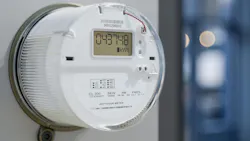
The emergence of automated meter reading (AMR) and advanced metering infrastructure (AMI) transformed an industry that had historically changed at a measured pace. By turning meters from passive devices into connected assets, utilities entered the digital age and expanded both operational capabilities and customer service.
Today, as energy systems become more complex and customer expectations evolve, the industry is reaching another inflection point. Advances in metering technology, communications networks and grid modernization are bringing next-generation AMI, or AMI 2.0, into focus. This evolution offers new opportunities to improve utility operations and customer engagement.
A Necessary Evolution
AMI changed how utilities collected and used meter data. Wireless communications enabled more accurate energy usage data while reducing operational costs by eliminating manual meter reading and allowing personnel to focus on system performance and customer service.
Adoption, however, was gradual. Many utilities replaced meters only at the end of their service life, and some considered manual meter reading adequate for their needs.
Early AMI deployments also required communications decisions. Many utilities chose wireless mesh networks because they provided a cost-effective, resilient and utility-controlled way to connect large numbers of meters. These networks supported core AMI functions such as remote meter reading, automated billing, outage detection, and remote connect and disconnect. As AMI applications expanded and data volumes increased, utilities began evaluating alternatives—including mesh, private broadband, fiber and hybrid architectures—to meet growing performance, scalability and security requirements.
The benefits of AMI ultimately drove widespread adoption. Utilities improved outage response by identifying affected areas more quickly, remotely connected and disconnected service, and reduced the environmental impact of monthly meter-reading truck rolls. Today, AMI delivers value for utilities and customers alike, while setting the stage for the next phase of innovation.
Advancing the Next Generation of AMI
The changing energy landscape is accelerating the evolution of AMI. Growing adoption of solar, battery storage, electric vehicles and building electrification is reshaping how customers use electricity and how utilities manage the grid. At the same time, advances in meters, communications and grid modernization are creating opportunities for next-generation AMI.
A key driver is the meter itself, which is becoming more intelligent. More powerful processors and secure communications modules enable advanced applications such as edge computing, time-sensitive grid functions, and near-real-time decision-making supported by artificial intelligence and machine learning.
...smart meters are becoming critical grid-edge devices rather than simply billing tools.
As a result, smart meters are becoming critical grid-edge devices rather than simply billing tools. Utilities can use them to detect and manage large loads, including EV charging and data center demand, while supporting distributed energy resource management systems (DERMS) that help stabilize the grid. Advanced metering also improves visibility into power quality, enhances load forecasting through load disaggregation, and supports capacity planning and operations scheduling.
Realizing the full value of these capabilities, however, increasingly depends on communications networks that can securely handle growing volumes of data.
High-Speed Networks Drive Innovation
As next-generation AMI generates significantly more data, many utilities are finding that communications infrastructure must evolve as well. Just as mobile networks advanced from 3G to 5G, AMI communications must support higher bandwidth, lower latency and more demanding applications. Where advanced use cases require greater speed and capacity, high-speed private wireless networks can provide the security, reliability and performance utilities need.
A key advantage of private wireless broadband is control. Utilities can deploy communications infrastructure tailored to their operational requirements while maintaining direct control over network management and security. This allows operators to manage quality of service for grid-edge applications and transmit large amounts of data quickly enough to support faster, and in some cases automated, operational decisions.
Cybersecurity is another major consideration. As nation-state cyber threats increase and smart meters generate growing volumes of operational data, utilities require communications networks with strong security built into their design. Private LTE enables utilities to incorporate advanced security controls while rapidly detecting anomalies and enforcing policies around network segmentation, roaming and third-party access.
Private LTE can also accelerate innovation by improving interoperability. Many legacy AMI systems operate within proprietary architectures that limit flexibility. Next-generation AMI will increasingly depend on standards-based technologies that allow utilities to integrate solutions from multiple vendors, creating a more open ecosystem for future applications.
Looking Toward the Future
AMI fundamentally transformed utility operations by digitizing meter data collection. Next-generation AMI builds on that foundation by turning communications networks into platforms for broader grid innovation.
As utilities continue modernizing the grid, communications infrastructure will become as important as the meters themselves. Investing in secure, high-performance private broadband networks can help utilities unlock the full capabilities of advanced AMI, improve operational performance, strengthen customer service and provide a foundation for future grid applications.
Submitted on behalf of The Utility Broadband Alliance (UBBA).
About the Author
Jimi Conway
Jimi Conway is senior manager, AMI strategy and data analytics, ComEd.
Mar Tarres
Mar Tarres is vice president of Product Management at Anterix.