When the Substation Is Ready—but Nothing Talks to It
Key Highlights
- Telecommunications are essential for real-time grid management, safety, and regulatory compliance in modern utilities.
- Neglecting telecom planning can cause significant delays, operational outages, and financial losses during infrastructure projects.
- Specialized telecom project managers improve accuracy in planning, risk management, and stakeholder communication, leading to smoother project execution.
- Geographical challenges and cybersecurity requirements add complexity, requiring expert oversight and tailored solutions.
- Early involvement of telecom teams and clear ownership are key to integrating communication systems effectively into utility projects.
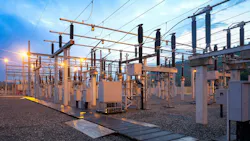
Telecommunications is absolutely critical—but still often overlooked—in utility operations. Today, fiber networks, private LTE and IoT systems underpin every function across electric, gas and water utilities. And that dependence is only growing as utilities modernize.
In my work supporting telecom projects for utilities, I regularly see how small gaps in telecom planning turn into costly delays. One of the biggest issues: utilities often rely on generalist project managers for highly specialized telecom work. And telecom is often, as one colleague put it, “the piece everybody forgets about when you’re doing a larger transmission project.”
That oversight can stop a project in its tracks.
Imagine a utility has just finished building a new transmission substation. The equipment is installed. Testing is complete. The team is ready to begin test & checkout. Then, a week before in-servicing, someone realizes telecommunications was never included.
The substation is not talking to anything on the grid. There’s no protection and control, no visibility into performance. The assets can’t go live, and the utility can’t capitalize on the investment it just made.
This happens more often than many leaders expect. And it’s a clear example of why telecom expertise is no longer optional.
Modern Utility Operations Depend on Communications
Today’s grid depends on constant, real-time communication between substations, control centers and distributed assets. Systems like SCADA, AMI and distributed energy resources all rely on stable, low-latency connectivity.
When that communication fails, or isn’t there to begin with, the impact is immediate and the consequences can be expensive. Outage restoration slows. Visibility drops. Safety risks increase. And in some cases, utilities face compliance or regulatory consequences.
Telecommunications enables everything to function.
Why Telecom Work Is Different
Telecom work inside utilities comes with its own set of challenges. It involves specialized engineering, long lead times, complex permitting and tight dependencies with other infrastructure.
Without telecom experience, it’s easy to underestimate timelines, misinterpret requirements or miss critical risks entirely. In many cases, utilities don’t realize something is missing until late in the project because they don’t have the expertise in place to identify the gap early.
Geography adds another layer of complexity. Networks often span remote substations, rural terrain or environmentally sensitive areas. These locations come with additional communication complexities, while securing access, permits and rights-of-way can drive timelines as much as construction itself.
Cybersecurity is also a challenge. Operational telecom systems must meet strict requirements tailored to industrial control environments, influencing everything from design to testing.
Telecom’s reach extends far and wide. Engineering, field operations, cybersecurity, procurement and external vendors all play a role. Keeping those groups aligned requires someone who understands both the technical details of how the pieces fit together.
What Telecom-Specific Project Management Brings
Telecom-focused project managers combine traditional project management discipline with deep knowledge of communications systems. They understand how networks are designed, built and integrated, and how that work fits into broader utility operations.
One of the biggest differences between telecom-specific project management and a generalist approach is accuracy in planning. Telecom PMs know how long it actually takes to secure licenses, build fiber routes or complete network cutovers. That leads to more realistic schedules, fewer surprises and fewer costly change orders.
They also improve risk management. Issues like path interference, equipment compatibility or network redundancy gaps can derail a project if they aren’t identified early. Telecom PMs know what to look for and how to plan for it.
Just as important, they improve communication. In many projects, telecom PMs act as the “funnel”—coordinating between engineering teams, transmission groups and other stakeholders to make sure everyone has the information they need. Without that role, communication often breaks down, and teams fall out of sync.
Telecom PMs make the whole process smoother resulting in fewer delays, better coordination and infrastructure that works the way it’s supposed to.
A Practical Path Forward
Utilities don’t need to overhaul everything overnight. But there are a few practical steps that can make an immediate difference:
- Involve telecom or IT teams at the very beginning of a project. Too often, they’re brought in late after key decisions have already been made.
- Establish clear communication processes across teams. When information doesn’t flow between groups, gaps appear quickly.
- Define ownership for telecom scope early. Someone needs to be accountable for making sure that piece of the project is fully addressed.
For some utilities, that may mean bringing in telecom-specific project management support. For others, it may mean building internal capabilities. Either way, the goal is the same: making sure telecom is treated as a core part of project delivery, not an afterthought.
Utilities are investing heavily in grid modernization, automation and digital infrastructure. But those investments only deliver value if the underlying communication systems are in place and working correctly.
At the end of the day, a substation that isn’t connected isn’t operational—it’s just sitting there. Avoiding that outcome starts with treating telecom expertise as essential.
About the Author
Megan Wonnell
Megan Wonnell, PMP is Group Manager, Grid Automation Practice, Actalent Services.