Best Practices for Utility and Telecom Collaboration on Pole Attachments
Key Highlights
- The surge in pole attachments is driven by telecom infrastructure expansion and federal funding, creating new operational and safety challenges for utilities.
- Proper contractual and pole audits are essential to identify outdated agreements, unauthorized attachments, and compliance issues, reducing liabilities.
- Accurate, up-to-date data and digital workflows improve visibility, reduce delays, and support long-term joint use program success.
- Implementing integrated cost recovery processes ensures utilities can fund maintenance, upgrades, and safety measures effectively.
- Adopting best practices like centralized data management and regular audits helps utilities and attachers adapt to increasing attachment volumes and evolving regulations.
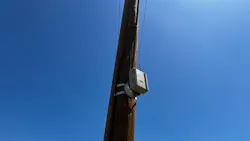
Electric utilities across the U.S. are seeing an unprecedented increase in joint use requests and pole attachments driven by accelerating telecom buildouts to deliver high-speed, high-capacity connectivity services to customers including gigabit Wi-Fi and 5G wireless. Attachments are also being fueled by $42.5 billion in federal funds from the Broadband Equity Access and Deployment (BEAD) program, whose goal is to connect every American to high-speed internet. These factors have created a nationwide surge in attachments to poles that creates challenges and opportunities not only for utilities but also for telecom companies and other attachers.
The challenges for utilities and joint-use partners like telecom companies include:
Cable Clearance Issues and Potential Damage to Equipment – Improperly installed attachments can lead to inadequate clearance above roads and driveways. Cables may be installed with too much slack or may be installed in ways that do not factor in enough expansion on hot days. Both make them vulnerable to impact with tall trucks. Mistakes during attachments can also cause damage to wires, poles and cables that can create safety risks or make them more vulnerable during storm. Additionally, damage to equipment like transformers could cause oil leaks or transformer explosions.
Worker Safety – In addition to public safety issues, improper attachments often create unsafe situations for utility workers, telecom workers and contractors. Lack of adequate spacing and clearance between lines is a primary concern. Improper placement of equipment and attachment arms can also create unsafe situations for workers when they perform maintenance or repair.
Code Violations and Compliance – Improper installations of attachments can lead to costly code violations and compliance breakdowns as well as the need for urgent rework. The amount of work done by attachment subcontractors is a contributing factor. Quality of work can vary widely from one contractor to another. Project schedules and deployment pressures can sometimes create conditions where speed is prioritized over long-term quality and compliance.
Liability and Financial – Most unauthorized use is driven by lack of communication and missing paperwork rather than bad faith. But the consequences are significant: liability issues, potential excessive load on poles and lack of a mechanism for cost recovery. Because of the complexity of managing joint use contracts and payments, billing errors are common. Underbilling attachers can reduce revenue that could fund the costs of maintaining and upgrading pole infrastructure. Overbilling is just as impactful. If large rebates or payments are owed to attachers, it can be a blow to operating budgets. All of these factors make accurate data and complete cyclical audits vitally important.
Outdated Contracts – Joint use contract management is complex, particularly as the number of attachment requests skyrockets. Audits often reveal outdated contracts that use decades-old rate structures or obsolete contractual terms for attachers, creating liability issues while also preventing fair cost recovery. Out-of-date joint use contracts can also create liability.
Operational Inefficiencies and Costs – As the number of joint use requests and attachments rises, operational complexity increases particularly for municipal utilities and co-ops that have small joint use teams and limited resources. The volume of requests, number of contracts, and burden of managing an increasing volume of joint use responsibilities can lead to large backlogs. Struggles to keep pace with these challenges can also create liabilities, compliance issues and drive higher costs.
These are challenges not only for utilities but also telecom companies, given that they pose liability, reliability, financial and operational challenges for every organization utilizing these poles.
So, what are the best practices for effective joint use management? We have a unique perspective on this. The TRC team has supported joint use projects in 30 states over the last 10 years, from pole audits to contract reviews to cost recovery programs involving hundreds of thousands of poles.
Contract Assessments Are Critical – Conducting comprehensive contractual audits is a fundamental first step for utilities to establish effective joint use programs. This process will uncover outdated and missing contracts, pole ownership changes, contractual confusion, overbilling, underbilling and more. It will also confirm that the terms include proper attachment rates and other components that will prevent disputes in the future. Contractual reviews also ensure that this paperwork is aligned with the current reality of pole ownership, the number and type of attachments, and the owners of those attachments. Given the volume of existing and new joint use contracts, working with a partner that has expertise in these audits may be the right path to tackling this without overwhelming internal teams.

Pole Audits Provide the Foundation – Accurate assessments of pole attachments are indispensable for successful joint use. However, many utilities do not have accurate data, despite the requirement to perform them every five years. Utilities also rarely have the personnel or resources to perform regular audits. This keeps utilities and attachers in the dark about safety issues, equipment damage, unauthorized attachments, code violations, compliance issues and more – preventing everyone from taking action before an issue becomes an emergency. We have seen some utility audits uncover unauthorized attachment rates exceeding 20-30% of total pole occupancy. Audits work best when they are truly transparent, which is why our team has an open-door policy and invites attachers to join us when audits are performed. We then rapidly share data across organizations in ways to help expedite mitigation efforts, particularly for ensuring safety and liability. This data can also drive smarter decision making about how to prioritize maintenance and upgrades, including where to make investments for storm preparedness. Once a comprehensive audit is performed, keeping that data up to date is also critical, which is why we recommend processes and technologies that enable this data to stay accurate over time. All of this provides a critical foundation for modern joint use programs, which rely on centralized data environments, GIS integration, and digital workflow management – all of which improve visibility, reduce delays, and maintain long-term program accuracy.
Cost Recovery Analysis Delivers Value for Utilities and Attachers – Cost recovery is a win-win for every organization that uses pole infrastructure. It provides crucial funds for utilities to invest in maintenance and upgrades, which deliver safety, reliability and more to every company involved. However, cost recovery becomes far more complex as the number of attachments rises, creating a volume of work and complexity that in-house teams may find difficult to keep up with. As a result, cost recovery efforts can be overshadowed by urgent needs around joint use requests and contractual processes. Making cost recovery the responsibility of a service provider enables cost recovery to remain a daily focus without the need to add internal head count. Utilities should also select providers who can assist with other critical aspects of administration including transfer management, invoicing support, funding management, reporting, compliance requirements and more. It is important to remember that cost recovery efforts are optimized when they are performed in an integrated way with pole audits and contractual audits — simplifying data streams, workflows and rapid action.

As broadband expansion, grid modernization and infrastructure hardening initiatives continue accelerating, utilities will need scalable, data-driven joint use programs capable of adapting to increasing attachment volumes and evolving regulatory expectations. This will enable utilities and attachers to successfully increase reliability, affordability, resilience and safety. For a deeper dive into best practices for effective, efficient joint use programs, read more in this white paper our team published through T&D World: “The Joint Use Playbook: Strategies for an Effective, Compliant and Future-Ready Joint Use Practice.”
About the Author
Derrick Craton and Jesse Cash
Derrick Craton and Jesse Cash are VP of Business Strategy and Project Manager respectively at TRC, a global professional services firm providing integrated strategy, consulting, engineering and applied technologies in support of the energy transition. They work with utilities across the U.S. to perform joint use audits, contract negotiations, safety improvements, infrastructure upgrades and related services. To learn more best practices related to joint use, download the “The Joint Use Playbook: Strategies for an Effective, Compliant and Future-Ready Joint Use Practice” white paper from the T&D World site.