Superconductors Take Root in ComEd's Grid
Key Highlights
- High-temperature superconducting cables can carry significantly more power in a compact space, making them ideal for dense urban environments with limited infrastructure options.
- The ComEd REG system demonstrates how HTS technology enhances grid redundancy, operational flexibility, and fault current limiting, contributing to a more resilient power network.
- Cooling and refrigeration systems are critical for HTS cable performance, with ongoing research needed to improve reliability and reduce operational costs at scale.
- Installing underground conduits today positions utilities to adopt superconducting solutions in the future, leveraging existing infrastructure for increased capacity and reduced losses.
- Lessons from the Chicago project highlight the importance of tailored maintenance strategies, environmental considerations, and precise monitoring to optimize superconducting system performance.
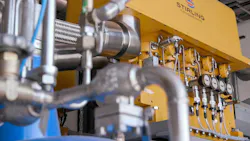
Integrating underground high-temperature superconducting (HTS) cables into the electric grid represents a transformative step toward a more sustainable, reliable, and affordable power system of the future. Super conducting cables have zero resistive losses thereby eliminating 5–10% of the energy waste typical of conventional copper or aluminum cables while carrying five to ten times more power. Increased power capacity to dense urban areas or to large data centers might be a good application for super conductors in the future.
Cooled by readily available liquid nitrogen, cables can potentially be installed in legacy underground conduits making today's investment in underground a tremendous asset for future super-conductors. Refrigeration systems for the liquid nitrogen must be further developed or advancements in material science must give us new materials with low or zero resistivity. Again, installing underground conduits today positions us for the future.
ComEd partnered with American Superconductor (AMSC) to deploy North America’s first permanent system using high-temperature superconductor (HTS) inside one of ComEd’s largest substations within Chicago. ComEd is a unit of Chicago-based Exelon Corp., a Fortune 200 company and one of the nation's largest utility companies, serving nearly 11 million electricity and natural gas customers. ComEd powers more than 4 million customers across northern Illinois, or 70 percent of the state's population. Founded in 1987, AMSC provides engineering planning services and advanced grid systems that optimize network reliability, efficiency and performance. AMSC is headquartered near Boston, Massachusetts with operations in Asia, Australia, Europe and North America.
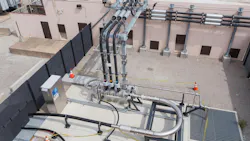
The installation is an AMSC Resilient Electric Grid (REG) system, which uses HTS technology to provide greater redundancy and operational flexibility within the existing grid. The purpose of the project was to evaluate how advanced cable technology can support a stronger and more resilient electric grid. Supported through funding from the Department of Homeland Security, the project was designed to demonstrate whether superconducting technology could provide added redundancy, operational flexibility, and future options for serving dense urban areas.
High-temperature superconducting cables can carry large amounts of power in a compact footprint when kept at very low temperatures using liquid nitrogen. In dense urban environments like Chicago, utilities cannot always solve for reliability needs by simply building new substations or adding traditional equipment due to lack of space or permitting constraints. For ComEd, that made AMSC’s REG system worth evaluating as a potential tool for locations where space is limited, reliability requirements are high, and traditional infrastructure solutions may be more difficult to build.
The AMSC REG system uses advanced high-temperature superconductor (HTS) technology and proprietary wire that AMSC says can transfer 200 times more power than copper wire with zero losses due to resistance. The high capacity of a single superconductor cable delivers transmission-level power (over 100MW @15kV) from nearby substations, providing backup in case of a transmission or transformer failure. REG systems also are fault current limiting, which protects the system from fault currents and extends the life of existing equipment.
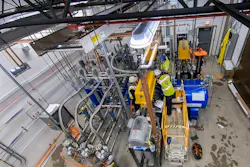
Temperature, pressure, and flow rates of the cooling system are carefully monitored and evaluated and hundreds of other sensors are deployed by engineers and operators throughout the system to measure everything. ComEd is operating, maintaining and learning on behalf of the industry.
The REG system connects two substation terminals through a superconducting bus tie. In practical terms, the system gives operators another way to move power between parts of the substation during certain operating conditions, improving redundancy from an N-1 contingency configuration to an N-2 configuration for the connected terminals.
This effectively means that the system now as an additional backup route available if the primary power route becomes unavailable due to outages, maintenance or contingency events. The substation can now tolerate a broader range of operating scenarios, and this added redundancy has increased station resiliency by adding additional operational flexibility, ultimately supporting reliability for ComEd’s customers.
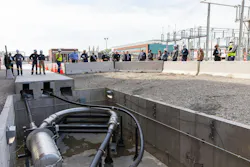
The installation also gave ComEd a controlled environment to study how different superconducting components perform in real utility conditions. The system includes a 600-foot, 12-kilovolt, 3,000-amp superconducting cable, along with multiple termination configurations and a specialized joint. These design choices allowed ComEd and its partners to evaluate installation requirements, operating performance, and equipment behavior through Chicago’s seasonal temperature extremes.
Since going into service in August 2021, the REG system has provided valuable operating experience. ComEd’s experience indicates that the superconducting cable and cable accessories have performed well, while the cooling and refrigeration equipment has required more attention. The project also highlighted the importance of balancing monitoring and alarm visibility with the need to avoid excessive or duplicative alarms.
Those lessons are important as utilities evaluate how advanced technologies can be used on the grid. The project helped ComEd better understand the maintenance needs, environmental considerations, space requirements, and operational value of superconducting systems before considering broader applications.
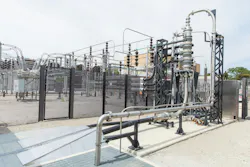
Overall, the project successfully demonstrated that while not a universal solution for every grid challenge, AMSC’s Resilient Electric Grid systems can be successfully integrated as a valuable tool in specific applications to provide additional operating flexibility at a substation. Equally important, the project provided practical operating experience that deepened understanding of superconductor use and reinforced that future applications should carefully consider location, cooling system design, maintenance strategy, and the specific grid need the technology is intended to address.
The reliability of the refrigeration system for superconducting cables has yet to be proven at scale except for the inherent reliability of underground assets. Solid dielectric and fluid filled underground systems today are much less expensive than ComEd’s piloted super conductors. However, ComEd planners and engineers understand that superconductors may have a unique and specific role on the ComEd grid in the years to come replacing traditional overhead lines and substations in areas that new lines are simply impossible to permit and build.
In the future, affordability and value will come from huge capacity increases in limited space and drastically reduced transmission and distribution losses. Loads are growing, technology is advancing, and our industry is responding.
Acknowledgments
Bob Cohoon, manager of Underground Transmission Engineering and Catherine Powers, senior manager of Transmission Engineering & Design at ComEd also contributed to the article.
About the Author
YangWei Li
YangWei Li is an associate engineer at ComEd working toward the goal of improving and powering lives. He graduated from the Illinois Institute of Technology with a Bachelor of Science in Mechanical Engineering.