Enhancing Utility Crisis Communication with Trusted Third-Party Communicators
Key Highlights
- Utilities collaborate with credible third-party experts like meteorologists and community leaders to enhance emergency communication efforts.
- Pre-event education is crucial for setting expectations and reducing confusion during outages caused by extreme weather.
- Clear separation of factual information and interpretation ensures accuracy while making complex concepts understandable to the public.
- Governance safeguards, including content approval and response monitoring, maintain regulatory compliance and message consistency.
- Effective crisis communication combines institutional authority with human credibility, improving public safety and trust during emergencies.
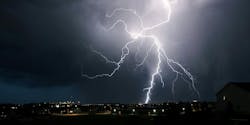
Extreme weather events are placing sustained pressure on electric utility operations. Hurricanes, wildfires, heat waves, cold snaps, and flooding now occur with greater frequency and intensity, testing not only grid resilience but also the effectiveness of utility communications.
During these events, utilities must convey complex, evolving information to customers, regulators, emergency agencies, and the media often under severe time constraints. While traditional communication tools such as outage maps, press releases, SMS alerts, and call centers remain essential, some utilities are supplementing these channels with a less conventional approach: working with trusted third-party communicators to help explain grid conditions and response actions to the public.
This practice is not about marketing or brand visibility. Instead, it reflects a growing recognition that during emergencies, public understanding depends as much on who explains the situation as what is being explained.
Extreme weather exposes recurring challenges in utility communications:
Information overload and fragmentation
During major events, customers are exposed to a mix of official updates, media coverage, social media commentary, and unverified claims. Even accurate utility messages can be diluted or misunderstood as they compete for attention.
Technical complexity
Grid operations, safety protocols, and restoration sequencing are inherently complex. Concepts such as load shedding, wildfire mitigation shutoffs, mutual aid, or weather-related access restrictions can be difficult to explain quickly and clearly to a general audience.
Institutional distance
Utilities must communicate carefully and consistently, particularly in regulated environments. While necessary, this formality can feel impersonal to customers experiencing outages or evacuations, increasing frustration and mistrust even when information is accurate.
The Role of Third Party Communicators
To address these challenges, some utilities are working with individuals who already communicate with the public during severe weather or emergency conditions. These are not spokespersons or influencers in a commercial sense. They are typically professionals whose credibility is based on expertise and experience.
Common profiles include:
-
Local or regional meteorologists and storm analysts
-
Wildfire, flood, or emergency management specialists
-
Former lineworkers, engineers, or safety professionals
-
Community-based figures with established public trust
These individuals often have established audiences who turn to them for guidance during emergencies. When they explain grid impacts, safety considerations, or restoration constraints, their messages can carry added credibility because their professional reputation is directly tied to accuracy.
How Utilities are Applying this Approach
Utilities that have adopted third-party communication support generally follow structured practices to maintain accuracy, safety, and compliance.
Pre-event education and preparedness
The most effective use of third-party voices occurs before an event escalates. Utilities support educational content that explains:
-
How extreme heat or cold stresses generation and distribution systems
-
Why certain safety measures, such as public safety power shutoffs, may be necessary
-
What factors influence restoration timelines, including weather conditions and crew safety
Pre-event education helps set expectations and reduces confusion once outages occur.
Clear separation of facts and interpretation
Utilities retain responsibility for all technical and operational information. Third-party communicators do not speculate or provide independent forecasts. Instead, they interpret approved information in accessible terms, often using diagrams, historical examples, or local context.
For example:
-
Explaining why crews cannot begin restoration during high winds
-
Describing how terrain or fire conditions limit access to damaged infrastructure
-
Clarifying why restoration prioritizes critical facilities before residential service
Controlled distribution through established channels
Content is typically distributed through channels already used by the communicator, where audiences are accustomed to receiving emergency-related information. Utilities may support broader reach through paid amplification, but the messaging remains factual and educational.
Long-form explanations, safety guidance, and updates are housed on utility-owned websites to ensure consistency, version control, and regulatory visibility.
Governance and Risk Considerations
Given the regulatory environment in which electric utilities operate, governance is essential. Utilities that use third-party communicators apply safeguards such as:
-
Pre-defined content parameters and prohibited topics
-
Review and approval of educational materials
-
Monitoring of public responses to correct misinformation quickly
-
Clear disclosure of the relationship between the utility and the communicator
This approach does not shift accountability. Utilities remain the authoritative source of information, while third-party voices help translate that information for broader public understanding.
Observed Benefits and Limitations
Utilities experimenting with this approach report several consistent outcomes:
-
Improved public understanding of safety-driven decisions
-
Reduced misinformation during rapidly evolving events
-
Fewer repetitive inquiries to customer service channels
At the same time, utilities emphasize that third-party communication does not replace core operational messaging. Outage reporting systems, emergency alerts, and official updates remain central to crisis response.
Implications for utility communication strategies
As extreme weather becomes a persistent operational condition rather than an exception, utilities are reassessing how they communicate technical realities to the public.
The emerging lesson is that effective crisis communication increasingly requires both institutional authority and credible human explanation. When used carefully and within appropriate governance structures, trusted third-party communicators can help utilities explain complex situations more clearly, improving public understanding without compromising accuracy or compliance.
In this context, communication resilience is becoming an important complement to physical grid resilience—supporting safer outcomes, clearer expectations, and more informed communities during extreme events.
About the Author
Joseph Perello
Joseph Perello is the Founder and CEO of Props, a performance-based creator media system built to turn credibility into scalable acquisition. Previously, he served as Chief Marketing Officer for the City of New York and as Vice President of the New York Yankees, where he led large-scale brand, revenue, and audience growth. Across public sector, sports, and consumer brands, Joseph’s work has focused on how storytelling, paid media, and measurement operate as a single system—designed to earn trust, drive performance, and scale with discipline.