Wildfire Resilience is Grid Resilience
Key Highlights
- Wildfire risk is now a year-round concern, requiring utilities to rethink their operational strategies and infrastructure investments.
- A layered approach—covering preparation, response, and recovery—is essential for effective wildfire resilience.
- Technologies like sensors, automation, and risk-based planning enable targeted investments and real-time decision-making during fire events.
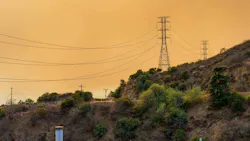
Wildfire risk is no longer a seasonal planning issue for utilities — it is becoming a year-round operating condition. Fire seasons are starting earlier, lasting longer, and reaching parts of the distribution grid once considered low-risk, forcing utilities to rethink how they prepare, operate, and restore power under extreme conditions.
Wildfires themselves aren't new. What's changed is the operating environment. Utilities today manage larger, more complex distribution systems while balancing public safety, affordability, regulatory expectations, and customer expectations alongside reliability. Success today is measured by how well the grid is prepared for risk, responds during extreme conditions, and recovers afterward.
For wildfire risk in particular, that challenge is shaped by a complex combination of weather patterns, vegetation conditions, terrain, and infrastructure. Through wildfire mitigation planning, utilities can identify areas of elevated risk and implement strategies that help reduce ignition potential, support safer operations during extreme conditions, and improve restoration outcomes when events occur. One way to think about wildfire resilience is in three stages: preparing the grid before fire conditions develop, responding intelligently when they do, and restoring power safely once conditions improve.
Prepare: A Layered Strategy
The most effective approach is a layered strategy that includes asset management, operational awareness, intelligent protection, automation, and targeted infrastructure investment.
That starts with maintaining asset health and using sensors, monitoring systems, and field data to identify conditions that may warrant further investigation between routine inspection cycles. From there, risk-based planning tools — which weigh variables like vegetation overgrowth, proximity to infrastructure, and community exposure — let operators target investment where the consequences of ignition would be greatest, rather than spreading resources evenly across a network.
Respond: Near-Term Changes with Immediate Impact
Many wildfire mitigation improvements can be implemented through operational and protection-system enhancements. Replacing legacy expulsion fuses with PulseClosing Technology, for example, allows utilities to test for faults using up to 95% less energy than conventional reclosing operations, reducing the potential for sparks during fault conditions.
On high-risk days, devices equipped with non-reclose settings and remote-operation capabilities give operators greater control over the system while reducing the need to deploy crews to multiple locations in potentially hazardous conditions. Similarly, condition-based reclosing strategies allow utilities to adjust restoration practices based on real-time fire risk, helping balance reliability and safety when conditions are most severe.
Restore: Building Resilience into the Grid's Structure
Longer-term, selective undergrounding remains one of the most effective ways to protect power lines and communities.
But undergrounding is one tool, not the strategy itself. Utilities get the greatest return when it's paired with automation, segmentation, and operational intelligence. Adding switching points lets operators isolate smaller sections of the grid during extreme conditions instead of de-energizing entire communities — reducing wildfire risk while also improving everyday service continuity and restoration times. As public safety power shutoffs become more common, the ability to localize outages will be essential to balancing safety with customer expectations.
Looking ahead, the automation of underground distribution establishes a solid foundation for future flexibility in operating the grid when overhead lines must be de-energized. This segmentation further protects the last mile of energy delivery and improves overall grid resilience.
Building Resilience Beyond Wildfire Season
The most effective wildfire mitigation strategies increasingly combine sensing, data analytics, and automation. Advanced sensors help identify abnormal conditions, while intelligent devices enable utilities to respond quickly and appropriately based on the information they receive. Together, these capabilities help operators make more informed decisions before, during, and after high-risk events.
Importantly, these are not future-state concepts. Utilities are already deploying field-proven technologies that support wildfire mitigation objectives while improving reliability and operational flexibility throughout the year. That's where resilience investments deliver their greatest value: when they help utilities address today's wildfire challenges while strengthening overall grid performance for the long term.
Providing More than Protection
Wildfires will continue to shape how utilities plan, operate, and invest. But resilience is about more than any single event — it reflects a broader shift in how the distribution grid is engineered to withstand increasingly complex threats while continuing to serve the communities that depend on it.
The utilities that build the greatest long-term resilience won't treat wildfire mitigation as a standalone initiative. They'll integrate it into a broader strategy to improve reliability, operational flexibility, and system performance across all conditions. In that approach, every investment that reduces risk also helps make the grid stronger, every day, for every community it serves.
About the Author
Joe Matamoros
Joe Matamoros is Chief Product Development Officer at S&C Electric Company. Learn more: sandc.com/en/solutions/wildfires.