Utilities Face an Affordability Problem; the Bigger Risk is a Trust Deficit
Key Highlights
- Customer trust is declining due to rising bills, reliability issues, and perceptions of profit-driven energy providers.
- Utilities can rebuild trust by improving outage management, providing proactive communication, and leveraging real-time data and analytics.
- Delivering effortless, digital-first experiences and simplifying customer choices are essential to meet rising expectations for convenience and control.

Energy affordability remains a growing concern for customers, regulators and policy- makers. But new EY research suggests the industry’s larger challenge may be customer trust. As bills rise and concerns about reliability grow, customers increasingly expect utilities to help them navigate a more complex energy landscape. When those expectations are not met, trust begins to erode.
For six years, EY research has tracked how people think and feel about their energy. This year’s results reveal an inflection point. More than one-quarter of Americans surveyed (26%) report living in energy poverty (spending more than 10% of their income on energy) and another 34% expect difficulty paying future bills. Customers understand that bigger bills are largely driven by inflation and rising costs, but many also blame energy providers for making more profit.
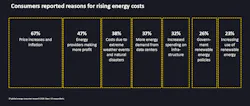
This data is a wake-up call for energy providers. The JD Power residential utility studies recorded their lowest customer satisfaction scores in more than two decades in 2025. EY research paints a similar picture. Just 30% of US respondents feel their providers create value for them and their communities. Only 23% feel that the changing energy system is fair and equitable. Trust, the currency that underpins energy providers’ license to serve, is in jeopardy.
But there’s reason for optimism. Seventy-one percent of consumers surveyed still look to their energy providers as trusted advisors and the main organization to help them manage costs. The challenge is that only 42% of respondents feel they do a good job of that today.
Providers are working hard to communicate the value they bring. However, trust won’t be rebuilt through better messaging, but better experiences.
Reassure and Restore
In the EY research, US consumers rank three priorities for their energy experience: reliability and safety; affordability; and convenience. Reliability and safety have always been foundational elements but they’re under more pressure.
Fifty-one percent of respondents feel that they’ve had more and longer power outages in the past year, and 71% are more concerned about future outages. Alongside rising energy bills, many respondents feel they are paying more for less when it comes to reliability. The adoption of electric vehicles (EVs), heat pumps and continued electrification of homes also increase anxiety around power disruptions. Sixty percent of customers expect better support during outages than in the past.
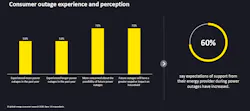
For utilities, this is an opportunity to reframe outage management, not as a reactive, transactional event, but an important lever in building trust. The majority of customers now prefer digital channels during disruption, according to the EY survey. Utilities that deliver proactive, accurate communication, including reasons for the outage, when service will be restored and how to manage in the meantime, can meet consumer expectations and boost confidence.
But delivering this information effectively will call on companies to break down silos and enhance transparency between customer, operations and field teams. Aligning communications with real-time data and leveraging sophisticated tools, advanced analytics and modeling will be necessary to generate more accurate restoration estimates.
Make it Effortless
Convenience means making energy effortless. Customer expectations are rising as they compare interactions with their utility against the seamless, personalized experiences offered by retailers, banks and tech companies.
Delivering a better experience starts with preventing issues where possible and making it easier to engage when they do. Often, internal friction and complexity show up in a poor customer experience. Metering discrepancies drive billing exceptions, disparate technology systems make it difficult to provide field request updates and fragmented distributed energy experience frustrate customers. According to the EY survey, complexity is a key barrier preventing adoption of new energy products and services.
The solution requires providers to put themselves in customers’ shoes, viewing their experience as one integrated journey. Rebuilding workflows and operating models to centralize ownership and drive automation can improve efficiency and give customers the easy, digital-first experiences they want.
Offer Choice and Control
Affordability isn’t simply about reducing prices. It’s about giving customers choice and control.
As demand grows and investment in infrastructure continues, pressure on rates is likely to remain. Broader policy solutions are underway, but utilities still have significant opportunities to help customers manage their own costs.
Choosing rates puts customers in control. The EY research found strong interest in alternative rate programs, especially among Gen Z in the US. Thirty percent of Gen Z respondents are interested in subscription-based programs and 18% in prepay energy.
Across all age groups, interest in energy management is high, with 85% of US respondents saying they would sign up to programs. But trust is a critical factor. Customers want clear insight into how these programs operate and whether they will deliver savings. Simplifying choice, tailoring suggestions and proactively offering advice can ease concerns and build confidence.
Trust Will be a Defining Challenge
Utilities cannot control every driver of affordability. But they can control the energy experience they create around it.
Consumers want more from providers – more choice, clarity, convenience and peace of mind. In a world transformed by AI, they expect a digital-first energy experience that’s intuitive, simple and that delivers on their terms. Ultimately, they expect energy to support how they live, work and thrive. That’s what the EY organization describes as energy wellbeing: creating an integrated experience that transforms how energy makes people think, feel, believe and act and enables everyone to live more prosperous, sustainable and fulfilling lives.
For providers, this could be a defining challenge. Utilities that combine affordability, reliability and convenience into one connected experience can earn trust that endures and strengthen their licence to serve in a rapidly changing energy system.
About the Author
Greg Guthridge
Greg Guthridge is a managing director at Ernst & Young LLP and serves as the EY Global Power & Utilities Customer Experience Transformation Leader. He works with energy retailers as they navigate the changing energy industry, helping to build innovative strategies that seize the opportunities of transformation.
The views reflected in this article are the views of the authors and do not necessarily reflect the views of Ernst & Young LLP or other members of the global EY organization.