Is Your Grid Modeling Strategy Ready for a More Uncertain Energy Future?
Key Highlights
- Traditional energy modeling approaches are insufficient in an environment characterized by persistent uncertainty and rapid disruptions.
- A unified, integrated modeling framework helps organizations understand system-wide impacts and reduces blind spots caused by siloed tools.
- Effective co-optimization of power and natural gas systems is essential for proactive management of volatility and operational risks.
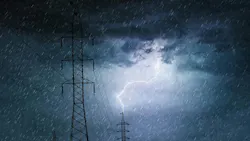
Energy stakeholders have always operated in a world of complexity—but today, they are operating in a world defined by uncertainty.
Recent geopolitical instability in the Middle East has reinforced just how exposed global energy systems are to disruption. Constraints on critical energy transit corridors have demonstrated how quickly localized events can ripple across global fuel markets—impacting availability, pricing, and system reliability far beyond their point of origin. For electric utilities, these global events are unfolding alongside accelerating load growth, extreme weather, supply chain constraints, and the rapid integration of new energy resources.
For many organizations, these disruptions don’t just show up as market volatility—they manifest as unplanned outages, fuel constraints, and cascading reliability challenges across interconnected systems.
And while no organization can predict the exact timing or nature of these events, their increasing frequency underscores a critical shift: uncertainty is no longer an edge case in energy planning—it is the baseline.
This is where many traditional modeling approaches begin to fall short.
Historically, unplanned outage analysis has been treated as a secondary or periodic exercise. But in an environment where disruptions—whether geopolitical, weather-driven, or supply chain-related—can emerge rapidly and propagate system-wide, outage preparedness must become a core component of modeling strategy.
That requires more than static scenario planning. It demands stochastic, high-frequency testing of system resilience under a wide range of potential disruptions—many of which may have no historical precedent.
Because the goal is no longer to predict a single outcome. It is to understand the range of plausible outcomes—and to plan accordingly.
Are today’s modeling approaches truly equipped to operate in a system defined by persistent energy uncertainty?
Which raises a broader question: Are today’s modeling approaches truly equipped to operate in a system defined by persistent energy uncertainty?
As organizations reassess their modeling strategies in this environment, three questions stand out:
Do We Have a Unified View?
In a system defined by uncertainty, fragmentation is a risk multiplier.
Today’s modeling environment requires teams to balance overlapping priorities—from renewables integration and storage operations to long-term investment planning and transmission expansion—all within highly interconnected systems. Yet many organizations still rely on legacy tools that operate in silos.
This creates blind spots. When generation planning, dispatch, and transmission analysis are disconnected, uncertainty compounds—because decisions are being made without a full understanding of system-wide impacts.
Recent disruptions to key energy transit corridors in the Middle East highlight this clearly. What begins as a constraint on fuel supply can quickly cascade into pricing volatility, shifting dispatch patterns, and reliability concerns across multiple markets.
In these scenarios, partial visibility is a liability.
A unified modeling framework reduces this risk by enabling teams to understand how changes in one part of the system ripple across the whole. Without that integration, modelers are forced to rely on assumptions and approximations—introducing additional risk into already complex decisions.
Organizations that ground their models in integrated, data-driven analysis are better positioned not just to respond to known risks, but to identify “unknown unknowns”—the very uncertainties most likely to disrupt planning.
How Well are We Handling Co-optimization?
As uncertainty increasingly emerges at the intersection of systems, co-optimization becomes critical.
The growing interdependence between power and natural gas is a clear example. As renewables expand, their intermittency introduces variability that must be balanced by dispatchable resources—most notably natural gas. At the same time, disruptions to global fuel flows can introduce sudden price and availability shocks.
When these dynamics collide, uncertainty becomes operational risk.
Events in the Middle East have shown how quickly fuel constraints can tighten markets and reshape system behavior. Without a coordinated view of power and gas systems, organizations are left reacting to volatility instead of anticipating it.
Effective co-optimization allows modelers to simulate how assets perform together under a wide range of conditions—shifting fuel prices, supply disruptions, policy changes, and demand variability. It enables organizations to move from reactive decision-making to proactive strategy.
The stakes are significant. Misjudging these interactions can lead to reliability challenges, missed decarbonization targets, or substantial financial exposure.
In an uncertain energy landscape, co-optimization is no longer a “nice to have”—it is foundational to making decisions with confidence.
Do We Have a Clear Understanding of our Renewables Generation?
Renewables are central to the energy transition—but they also introduce a different, and often misunderstood, layer of uncertainty.
Their rapid growth, evolving cost curves, and inherent intermittency make it difficult for modelers to answer even fundamental questions: How much capacity is required? What will it cost over time? How will performance change as technologies improve?
At the same time, global supply disruptions—such as those affecting fuel-based generation—can increase the strategic importance of renewables while also raising the stakes of getting these decisions right.
Take wind as an example. Because of variability, achieving firm capacity may require significantly more installed capacity—driving near-term capital costs while long-term efficiency gains remain uncertain.
This complexity multiplies when considering solar, storage, hydro, and nuclear, each with its own performance characteristics and uncertainties.
The challenge is no longer simply integrating renewables—it is understanding how they behave under a wide range of future scenarios and how they interact with the broader power system.
Without robust, scenario-based modeling, organizations risk making decisions based on static assumptions in a highly dynamic environment.
Those that succeed will be the ones that can model not just current performance, but future uncertainty—capturing changes in technology, cost, policy, and system interactions.
Looking Forward
Uncertainty is not a temporary condition for the energy sector—it is a defining feature of its future.
From geopolitical instability to accelerating electrification and rising demand from sectors like data centers, the number of variables shaping energy systems continues to grow.
Events in the Middle East are not isolated—they are indicative of a broader shift toward a more volatile, interconnected, and rapidly evolving global energy landscape.
In this environment, modeling can no longer be treated as a static forecasting tool. It must evolve into a dynamic system for navigating uncertainty—capable of stress testing a wide range of scenarios and informing decisions under constantly changing conditions.
By addressing these questions, organizations can better assess whether their modeling capabilities are aligned with this new reality.
Because while uncertainty cannot be eliminated, it can be understood, managed, and—ultimately—turned into a strategic advantage for maintaining reliability, supporting investment decision and strengthening grid resilience.
About the Author
Rob Homer
Rob Homer is Head of Solutions and Senior Product Manager, Energy Exemplar