U.S. Power Outages Nearly Double in 2024, Driven by Major Weather Events
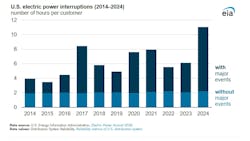
According to data from the U.S. Energy Information Administration, U.S. electricity customers experienced an average of 11 hours without power in 2024, nearly twice the annual average recorded over the previous decade.
Major weather events accounted for approximately 80% of total outage duration. “Major events” contributed nearly nine hours of outages per customer in 2024, compared with an annual average of about four hours between 2014 and 2023. Outages not associated with major events remained relatively stable at about two hours per year.
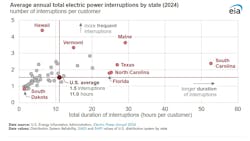
Electric power reliability is measured using the System Average Interruption Duration Index (SAIDI), which tracks the total duration of non-momentary outages per customer per year, and the System Average Interruption Frequency Index (SAIFI), which measures how often interruptions occur.
Several large storms contributed significantly to outage totals in 2024. In July, Hurricane Beryl caused power outages affecting approximately 2.6 million customers in Texas. In September, Hurricane Helene led to outages for about 5.9 million customers across 10 states, including at least 1.2 million customers in South Carolina.
South Carolina recorded the longest average outage duration in 2024, with customers experiencing nearly 53 hours without power on average. By contrast, several states, including Arizona, South Dakota, North Dakota, and Massachusetts, recorded average outage durations of less than two hours.
On a per-customer basis, outage frequency was highest in Hawaii, where customers experienced an average of 4.4 interruptions in 2024. These outages were associated with severe weather, volcanic activity, unplanned outages at oil-fired power plants, and the integration of new generation capacity. In states such as South Dakota, Maryland, Illinois, and Massachusetts, customers experienced fewer than one interruption on average over the year.