How to Prioritize Transformer Monitoring as Data Center Loads Grow
Key Highlights
- Data center growth increases continuous load demands, stressing existing transformers and requiring proactive monitoring strategies.
- Online dissolved-gas analysis (DGA) provides real-time insights into transformer health, enabling early detection of faults and thermal stress.
- Reliability-based DGA improves risk assessment by correlating gas production with failure likelihood, helping prioritize maintenance efforts.
- Combining manual oil sampling with online monitoring offers comprehensive condition data, reducing the risk of unexpected transformer failures.
- Effective interpretation of condition data, considering operational context and asset criticality, supports informed maintenance and operational decisions.
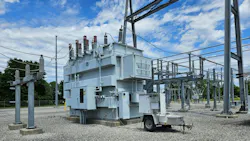
Data center development is placing new demands on the electricity grid, including power transformers. New facilities can add large, continuous loads while utilities manage aging assets, limited capacity margins and long-lead infrastructure projects. Increased power needs are arriving before additional transformer or substation capacity is available, requiring existing assets to carry higher or more continuous loads. Uptime requirements compound the need for reliable power, especially for higher tier data centers as they work toward less than two hours of downtime annually.
Grid planning for data center projects often centers on generation, transmission and interconnection capacity. Power transformers belong in the same conversation early on. Sustained demand keeps transformers loaded for longer periods, and high load density, harmonics and rapid load changes can add thermal stress. The effect depends on transformer design, available capacity, cooling performance and the actual load profile, but the cost of thermal stress is well-known: IEEE C57.91 puts insulation aging at roughly double for every 7-9°C rise in hot-spot temperature above rated levels. As loading becomes more continuous, the odds of reaching those temperatures can increase, and with them the risk of a forced outage.
Conditions can vary by system and site. Some areas have well-specified equipment, adequate capacity and redundancy. Others have fewer operating options while upgrades move through planning, procurement and construction. In those cases, timely transformer condition data is vital to help engineers catch changes in transformer condition early and understand the failure risk as loading increases. This could be the difference between reacting to a failure and prioritizing the work that prevents one.
Start with the transformer’s operating conditions.
Risk is the product of two things: how likely an adverse event is and the impact when the event occurs. This is often expressed mathematically as risk = likelihood × consequence. Data center growth pushes on both. Higher, more continuous loading raises the likelihood of an unplanned outage, and a data center designed around less than two hours of downtime a year raises the consequence well above that of a typical load.
The first question utilities should ask is: Which transformers now sit in a different risk position than they did two years ago? Utilities should start with units serving new or expanded data centers and those expected to carry data center demand during switching or contingencies. Recent load changes, available capacity, cooling performance, dissolved-gas analysis (DGA) history, redundancy and load-transfer options together help determine where continuous monitoring adds value.
Loading history matters as much as loading level. A transformer that historically served a cyclical commercial or industrial load may have spent regular intervals at reduced demand and temperature. A large data center can reduce those intervals by keeping the unit at a higher load for more hours each day.
Close the visibility gaps between oil samples.
DGA has long been considered the primary inspection method to screen energized transformers for internal thermal or electrical activity. Fault gases can indicate activity affecting insulating materials and flag assets that warrant further testing. Laboratory oil analysis and online DGA monitoring are two ways utilities perform that screening; understanding where one leaves gaps the other can fill is central to using both effectively.
Laboratory oil analysis remains important for fleetwide screening. A technician pulls manual oil samples on-site, typically annually or more often depending on the transformer’s criticality or the utility’s policies. Lab analysis provides detailed information about the gases present when a sample is collected, supports established IEEE and IEC interpretation methods and builds the history needed to recognize long-term change. What it cannot do at that sampling frequency is show exactly when gassing began or how quickly it developed.
Online DGA monitoring fills that gap, sampling at intervals of minutes, hours, or days. As loading patterns shift, online DGA monitoring answers questions annual sampling cannot do in a timely way: whether a unit stays stable after a load increase, whether a previously quiet transformer has begun producing fault gases, or whether an existing trend is accelerating.
KAMO Electric Cooperative offers a practical example of how laboratory testing, mobile multi-gas monitoring and permanent single-gas monitoring can be used together. Annual laboratory testing of an 84-MVA transformer showed acetylene increasing from 0 ppm in July 2021 to 1.2 ppm in July 2022. KAMO increased manual sampling and performed a series of electrical tests, which found no abnormalities, even as acetylene continued to rise and reached 19 ppm in January 2023. Subsequent laboratory samples showed the level declining, reaching 9.7 ppm by August 2023.
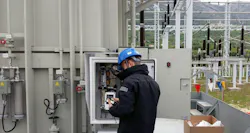
In spring 2024, KAMO installed a mobile online multi-gas monitor to evaluate the transformer through the summer high-load period. Hourly data confirmed that acetylene continued to decline and stabilized at approximately 6.5 ppm despite higher loading. KAMO then installed a permanent hydrogen and moisture monitor to provide an early warning of renewed fault activity and reduced laboratory sampling to twice a year.
The case shows how mobile online monitoring can clarify a trend left unresolved by intermittent, manual samples and help determine the appropriate, cost-effective level of permanent monitoring.
Build a dependable DGA measurement record.
High-quality decisions require high-quality data. For a DGA trend to support engineering decisions, utilities need confidence that observed changes reflect transformer gassing behavior rather than measurement variation.
For online monitoring, the record must be accurate, stable and continuous enough to distinguish meaningful activity from data gaps, drift or inconsistent readings, knowing that no single accuracy specification captures overall monitor performance. Sensitivity and response time affect how quickly a developing change appears in the data, while repeatability and long-term stability determine whether measurements remain consistent months or years after commissioning.
Monitor design also affects long-term data quality. Gas extraction efficiency, sensor selectivity, resistance to contamination, drift management and calibration quality all influence long-term performance. Vaisala’s work in online DGA focuses on controlling uncertainty across the measurement path, including internal reference measurements that account for changes in the sensing system. A monitor must remain dependable under changing field conditions throughout its operating life.
That consistency matters near diagnostic boundaries and alarm thresholds. A small difference in a reported value can impact the apparent fault classification or influence whether a transformer remains under observation, moves to confirmatory sampling or requires further investigation.
Measurement quality also affects interpretation of the trend. An elevated but stable gas concentration may support continued observation, while a lower concentration rising rapidly may warrant earlier review. Data gaps, erratic readings or unnoticed drift can hide that distinction.
When readings change unexpectedly, engineers should first verify instrument status and data continuity. They can then compare the result with loading, temperature, maintenance history and previous laboratory results. A confirmatory oil sample or another diagnostic test may be appropriate before determining the response.
Laboratory and online results will not always match exactly. Sampling, gas extraction, analytical standards and measurement technologies can influence reported concentrations. Engineers should focus on whether the online trend is internally consistent and whether both methods show the same overall direction of change.
Dissolved gases remain indirect indicators of activity inside a transformer. Their significance depends on data quality and the context provided by operating conditions and other diagnostic information. Together, those inputs support alarm setting, validation of unexpected changes and decisions about which trends require further analysis.
Place DGA trends in a reliability context.
High-quality data is only as useful as the interpretation applied to it. Once a utility trusts its DGA measurements, the next question is how to interpret the data correctly and understand which transformers deserve engineering attention first as data center loads push more units toward continuous, high-stress operation.
Conventional DGA methods use gas concentrations, increments or rates of change to assign a status and identify transformers with unusual gas behavior. That can be useful, but gas concentration alone does not always identify the transformer with the greatest near-term concern. One transformer may accumulate a relatively high concentration slowly, with no recent increase. Another may begin gassing quickly after years of little activity. Its total concentration may be lower, but it still deserves attention first.
Reliability-based DGA addresses the likelihood side of the risk equation raised earlier in this article. Developed by Delta-X Research, the method associates fault-gas production with real-world transformer operating and failure histories. Statistical survival analysis is used to derive failure-rate curves and relate active gassing to near-term failure risk.
The method was evaluated using DGA histories from five North American utilities, covering 15,239 operating transformers and 307 in-service failure cases. The study found that when compared to conventional IEC and IEEE severity-assessments, reliability-based DGA performed better overall at ranking near-term transformer failure risk.
A higher-risk ranking doesn't predict a forced outage; it identifies which assets warrant engineering review first, sharpening the likelihood side of the risk equation so utilities can focus limited review capacity and maintenance resources where the evidence is strongest.
Connect condition data to maintenance action.
Condition data becomes useful when it is tied to a defined review process. After validating the measurement, engineers should determine whether recent operating or switching events help explain the change.
The pattern and pace of change should guide the next step. A gradual, consistent increase may support continued observation and a shorter review interval. New or increasing gas activity may justify a confirmatory sample, infrared inspection, cooling-system review, electrical testing or another targeted assessment. Engineers can begin with assets showing the highest near-term failure risk while continuing to observe units without active change. Asset criticality, redundancy, load-transfer options and operational consequences remain part of a broader risk assessment for making good decisions.
When new data center load arrives before additional transformer or substation capacity, utilities need to know the impact on assets. Continuous monitoring does not create capacity or replace infrastructure investment, but it provides trend information that can identify developing changes and focus maintenance resources to meet the uptime requirements these customers specify. For utilities serving fast-growing data center corridors, the objective is to combine manual DGA sampling, online DGA monitoring, and reliability-centric interpretation so engineers can catch meaningful change early, direct testing and maintenance where it matters most, and make more defensible operating decisions while new infrastructure is planned and built.
About the Author
Lee Doyle
Lee Doyle is a Senior Sales Manager for North America at Vaisala. With over 15 years of experience in the energy industry, Lee has been driving Vaisala's continuous success in the DGA and moisture-in-oil markets since 2017. Originally trained as a mechanical engineer in the utility scale, energy storage market, working on CAES and flow battery technologies, he now holds an M.Sc. in Strategic Technology Leadership from Northeastern University.
John Brett
John Brett is President & CEO of Delta-X Research, which specializes in DGA interpretation and decision-support tools for electric utilities and energy-intensive companies. He is a registered Professional Engineer with over 25 years of experience in utility operations and grid modernization, giving him a broad, first-hand understanding of why transformer reliability matters in today's grid environment. Under his leadership, Delta-X Research has strengthened its role as a trusted partner to over half of North America's largest electric utilities.