KEMA Labs Validates Grid Protection Using HIL Testing
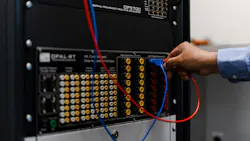
Transmission and distribution systems are evolving at a rapid pace as renewable energy sources, power electronic interfaces, and digital communications become central components of modern infrastructure. While these advancements significantly improve grid flexibility and sustainability, they simultaneously introduce new and complex challenges for network protection.
Converter-dominated networks behave significantly differently from conventional power systems, and fault characteristics may vary significantly depending on real-time operating conditions. Therefore, traditional protection schemes and standard testing approaches are increasingly insufficient to guarantee secure, stable, and reliable grid operations.
Mitigating Risks for Utilities
The variability introduced by these renewable energy sources places immense pressure on protection system performance and coordination . Relay settings that perform well under one specific operating condition may easily lead to miscoordination or unintended trips under another.
To address these challenges, utilities must validate protection systems across a wide range of realistic operating scenarios, including abnormal and dynamic conditions that are difficult, costly, or unsafe to reproduce directly in the field.
Closing the Loop: How HIL Testing Works
Hardware-in-the-Loop testing (HIL) is increasingly recognized as a critical methodology for validating protection relays and protection schemes before commissioning.
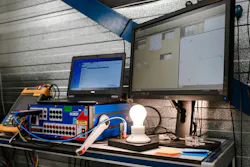
Unlike traditional playback-based testing, HIL testing operates in a true closed-loop configuration. Conventional playback methods inject fixed pre-recorded signals into a device without reacting to its behavior. In contrast, HIL testing dynamically closes the loop between the simulation environment and the physical hardware, enabling real-time interaction between the power system model and the protection equipment.
HIL architecture relies on real-time digital simulators that model the electrical network with high fidelity. KEMA Labs utilizes multiple high-performance real-time simulation platforms capable of executing complex power system models under dynamic grid conditions.
The real-time simulation environment continuously computes power system behavior, including voltages, currents, faults, and network dynamics, while exchanging signals with physical protection devices through analog and digital interfaces, including IEC 61850 communication protocols. This allows protection devices and controllers to operate exactly as they would in real grid environments.
When a protection relay reacts to a simulated disturbance — whether issuing a trip command, blocking a function, or exchanging communication signals — its physical response is immediately fed back into the simulation. This closed-loop interaction captures the mutual influence between the protection system and the electrical network under realistic operating conditions.
System-Level Validation and Pre-Commissioning
This dynamic capability provides essential system-level validation during pre-commissioning. Rather than analyzing isolated relay performance, engineering teams can evaluate system-wide behavior, verify the interoperability of protection relays from multiple different vendors, and assess the direct impact of communication delays or complex logic interactions.
By evaluating protection performance under realistic fault scenarios, engineers can mitigate technical risks, verify relay coordination, and eliminate deployment uncertainties before commissioning.
Independent Validation for Complex Networks
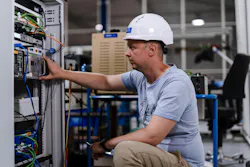
As modern grids continue transitioning toward converter-dominated operation, independent testing laboratories play a critical role in validating protection system performance under realistic conditions.
KEMA Labs applies advanced HIL methodologies aligned with evolving industry practices and standards, including emerging IEEE P2004 guidelines for Hardware-in-the-Loop simulation-based testing of electric power apparatus and controls.
The laboratory infrastructure supports testing of protection relays, controllers, and power system components under realistic and dynamic transmission and distribution scenarios. This includes support for real-time simulation, digital substations, communication-based protection, and advanced interoperability assessment in vendor-neutral environments.
By combining large-scale real-time power system simulation capabilities with practical protection expertise, KEMA Labs helps utilities, manufacturers, and system operators validate modern protection philosophies and improve power system resilience in increasingly complex and converter-rich electrical networks.
About the Author
Renzo Fabian
Renzo Fabian is Flex Power Grid Lab Manager at KEMA Labs (CESI Group).