Implementing Four-Terminal Line Differential Protection: BGE's Innovative Approach on 230kV Lines
Key Highlights
- Replaced legacy DCB protection with a modern four-terminal 87L differential scheme over Ethernet, improving fault detection speed and security.
- Utilized four SEL-411L relays, SEL-ICON multiplexers, and three SEL-2488 GPS clocks to ensure precise current measurement and synchronization.
- Overcame technical challenges through extensive bench testing, stakeholder engagement, and coordination of multiple crews during installation.
- Achieved accurate time synchronization critical for differential protection using redundant GPS clocks and IRIG-B signals.
- Demonstrated BGE's commitment to grid modernization, resilience, and adopting innovative protection technologies for future infrastructure upgrades.
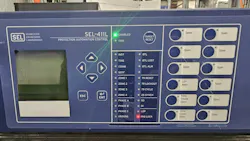
In 2024, Baltimore Gas and Electric (BGE) upgraded a legacy Directional Comparison Blocking (DCB) protection scheme on a 230-kV transmission line to a modern four-terminal line current differential (87L) protection scheme operating over Ethernet. The new system incorporates four SEL-411L protective relays, four SEL-ICON multiplexers and three SEL-2488 GPS clocks.
As BGE’s first deployment of this protection scheme, the project marked a significant step in modernizing the utility’s transmission protection infrastructure. The implementation provides a case study in the transition from legacy Directional Comparison Blocking protection to modern line current differential protection, highlighting the technical considerations, equipment selection process and implementation challenges associated with deploying a four-terminal 87L scheme over Ethernet.
Legacy DCB Scheme Limitations
The legacy DCB scheme was in service for several decades but had certain limitations that made it suboptimal. One of the limitations was related to the heavy reliance on relay communication to block or permit tripping. Relay communication failure compromised the scheme's security and increased the risk of mis-operation.
Another limitation was sacrificed instantaneous fault clearing. The DCB scheme typically cannot achieve instantaneous fault clearing, as it requires coordination of signals between relays to confirm the fault direction and to allow enough time to receive blocking signals from remote relays for external faults.
Additionally, the legacy DCB scheme used both electromechanical and digital relays that have different processing and response times. This introduced the need to build additional time delays into the scheme to minimize the risk of mis-operation. These intentional delays exposed high voltage equipment to fault currents for longer durations, potentially accelerating equipment failures. These limitations highlighted the need for a protection scheme that would provide faster, more secure fault detection and isolation on this 230-kV transmission line.
Evaluation and 4-Terminal 87L Solution
During the scheme replacement evaluation, BGE considered two main options. One was a 3-terminal 87L scheme with a permissive signal originating from the fourth terminal (radial load substation). This solution would have avoided the use of Ethernet, however unintentional time delays to 87L tripping at the three source terminals would have been introduced due to waiting for receipt of the permissive signal from the fourth terminal, which was not ideal. The second option was to employ the 4-terminal 87L over Ethernet solution, which was the decided route due its inherent security, reliability, and tripping speed.
The 4-terminal 87L scheme is composed of the following major equipment:
- Four SEL-411L protective relays
- Four SEL-ICON (Integrated Communications Optical Network) multiplexers
- Three SEL-2488 GPS clocks
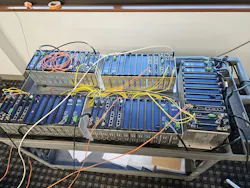
An SEL-411L was installed at each terminal (substation) of the 230kV line to measure the currents into and out of the 87L protected zone. These SEL-411Ls exchange their current magnitudes and angles with the other SEL-411Ls that make up the 87L protected zone. The SEL-411Ls utilize SEL-ICON multiplexers for the data exchange. Each SEL-411L is connected to its respective SEL-ICON via Ethernet Layer 2 over fiber. The SEL-ICONs are connected in a ring configuration via non-routable Synchronous Optical Networking (SONET) protocol over fiber.
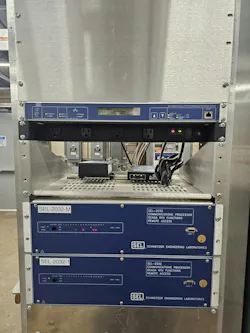
In this scheme, aligning the SEL-411L times to facilitate proper differential current calculation and comparison to pickup setting is critical. This time synchronization was achieved via installation of SEL-2488 GPS clocks at three out of the four substations. For the substations where SEL-2488s were installed, they were connected to their respective SEL-ICONs via IRIG-B to provide synchronized time source for the SEL-ICON network. The SEL-ICON network uses only one of the SEL-2488s as the time source at any given time. Three SEL-2488s were installed for redundancy purposes.
One of the SEL-2488s was designated as the primary GPS clock, another designated as the backup GPS clock, and the third designated as a hot standby in the case the first two were lost. Failure of the primary GPS clock results in the SEL-ICON network automatically switching the time source to the backup GPS clock. The third GPS clock would need to be manually configured into the scheme via SEL-ICON settings change.
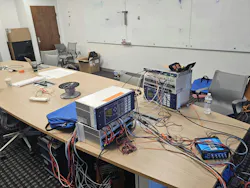
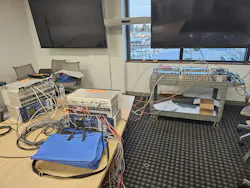
BGE encountered many technical and logistical challenges throughout the design, engineering, construction, testing, and commissioning of this relay upgrade project. With this being the only 4-terminal 87L scheme employed in the industry, there were no opportunities for leveraging experience of other utilities. This required a large amount of collaboration with SEL to ensure all device, design, settings and testing requirements were met.
Bench testing was performed several months prior to the project start in the field, which facilitated proof of concept, verification of accurate settings, and was used as a training opportunity for the engineers and relay technicians. As beneficial as the bench testing was, it required additional time, effort, and equipment to mimic the ultimate application in the field.
Prior to implementation in the field, BGE was also required to push the equipment and application through the Architecture Engagement Form and New Equipment processes, which are intended to ensure that new equipment and applications meet all applicable compliance requirements and have been approved by all stakeholders and internal customers.
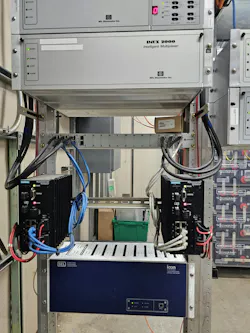
The criticality of an accurate and synchronized time source for the 87L scheme via the SEL-2488 GPS clocks forced BGE to evaluate the inclusion of the clocks in the protection system for adherence to PRC-005 and CIP compliance standards. Prior to this project BGE had never considered the GPS clock to be a critical component of the protection system. The field execution of this project also proved to be a challenge from a resource perspective due to needing a construction and a relay commissioning and test crew at each station simultaneously, resulting in the need for four construction and four relay commissioning and test crews throughout the field execution of the project.
In summary, BGE’s implementation of a 4-terminal 230kV transmission line 87L protection scheme over Ethernet utilizing SEL-411L relays, SEL-ICON multiplexers, and SEL-2488 GPS clocks marks a significant advancement in grid protection. By replacing the legacy DCB scheme, BGE addressed critical limitations related to protection system security, reliability, and response time on the subject 230kV transmission line.
A similar 87L scheme will be applied to another 4-terminal 230kV transmission line on the BGE system. The successful implementation of this scheme demonstrates BGE’s commitment to innovation and its willingness to evaluate and adopt new technology in support of grid resilience and enhancement, ultimately providing benefit to its customers.
About the Author
Timothy Plummer
TIMOTHY PLUMMER is the manager of Innovation and Initiation at Baltimore Gas & Electric in the Automation & Technology Unit. He started his career in the utility industry in 2010 as associate engineer. He eventually climbed the ranks from associate to engineer to general engineer to senior engineer to section engineer and finally to manager. He has worked in the System Analyst and Support group where he analyzed real time faults and studied system conditions. He has also been on the capital project side where he has led teams to engineer and design complex substations. He holds a bachelor of science degree in electrical engineering from the Pennsylvania State University, a master of science degree in electrical engineering from Kansas State University and is a licensed professional engineer in the state of Maryland.