Meeting Utility Challenges with Intelligent High-Speed Private LTE/5G Networks
Key Highlights
- Utilities must rethink their grids to meet rising energy demand
- Renewables and DERs boost generation but add complexity
- Private LTE/5G networks make it easy to connect, monitor and manage distributed assets
- Analytics, automation and private wireless let utilities use real-time data to control the grid
- With private wireless, utilities have a foundation for more reliable and sustainable energy delivery
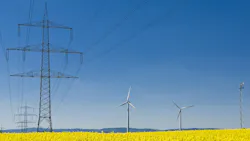

The power utility industry is facing one of the most significant transformations in its history, along with challenges it has never seen before. Demand for electricity is rising rapidly, driven by the growth of data centers, cloud services and digital technologies, and the increasing electrification of transportation and industry. At the same time, customers continue to expect reliable service, affordable rates and uninterrupted access to power. To meet these expectations and accommodate unprecedented load growth, utilities need to rethink the way energy is generated, transmitted, distributed and managed.
A major driver of this change is the rapid expansion of large-scale data centers. These facilities require substantial power capacity, often on accelerated deployment timelines that challenge traditional utility planning processes. Historically, utilities could forecast demand growth years in advance and expand infrastructure accordingly. Today's environment is different. Utilities are increasingly asked to support new loads quickly, often in areas where the grid was not designed to accommodate significant concentrations of power demand.
Meanwhile, the energy landscape is evolving. Utilities need new power sources that can help them meet growing demand and support sustainability goals and emissions reduction targets. Renewable and distributed energy resources (DERs) such as solar generation, wind power and battery energy storage systems are becoming essential components of the modern grid. DERs are major drivers of new annual power generation capacity growth. In 2026, the U.S. Energy Information Administration forecasts that 93% of the 86 gigawatts of new power generation capacity will be from DERs: solar, battery storage and wind. This percentage has been increasing over the past several years.
While these relatively new sources of renewable energy provide tremendous benefits, they also introduce complexity. Traditional electric grids were designed around large, centralized power plants that enabled predictable and controllable generation. Renewable resources are inherently more dynamic. Their fault signatures do not match those of the traditional synchronous power grid, so the traditional grid protection controls are not designed to detect DER faults. And DER output can fluctuate based on weather and environmental conditions. As DER penetration increases, utilities must manage more distributed assets operating across the network.
Successfully integrating these resources requires far more than additional generation capacity and new transmission and distribution lines and circuits. Utilities need the ability to monitor conditions continuously and proactively. This means collecting and analyzing real-time operational data, making predictions, and recommending or taking actions to respond to changing grid conditions in real time to prevent faults and failures.
This shift demands a new generation of intelligent high-speed private networks that can deliver secure, reliable, resilient and low-latency connectivity across the entire utility grid. These networks need to be able to run semi-autonomous and autonomous agents at the edge to detect and predict faults and failures, take action to prevent them and ensure the efficient integration of DERs.
Over the last decade, utilities have steadily advanced their digital transformation efforts. Smart meters, substation automation, advanced distribution management systems and intelligent field devices have improved visibility and operational efficiency while maintaining the industry's strong reliability record. The next phase of grid modernization builds on these foundations by introducing highly capable telecommunication networks that support real-time monitoring, control and automation.
Private LTE/5G networks are critical enablers of this evolution. Unlike public cellular networks, private wireless networks are designed specifically for utility operations. They provide dedicated connectivity, enhanced security, predictable performance and complete operational control over communications that support critical infrastructure.
These capabilities are increasingly important as utilities expand their use of distributed assets. A private wireless network can provide the low-latency communications needed to support real-time visibility and control of solar facilities, battery storage systems, substations and field devices. Operators can monitor system conditions continuously and respond more quickly to changing generation and load patterns.
For example, during periods of high renewable generation, operators may need to coordinate energy storage resources, manage voltage levels and optimize power flows across the grid. During peak demand periods, they may need to strategically dispatch stored energy to maintain grid stability and reduce strain on infrastructure. Achieving these outcomes requires reliable communications that can support fast decision-making and coordinated control across thousands of connected assets.
Modern telecommunications networks also improve many core utility functions. Supervisory Control and Data Acquisition (SCADA) systems depend on secure and reliable communications to transport operational data between field devices and control centers. Distribution automation applications require rapid transfer of information to identify faults, isolate affected sections of the grid and restore service more efficiently. Field crews increasingly rely on mobile applications, remote diagnostics, video capabilities and digital workflows that demand high-performance connectivity across extensive service territories.
Cybersecurity is another key consideration. As utilities become more connected, protecting operational technology and critical infrastructure becomes even more important. Private LTE/5G networks provide greater visibility, stronger security controls and direct oversight of communication pathways. This allows utilities to reduce their reliance on third-party networks while maintaining the levels of resilience and availability that critical infrastructure requires.
Beyond communications, advanced analytics and automation are reshaping grid operations. Utilities now have access to unprecedented volumes of data from sensors, smart meters, weather systems, DERs and operational platforms. Being able to quickly process and act on this information is becoming a significant competitive and operational necessity to improve reliability metrics such as SAIFI, SAIDI and CAIDI.
Increasingly, computing capabilities are being deployed at the edge, closer to where data is created. By processing information at substations, renewable energy sites or other grid-edge locations, utilities can reduce delays associated with transporting data back to centralized systems. This approach enables faster situational awareness and more responsive operational decisions.
Edge computing supports a wide range of applications. Utilities can forecast demand more accurately, identify emerging equipment issues before failures occur, detect abnormal operating conditions and optimize the performance of distributed energy resources. These capabilities help move operations from a reactive model toward a more predictive and proactive approach, providing more reliable and resilient power to customers.
For example, advanced analytics can combine information from grid sensors, weather forecasts, customer demand patterns and distributed resources to anticipate localized congestion or reliability challenges before they affect customers. Operators can then take corrective actions, such as adjusting power flows, dispatching storage resources or reconfiguring portions of the network to maintain service quality and reliability.
As demand for electricity grows and energy systems become more distributed, this combination of advanced communications, edge computing and intelligent automation will play an increasingly important role in utility operations.
The future grid will be far more dynamic than the ones that utilities have managed for decades. It will include millions of connected devices, large numbers of distributed energy assets, and rapidly changing patterns of generation and consumption. Successfully managing this environment requires a digital foundation that can support real-time visibility, control and decision-making.
Private LTE/5G networks provide this foundation. Combined with advanced analytics, edge computing capabilities and increasingly automated operations, private LTE/5G networks enable utilities to operate with greater precision, resilience and efficiency. Together, they help utilities meet rapidly rising power demands, integrate more DERs to meet these demands and deliver the reliable, secure and affordable energy we all depend on every day.
Read this ebook from Omdia and Nokia to find out more about how private LTE/5G networks can help utilities improve visibility and control of assets across the grid.
Dr. Ali Shah
Dr. Ali Shah is the Head of Technology Mission Critical Enterprise, Mobile Infrastructure, North America at Nokia. Ali has 25 years of experience in Mobile Network Strategy & Solutions, Network Planning and Optimization for Mobile Network Operators as well as Utilities in the North America and Europe. He drives the strategy to Private 5G/LTE to solve mission critical enterprise use cases across multiple verticals including Utilities, Transportation, Healthcare, and State & Local Government. Dr Shah has a PhD in Wireless Communications and has 14 Patents and numerous papers/white papers in academia and industry.
Keith Moll
Keith Moll is a Consultant and Project Manager in Burns & McDonnell’s T&D Telecom Group. He has almost four decades of experience leading teams in the research, development, and deployment of new technologies in cellular and wireline products and services that have enabled over $1B of new product and service revenue in the telecommunications industry. He has received numerous awards and holds 16 U.S. patents.
Burns & McDonnell's T&D Telecom Group plans, architects, engineers, designs and builds advanced, intelligent, high-speed private networks for utilities. The group provides end-to-end program and project management and systems integration services, so its utility clients realize the full benefits of a fully operational private network that meets their business and operational needs.