Brazil’s Renewable Capacity Growth Will Increase Grid Expansion Needs
Brazil’s power sector is projected to significantly increase its renewable generation capacity over the next decade, creating additional needs for transmission expansion, grid flexibility and system reliability, according to a new analysis from GlobalData.
The country’s cumulative installed power capacity is expected to grow at a compound annual growth rate of 4.7% from 2025 through 2035, while the share of renewable capacity is forecast to increase from 48% to nearly 62%, GlobalData said. Renewable generation is expected to approach half of Brazil’s total electricity generation during the period.
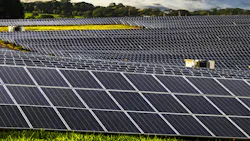
Solar photovoltaic generation is expected to account for much of the near-term growth. GlobalData said solar projects in permitting queues, along with projects under construction and those that have secured financing, will drive capacity additions. Onshore wind also is expected to expand, particularly in Brazil’s Northeast region.
As variable generation grows, however, transmission and distribution infrastructure will face increasing demands. Attaurrahman Ojindaram Saibasan, power analyst at GlobalData, said the expansion of solar generation and distributed solar will increase the need for transmission corridors and grid reinforcement.
“Solar PV is on track to surpass large hydropower as Brazil’s single largest power source in terms of installed capacity by 2035,” Saibasan said.
Brazil’s 2025 Power Sector Reform Law is expected to support the transition by gradually opening the free contracting market to all consumers and establishing a framework for grid-scale energy storage, according to GlobalData.
Natural gas also is expected to play a role in balancing the system. GlobalData said gas-fired capacity under construction will provide flexible generation as Brazil manages hydrological risks during dry periods.
Offshore wind development
Brazil also has a substantial offshore wind development pipeline, although GlobalData expects offshore wind to be a longer-term opportunity than solar.
The pace of offshore wind development will depend on regulatory and infrastructure issues, including auction rules, seabed leasing, environmental licensing and grid access, Saibasan said.
Investment projections reflect the scale of the expected changes. GlobalData forecasts nearly $93 billion in new capital investment in Brazil’s power sector from 2026 through 2030. Solar PV is expected to account for about 58% of that spending, followed by onshore wind and natural gas.
The country’s Low Carbon Hydrogen Framework also could increase demand for renewable electricity by supporting domestic industrial decarbonization and clean-fuel exports, GlobalData said.
GlobalData’s analysis identifies grid expansion, licensing and regulatory certainty for energy storage and offshore wind as factors that will affect Brazil’s ability to accommodate the changing generation mix.
The analysis is based on GlobalData’s Brazil Power Market Trends and Analysis by Capacity, Generation, Transmission, Distribution, Regulations, Key Players and Forecast to 2035 report.