Denmark’s Energy Islands Could Reshape Offshore Wind Integration
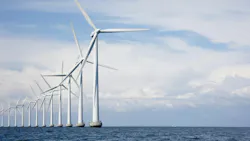
Denmark is planning two artificial energy islands that will serve as hubs for offshore wind generation, electricity transmission and Power-to-X technologies.
The country plans to establish an artificial island in the North Sea with an initial capacity of 3 GW, along with another island-based hub at Bornholm in the Baltic Sea. The hubs are designed to collect electricity from offshore wind turbines and transmit power to Denmark and neighboring countries. Surplus electricity also could be converted into green fuels through Power-to-X technologies.
According to GlobalData, Denmark’s electricity generation is projected to increase from about 33.6 TWh in 2025 to approximately 43.3 TWh by 2035. The growth is expected to be driven primarily by wind power, solar PV and biopower.
Renewable technologies are projected to account for nearly 98% of electricity generation by 2035, while thermal generation is expected to increasingly serve as backup.
More than 8.7 GW of offshore wind projects are currently in the permitting and announced stages, out of a total pipeline exceeding 17.6 GW, according to Attaurrahman Ojindaram Saibasan, power analyst at GlobalData.
Some of the projects are being designed as artificial energy islands that can collect, convert and redistribute offshore-generated electricity while connecting with storage, electrolyzers and other islands.
The developments are part of Denmark’s efforts to increase its reliance on renewable energy, with the country targeting more than 55% of gross final energy consumption from renewables by 2030 and full renewable electricity supply shortly thereafter, according to GlobalData.
Renewables accounted for more than 76% of Denmark’s installed capacity in 2025 and are projected to reach nearly 87% by 2035. The growing share of variable generation will increase the need for flexibility across the power system.
Gas-fired generation, biopower, battery storage, thermal storage and demand response are expected to help balance the system as coal generation is phased out by 2028.
“System reliability will increasingly rely on balancing tools that can handle intermittent supply, particularly from offshore wind, where weather and ocean dynamics introduce unique variability,” Saibasan said.
Grid upgrades will also be needed, particularly transmission infrastructure connecting the energy islands to the mainland and additional local grid capacity to accommodate distributed renewable generation, electric vehicles and heating loads, he said.
Electricity trading with Norway, Sweden and Germany is expected to increase as the artificial islands provide opportunities to consolidate offshore generation, produce green hydrogen and export surplus electricity.
Denmark’s existing interconnections with neighboring countries already connect it to the Nordic and European electricity markets. The energy islands could further support electricity exports while reducing reliance on imports.
Denmark is expected to invest about $9.7 billion in offshore wind between 2026 and 2030, with nearly one-third of that investment projected to be deployed during the period, according to GlobalData. Solar PV is expected to account for the remainder of the estimated investment.
However, artificial energy islands also present technical, regulatory and environmental challenges, including higher upfront costs and long development timelines.
Other challenges include marine spatial planning, securing grid connection rights, constructing subsea cables, addressing local environmental concerns and managing supply chain and labor constraints associated with large-scale offshore infrastructure.