DOE Issues Basin Electric Presidential Permit to Expand U.S.-Canada Transmission Infrastructure
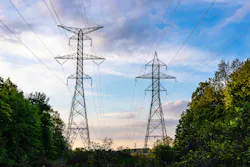
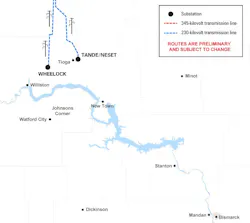
The U.S. Department of Energy’s (DOE) Office of Electricity recently issued a Presidential Permit to expand new Basin Electric Power Cooperative electric transmission lines from existing substations in North Dakota to the Canadian border.
DOE announced authorization this month for the North Dakota utility company to construct, operate, and maintain the two new 230‑kilovolt (KV) lines as part of the U.S.-Canada joint effort to add up to 650 megawatts (MW) of transfer capability between the countries. This Tande-Wheelock Transmission Project is part of a broader North America scope to strengthen grid reliability while also supporting an efficient cross‑border electricity system.
“By enabling up to 650 megawatts of new cross‑border transmission capability, we are supporting a more affordable and reliable grid, expanding opportunities for U.S. electricity exports, and reinforcing America’s position as a global leader in energy production,” Assistant Secretary Katie Jereza of the Office of Electricity said in a statement.
DOE adds that it took steps to shorten the permit review process and timelines amid President Donald Trump’s executive order that focused on reducing regulatory burdens to accelerate the development of critical infrastructure needed to meet electrification demand.
Since the 1980s, Basin Electric has been strategically involved in cross-border logistics, operating its first international transmission facility, the Tioga-Saskatchewan 230-kV intertie. The utility company later expanded its cross-border marketing in 2009 by applying to export surplus energy to NorthPoint Energy Solutions, a subsidiary of SaskPower, to modernize energy sales between Western Canada and the nine U.S. states Basin Electric serves (North Dakota, South Dakota, Nebraska, Colorado, Iowa, Minnesota, Montana, New Mexico, and Wyoming).
This latest U.S. activity toward further grid sustainability comes as the North American Reliability Corporation (NERC) issued a Level 3 Essential Action Alert amid grid challenges from a surge in AI and data center demand on utility bulk power systems (BPS). NERC, a not-for-profit international regulatory authority, forecasts peak demand to rise 24% from new data center loads in its latest report.
Registered utility entities have an August 3 deadline to submit action plan responses under NERC's highest advisory tier. Transmission planners and operators are among the core groups urgently informed to act.
The U.S. and Canada grid modernization efforts target NERC compliance by stabilizing unexpected voltage fluctuations triggered by large-scale computational load growth.
About the Author
 Eric Moody