States Get New Framework for Planning Around Large Load Growth
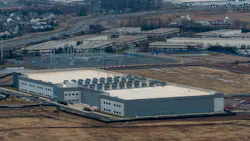
The National Council on Electricity Policy (NCEP) has released a framework to help state agencies coordinate planning for major new electricity users, including data centers and advanced manufacturing facilities. NCEP is an initiative facilitated by the NARUC Center for Partnerships & Innovation.
The framework offers guidance for state leaders and energy decision-makers responding to rising electricity demand while balancing reliability, affordability and economic growth.
“As electricity demand grows, states have an opportunity to plan ahead in ways that protect consumers while supporting economic development,” said Joseph Pereira, consumer advocate and director at the Colorado Office of the Utility Consumer Advocate and NCEP executive committee member. “This framework encourages agencies to work together early, use shared data and carefully consider how costs and benefits are distributed.”
The framework identifies three priorities for states managing load growth:
- Coordination among state agencies.
- Shared data and analysis to support decision-making.
- Evaluation of economic costs, benefits and risks.
It also outlines six approaches states can consider:
- Early coordination among agencies.
- Centralized information-sharing tools.
- State-level electricity demand forecasting.
- Policies for connecting large new customers to the grid.
- Rate structures designed for large electricity users.
- Shared state-level economic development objectives.
The publication also includes additional resources to help states evaluate and respond to increasing electricity demand.
“NCEP is uniquely positioned to bring together the state agencies responsible for energy policy, utility regulation, economic development and environmental stewardship,” said NCEP Director Deborah Reynolds. “This framework provides practical strategies states can use to coordinate planning for growing electricity demand while balancing reliability, affordability and economic opportunity.”
The framework is intended to help states improve transparency, align infrastructure planning with future demand and consider the impacts of large new electricity users. Because state policies and regulatory structures vary, the framework is designed to be adapted to individual state needs.