Report: Grid Planning Gaps Reveal Bottlenecks That Transmission Planners Must Address
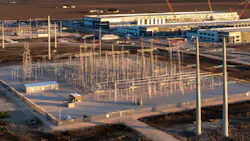
Present-day large loads and other AI facilities are outpacing existing transmission planning processes, failing to keep pace with evolving generation requirements, according to a report released by The Energy Systems Integration Group (ESIG).
The July report from ESIG's Large Load Task Force, which focuses on current practices and recommendations, highlights that the structural reasons for these transmission planning gaps are that most existing grid frameworks were designed for slower and more dispersed demand growth. ESIG identifies three structural reasons as to why current planning processes struggle to adapt.
One reason is that “planning functions are siloed by jurisdiction, time horizon and study method.” ESIG claims that many organizations are deeply split into isolated groups, essentially disconnected by these boundaries, which hinder transmission planning queues.
“Every large load interconnection request that comes in today gets evaluated through a siloed planning process built for a world of slower, steadier load growth,” said James Okullo, ESIG director of system planning, in a statement.
Secondly, ESIG adds that “there is a fundamental timing mismatch between how fast large loads want to connect and how long transmission takes to plan and build.” Many large-scale customers such as hyperscalers are ready to interconnect new projects on the grid years before most transmission infrastructure is modernized.
Expected timelines of months to a few years for large load requests are, in fact, very optimistic, exceeding 5-to-10 years for most transmission planning, permitting and construction processes. ESIG explains that a single interconnection request for AI data center facilities can reach gigawatt scale, triggering a regional-scale transmission and infrastructure need for these proposed projects, with major uncertainties.
The third reason ESIG lists for planning processes struggling to keep pace is that “planners face a radically different level of demand uncertainty that current planning methods were not designed to handle.” Traditional math models and forecasting tools are reportedly too volatile and unpredictable for the current energy trajectory power grid planners are trying to predict and prepare for.
“Most of the U.S. transmission investment is still driven by planning processes built to solve one transmission need at a time, rather than identify solutions that can better address the multiple near- and long-term needs we face to deliver the most value across the system,” said Johannes P. Pfeifenberger, a lead author of the report and a principal of the electricity wholesale markets & planning team at The Brattle Group. “Large loads are exposing how costly that siloed approach can become when the problem in front of you is only one piece of a much bigger picture.”
To mitigate this gap while bringing more group resources together, many energy management solution companies are incorporating AI-enabled real-time software to track these evolving metrics. By analyzing this data during peak demand and downtime, these advanced forecasting tools allow planners to better navigate long-term transmission planning.
Lead author Warren Lasher of Lasher Energy Consulting states there are innovative and practical steps that "can be done now.” These solutions include real-time tracking software and targeted studies that identify where the grid can absorb new loads.
By implementing these solutions, planners can manage the rising influx of large-load interconnection requests without requiring new legislation or redesigning the entire planning process.
“Planners don’t need to wait for perfect long-term forecasts to make better near-term decisions,” Lasher added.
About the Author
 Eric Moody