Before Heading to the Field: A Lineworker Safety Checklist

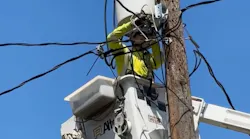
As we quickly approach Thanksgiving Day, hopefully with family and friends, we want to welcome this opportunity with greater awareness of basic practices that enhance and ensure personal safety among electrical workers, especially lineworkers.
Lineworkers are widely considered “essential” to the general well-being, safety, and comfort derived from our lifestyle. Therefore, it is paramount that these “essential” workers be well-trained and follow best safety practices to safeguard their own safety, that of their co-workers and the public. All workers should and must return home from work with their “10 fingers and 10 toes."
Reviewing OSHA Standards
Michael Rubin, an OSHA defense attorney, summarized 10 important OSHA standards that highlight and mandate specific training requirements (for pre-shift or pre-use equipment inspections) that a worker is supposed to meet before that worker goes or is sent to the field to commence work:
- Respirators- 1910.134(h)(3)(ii) - Checking of functions, tight wear, conditions and required parts.
- Rigging Equipment used for Material Handling- 1926.251(a)(6) - Competent person to inspect sling, fastenings, attachments and any damage.
- Torches- 1926.350(g)(2)- Checking for leaking shutoff valves and accessories.
- Scaffolds- 1926.451(f)(3) - Competent person to inspect for visible defects.
- Personal Fall Arrest Systems- 1926.502(d)(21) - Inspection of any wear and tear, parts defect, deterioration and proper functioning.
- Construction Vehicles - 1926.601(b)(14)- Check/inspection of specific parts/equipment and accessories for safe operating conditions, free of apparent damage that could cause failure while being used.
- Erected Shoring Equipment - 1926.703(b)(3) - Checking immediately before, during and after concrete placement.
- Ladders - 1926.1053(b)(15) - Competent person to inspect for visible defects.
- Cranes - 1926.1412(d)(1)(i) - (d) (1)(xiv)- Competent person to inspect visually before each shift.
- Wire Rope - 1926.1413(a) - Competent person to inspect before each shift.
Following Best Practices
In addition to these pre-shift or pre-use inspections, the following “best practices” are recommended:
- Wear a facial mask to prevent COVID-19 or other infections.
- Clean face shields before and after any use.
- Perform truck checks (Daily Vehicle Inspection Reports), especially for emergency equipment and devices.
- Keep the Auto External Defibrillator (AED) device in good working condition. Ensure the battery pack and pads are not expired.
- Check the first aid kit to make sure it has everything you need.
- Keep at least one water gel/burn blanket canister kit.
- Store and wear Chainsaw Safety Chaps as instructed.
- Check, test and examine all Personal Protective Equipment (PPE) as needed.
- Check all fire extinguishers and place them in accessible locations.
- Practice proper housekeeping and keep work areas clean.
- Inspect all hoisting devices before use.
- Secure all material and cargo in the truck accordingly.
- Carry road warning signs as needed for proper traffic control.
Don’t become an injury statistic. Make sure you are properly trained and that all your working equipment/devices and the truck are all functioning properly before heading out to the field. Be careful and keep your eyes open. Your family deserves no less.
About the Author
Luis Ortega
Luis Ortega, CUSP, is a freelance writer on occupational safety, health and the environment. He works as the Safety Director for IBEW LU 3 (NYC) and worked for five years as a Safety Specialist at Northline Utilities LLC in New York State. He is proficient in OSHA, NESC and other safety-related entities. He retired from Consolidated Edison Company of New York City after a 30-year career. He holds an Electrical Engineering Technical Certificate from Power Technologies, Inc., and a Bachelor of Civil Engineering from CCNY. For more information, please contact Luis at [email protected].