BW ESS Begins Work on 1 GW Battery Energy Storage System

BW ESS, a global energy storage owner-operator, is building one of Europe’s largest battery energy storage projects to date to provide capacity to supply millions of German households with sustainable electricity.
On July 1, BW ESS officially broke ground on the Klostermansfeld battery energy storage system (BESS), which will supply 1,000 MW (up to 5,700MWh) of capacity—enough to sustain three million households for at least four hours, according to a release. The BESS project, located in the Mansfeld-Südharz region, Saxony-Anhalt, is reportedly in close proximity to the Klostermansfeld substation.
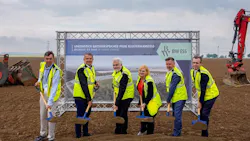
Earlier this year, BW ESS acquired 100% ownership rights of the Klostermansfeld BESS from Berlin-based developer Zelos Energy Developments after initially investing in the project in 2024. Zelos will reportedly continue to provide support on local site matters until the project is further into construction by the end of 2026.
Currently, BW ESS has more than 540MWh of operating BESS generation across the U.K., Australia, Italy, Germany, Spain and Sweden.
The company plans to add 11 GWh under construction alongside a multi-gigawatt development pipeline. It’s part of a long-term vision for the BW Group, which is actively expanding its global footprint in renewable energy and maritime infrastructure.
“We’ve made a long-term commitment to help realize the potential of energy storage in Germany and Klostermansfeld BESS will be our first German asset to enter construction,” said Executive Director Roberto Jiménez of BW ESS in a statement. “We will continue to take an active approach to knowledge transfer across our portfolio, leveraging our extensive experience from the mature global markets.”
BW ESS explains that the nearby Klostermansfeld substation, functioning as one of the few central nodes on the German energy grid, has recently been expanded to draw more power from the distribution grid and transmit electricity across Germany via high-voltage power lines. This BESS project aims to strengthen the region’s structural infrastructure and bolster the grid’s ability to cope effectively with peak load periods.
As Prof. Dr. Armin Willingmann, minister for Science, Energy, Climate Protection and the Environment of Saxony-Anhalt, notes, increasing volumes of renewable electricity can be absorbed by the large-scale BESS and then transported further via the grid more sustainably.
"Saxony-Anhalt is one of the pioneers in the energy transition, especially in the expansion of renewables. It is therefore important for our state to have grid-serving battery energy storage systems that help stabilize our power grids,” Dr. Willingmann added. “The Klostermansfeld battery energy storage system will be an important building block in this.”
About the Author
 Eric Moody