U.S. Energy Storage Market Hits Record 18.9 GW in 2025, Driving Future Growth
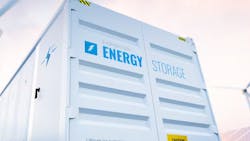
The U.S. energy storage market reached a record level of installations in 2025, driven by growth across utility-scale, residential and commercial segments, according to a new report from the American Clean Power Association and Wood Mackenzie.
The report found that 18.9 GW of battery energy storage systems were installed during the year, a 52% increase over 2024 totals. The fourth quarter alone set a new quarterly record, with 5.8 GW installed.
Utility-scale projects accounted for the majority of additions, totaling 4.9 GW in the fourth quarter, up 31% year over year. Installations were recorded across 13 states, signaling broader geographic expansion beyond traditional strongholds such as California and Texas.
Residential energy storage also reached new milestones. Installations totaled more than 800 MW in 2025, a 75% increase from the previous year, with 1 GWh deployed in the fourth quarter alone. Growth was largely attributed to expiring tax incentives, which accelerated customer adoption. California led the market, followed by Puerto Rico, Texas, Arizona and Illinois.
The community, commercial and industrial segment also posted gains, with 77 MW installed in the fourth quarter, supported in part by state-level policy incentives.
Looking ahead, the report projects continued expansion. Total U.S. installations across all segments are expected to surpass 28 GW by 2031. Between 2026 and 2031, the market is forecast to add half a terawatt-hour of storage capacity, representing a 250% increase over the previous five-year period.
Utility-scale deployments are expected to drive much of that growth, with annual additions projected to double between 2025 and 2030. A previously anticipated slowdown in the near term is no longer expected, as a large number of projects began construction in 2025 to qualify for federal Investment Tax Credit requirements.
Residential growth, which increased in part due to the expiration of the Section 25D tax credit, is expected to decline slightly in 2026. Meanwhile, commercial and industrial installations are projected to grow by 39% between 2025 and 2030, supported by declining system costs and policy support.
Despite the strong outlook, the report notes that future deployment levels remain sensitive to policy and market conditions. Wood Mackenzie’s analysis indicates that as much as 52 GW of potential capacity could be affected by regulatory uncertainty and varying demand growth scenarios. High- and low-case projections for 2031 differ based on factors including federal permitting, trade policy and access to tax incentives.
Additional findings show that more than 50 GW, or 144 GWh, of cumulative energy storage capacity has been installed in the United States since 2019. Over that period, annual installations have grown at an average rate of 107% on a megawatt-hour basis. The report also notes that utility-scale battery system prices increased 23% year over year in 2025.