Beyond the Lowest Cost: Why Grid Economics Requires a Broader Calculus
Key Highlights
- Renewable energy remains the lowest-cost option for new power generation, but system value depends on location, infrastructure, and reliability factors.
- Lazard emphasizes the need to consider project-specific risks, permitting, interconnection, and capacity accreditation when evaluating energy investments.
- Storage solutions like batteries face increasing costs and regulatory challenges, especially related to safety, supply chains, and foreign entity restrictions.
Lazard’s newly released 2026 Levelized Cost of Energy+ report arrives at a pivotal moment for the power industry. Electricity demand is accelerating, costs are rising across generation technologies, and utilities are under increasing pressure to add dependable capacity quickly. Lazard concludes that renewable energy remains the lowest-cost form of new-build generation on an unsubsidized Levelized Cost of Energy (LCOE) basis, while emphasizing that meeting unprecedented demand will require a diverse resource portfolio and faster permitting and approvals.
That conclusion is important—but it is not the end of the investment decision. LCOE and Levelized Cost of Storage (LCOS) provide useful standardized comparisons. They estimate the lifetime cost of producing or storing a megawatt-hour under defined assumptions. But the grid does not purchase average megawatt-hours in a vacuum. Electricity must be delivered at a particular location, during specific hours, through infrastructure that may already be congested, delayed or prohibitively expensive to expand.
Lazard’s own analysis acknowledges this broader system context by separately examining the cost of firming intermittent generation and the economics of storage. Even so, no generalized LCOE or LCOS calculation can fully account for every project’s interconnection requirement, development schedule, capacity accreditation, infrastructure needs, regulatory exposure and site-specific risks.
Lazard’s data illustrate why the lowest standalone LCOE does not necessarily identify the resource with the greatest system value. Its 2026 analysis places unsubsidized utility-scale solar at $40–$98/MWh and onshore wind at $37–$99/MWh, compared with $51–$129/MWh for combined-cycle gas and $144–$276/MWh for gas peaking. When Lazard applies regional capacity-accreditation and resource-adequacy methodologies, however, illustrative firming costs add between $8 and $33/MWh to selected renewable and renewable-plus-storage configurations. Even after firming, many remain competitive, but the comparison confirms that dependable capacity, not merely average production cost, is increasingly important.
The storage results reinforce the same point. Lazard estimates an unsubsidized LCOS of $210–$292/MWh for a 100 MW, four-hour standalone battery system, or $148–$209/MWh with the assumed federal ITC. That unsubsidized range increased from $115–$254/MWh in 2025, reversing the prior year’s decline. Lazard attributes the increase partly to tariffs restricting access to lower-cost Chinese lithium-ion cells and to FEOC-driven supply-chain diversification. It also expressly excludes congestion, interconnection, permitting, safety hazards, end-of-life disposal and other externalities, precisely the project-specific considerations that a broader GridValue analysis is intended to capture. (GridValue is a broader framework for evaluating an energy resource according to the dependable, location-specific value it provides to the grid including dispatchability, distributed deployment, capacity contribution, interconnection, infrastructure reuse, safety, resilience, supply-chain exposure and bankability, not simply its levelized cost.)
This is where the broader calculus begins. For investors, the relevant questions include how quickly a project can generate revenue, what dependable-capacity value it can earn, whether tax credits will remain available, and how exposed it is to construction delays or equipment restrictions. For developers, land availability, permitting, interconnection timing, transformer procurement and access to existing substations may matter as much as round-trip efficiency (RTE) and other thermodynamic metrics. For regulators, legislators and ratepayers, the analysis must also include public safety, resilience, domestic supply chains, cybersecurity and the cost of managing technology-related failures.
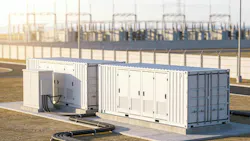
BESS remains an essential grid resource, but it is facing a growing combination of safety, insurance, financing, and regulatory headwinds. Lithium-ion systems carry recognized thermal-runaway risks that can lead to fires, explosions, toxic emissions, emergency-response costs, permitting delays, and community opposition. Even with improved codes, monitoring, and modular designs, insurers, lenders, and project investors may view these exposures as material to premiums, coverage limits, debt terms, reserves, and overall bankability.
Foreign Entity of Concern (FEOC) compliance adds another layer of uncertainty. Treasury and IRS rules require developers to document whether storage equipment and components involve prohibited foreign entities. The potential for tax-credit denial or recapture can add financial risk for developers and investors, while scrutiny of foreign-sourced inverters and other connected equipment could affect procurement, replacement and long-term asset value.That risk became more tangible in July 2026, when the Federal Communications Commission added foreign-produced power inverters to its Covered List based on national-security and cybersecurity concerns. The action restricts new equipment authorizations for affected foreign-produced models, including inverters used with solar generation, battery storage and other grid-connected energy systems. Although existing installations and certain approved or conditionally authorized equipment may be treated differently, the decision could constrain procurement choices, increase domestic-content and compliance costs, complicate warranties and replacements, and accelerate technological obsolescence. The decision illustrates how equipment eligibility, cybersecurity, supply-chain resilience and long-term serviceability can affect a project's value alongside efficiency and levelized cost.These headwinds do not invalidate BESS. They demonstrate why LCOE and LCOS alone cannot determine which resource offers the greatest value. A technology with a somewhat higher standalone cost may produce greater system value when it is distributed, dispatchable, located near demand, able to reuse brownfield infrastructure, or less exposed to safety, supply-chain and equipment risks.The central question is therefore no longer simply, “What does a megawatt-hour cost?” It is: Where and when will the power be delivered, how soon can the project operate, what risks accompany it, and what existing infrastructure can be converted into a productive grid asset? That is the difference between calculating levelized cost and understanding true grid value.
About the Author
Phil Cruver
Phil Cruver is a Co-founder and CEO of Geo2Watts. Previously, he was the Founder and CEO of Catalina Sea Ranch, the first aquaculture facility in U.S. Federal waters developed six miles offshore California. Phil was also the founder of five additional start-up companies and recently served as Principal Investigator for over $1.2 millions of Federally funded R&D projects. He is also a wind energy pioneer who founded International Dynergy, a publicly traded company that installed 500 wind turbine generators in Palm Springs, California.