DNV: Cooling to Account for 13% of Global Electricity Demand by 2035
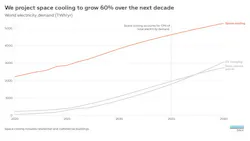
Cooling is projected to account for 13% of global electricity demand by 2035 as rising incomes, expanding floor space and higher temperatures drive increased use of air conditioning, according to a new analysis from DNV’s Energy Transition Outlook program. Published ahead of COP31, the findings examine the challenge of expanding access to cooling while reducing emissions from electricity generation.
DNV’s analysis, Burning to cool: COP31 has a cooling challenge, forecasts that electricity demand for cooling will increase by more than 60% over the next decade. By 2035, cooling is expected to consume twice as much electricity as electric vehicle charging or artificial intelligence data centers.
Cooling is also expected to feature in discussions at COP31, including the Third Annual Cooling Ministerial on Nov. 16. The Global Cooling Pledge, launched at COP28 in 2023, calls for cooling-related emissions to decline by at least 68% from 2022 levels by 2050 while expanding access to sustainable cooling.
DNV’s research forecasts that CO₂ emissions from electricity used for space cooling will decline by approximately 40% from 2022 levels toward mid-century. The emissions figures have different boundaries, as the Global Cooling Pledge also includes hydrofluorocarbons (HFCs). DNV’s forecast indicates that growth in cooling demand could offset some of the emissions reductions achieved through electricity grid decarbonization.
Cooling Demand to Grow Fastest in Emerging Economies
Global electricity demand for cooling, currently approximately 2,800 TWh, is forecast to increase by 80% by 2040, compared with 55% growth over the previous 15 years.
The largest increases are expected in emerging economies. Cooling demand is projected to triple in the Indian Subcontinent and quadruple in South East Asia over the next 15 years. In North America, demand is forecast to increase by just over 5%, with data center cooling accounting for much of the additional electricity load.
The analysis also identifies differing emissions trends across regions. In North America, limited demand growth and electricity decarbonization are expected to reduce cooling-related emissions. In South East Asia, expanding access to air conditioning is initially projected to increase emissions despite a shift toward a cleaner electricity mix. Emissions are then expected to decline as power generation continues to decarbonize.
Efficiency Remains a Key Factor
DNV’s analysis identifies rising incomes as the largest driver of additional cooling-energy demand between 2025 and 2040. Improvements in cooling equipment and controls are expected to offset only a small portion of the increase.
The Global Cooling Pledge includes a target to increase the global average efficiency of new air conditioners by 50% by 2030, compared with a 2022 installed baseline.
According to DNV’s analysis, translating these ambitions into equipment standards and improving access to efficient cooling will be important, particularly in countries experiencing the fastest growth in cooling demand.