Why DERMS Is Earning a Place Alongside SCADA
Key Highlights
- Distributed energy resources are reshaping feeder management, requiring real-time coordination beyond traditional systems.
- DERMS extends existing management platforms like ADMS, providing a unified operational picture that integrates customer-side assets and grid conditions.
- Changing generation mix and load growth increase reliance on distributed resources for grid stability, making DERMS essential infrastructure.
- Smart meters and advanced sensors at the grid edge enable proactive management of voltage and thermal issues, improving reliability.
- Organizational alignment between grid operations and customer programs is crucial for maximizing DERMS benefits and achieving operational efficiency.
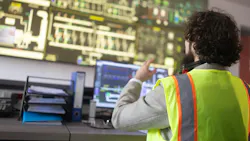
For energy distribution system operators, the past decade has quietly rewritten the rules of feeder management. Power flowing in the wrong direction on circuits designed for one-way delivery.
Voltage swings triggered not by fault conditions but by rooftop solar ramping up at midday. Hosting capacity studies that were accurate at the time of approval but effectively obsolete six months later.
None of these are hypothetical scenarios. They are day-to-day operational realities for utilities managing high concentrations of distributed energy resources (DERs) today. And the operational technology stack that has anchored distribution grid management for three decades—Supervisory Control and Data Acquisition (SCADA), Energy Management Systems (EMS) and, increasingly, Advanced Distribution Management Systems (ADMS), were not built to handle them at scale.
Therein lies the case for Distributed Energy Resource Management Systems (DERMS). Not the business case, but the operational case. And in 2026, that case has become strong enough that DERMS is moving from the innovation budget into the capital plan alongside ADMS expansions, substation automation upgrades and advanced metering infrastructure (AMI) deployments.
Three Pressures Redefining the Distribution Control Center
Pressure #1: The generation mix is changing faster than the grid was built to absorb
IIR Energy’s tracking data reports that approximately 78 GW from coal-fired generation is slated for retirement over the next two decades. The transmission-level implications get most of the attention, but the distribution-level consequences are just as significant.
As dispatchable baseload plants retire, the flexibility that distribution operators have long relied on—calling on upstream generation to stabilize circuits when conditions tighten—becomes less available.
What replaces it is a fragmented portfolio of distributed assets: utility-scale batteries with dispatch limitations, customer-owned storage with variable participation rates, solar PV with the unpredictable output profile every grid operator knows well, and EV load that is increasingly bidirectional but hard to forecast. What’s more, U.S. electricity demand is projected to grow by 200 GW by 2030.
That load growth, layered onto a retirement curve of dispatchable generation, creates a straightforward problem: the flexibility needed to manage evening peaks must increasingly be assembled from distributed resources scattered across the distribution system. Doing that without a real-time coordination platform means relying on operator judgment and manual processes at the speed of a problem that moves in seconds.
That gap is what is pushing utilities to treat DERMS as infrastructure rather than innovation.
Pressure #2: Traditional reliability planning tools weren't designed for a dynamic grid
Grid planning tools, including load flow models, fault current calculations and hosting capacity assessments, are built around a relatively stable picture of what is connected to a given circuit and how it behaves. DER-heavy feeders don't fit that assumption.
Voltage conditions on circuits with high solar penetration can shift significantly within minutes. Hosting capacity that appeared adequate when a solar project was approved may be effectively used once actual operating patterns emerge over subsequent months.
Extreme weather events have added another layer of urgency. It is no longer enough for utilities to respond to reliability problems after they develop. The distribution system needs the ability to anticipate stress and pre-position flexible resources before conditions deteriorate—not after the outage has started.
DERMS platforms designed for distribution-level operations address this gap directly. By pulling together data from smart endpoints, DER monitoring systems and distributed assets into a unified operating picture, DERMS gives operators real-time situational awareness that static planning tools simply cannot provide.
Utilities already using this approach have enabled remote load management and real-time voltage monitoring from the distribution control center—capabilities that genuinely change what proactive outage prevention looks like on the ground.
Pressure #3: Customer-sited equipment is now a grid operations variable, not just a program management concern
Updated interconnection standards have changed the technical relationship between customer-owned equipment and distribution system operators. The inverters behind rooftop solar installations, home batteries and EV chargers are now capable of actively supporting the grid— responding to voltage conditions, adjusting output, and in some cases, receiving direct dispatch instructions from the utility.
These are no longer passive loads. They are grid assets with real impacts on feeder behavior. This is where a structural gap at most utilities becomes an operational liability.
Distribution operations teams and customer program teams have historically worked in separate systems, with separate priorities, reporting into separate parts of the organization. Grid operators focus on circuit reliability while demand response teams focus on customer enrollment and program performance.
When DERs are scattered across the distribution system and capable of affecting grid conditions, that separation creates blind spots on both sides. DERMS platforms that bridge these two views—giving grid operators visibility into customer-side flexibility while letting program managers see real-time grid conditions—close that gap in a way that neither system can manage independently.
SCADA to ADMS to DERMS: A Familiar Progression
The comparison to SCADA is useful, not because it flatters DERMS, but because the structural parallel is accurate. When SCADA emerged, utilities justified it on operational efficiency grounds—remote switching and substation monitoring instead of truck rolls.
Over time, as grid complexity grew, it became something more fundamental: the visibility layer that no competent distribution operator would consider running a system without. It moved from the productivity toolbox to the list of things that simply must work.
ADMS followed the same arc. What began as an integration of several existing management systems matured into the system of record for distribution grid topology, switching operations and outage response. Its value is not in any single function—it is in maintaining a coherent, current operational picture of the distribution system at all times.
DERMS is on the same trajectory. Critically, it doesn’t replace ADMS; it extends it, sharing data and workflows rather than operating as a standalone silo. A DERMS that manages DER dispatch without connecting to the broader distribution operational picture simply replicates the coordination problem it was meant to solve.
What has shifted in 2026 is the standard utilities are holding DERMS to. After years of pilots and proof-of-concept deployments, utilities are now writing procurement specifications that look a lot like the standards applied to SCADA infrastructure: round-the-clock reliability requirements, defined response time expectations, failover and redundancy provisions.
The question has shifted from "can this work in a demonstration?" to "can this perform consistently as a production system under real operating conditions?"
Smart Meters as a Grid Operations Tool
One piece of the DERMS equation that is frequently underweighted in these conversations is the AMI layer that is already deployed across tens of millions of endpoints nationwide. Modern smart endpoints are not simply billing devices with a communication module attached, but networked field devices capable of supporting load control, providing frequent voltage and current readings at the customer connection point, and surfacing early warning signals for developing grid issues.
For distribution operators, this means DERMS platforms built to take advantage of AMI data have access to a real-time sensing and control layer across the distribution system that legacy SCADA point placements at substations and major feeder nodes could never replicate at the same resolution. Voltage problems developing on a secondary network, thermal loading building toward an overload, early signatures of equipment stress—these are now observable and actionable at the grid edge, not just at the substation.
When smart meter data feeds into DERMS operational logic, demand flexibility becomes a feeder management capability, not just a customer engagement program. A distribution operator can dispatch controllable loads on a specific section of circuit to relieve an emerging overload condition.
A program manager can see exactly how much flexibility is available from enrolled customers at any given moment. Both happen within the same operational workflow—and the value each function generates is greater than either could produce working from a separate system.
The Organizational Challenge Is as Real as the Technical One
No discussion of DERMS readiness is complete without acknowledging the organizational problem. Grid operations and customer programs are separated at most utilities by long-standing structural divisions with different systems, reporting chains and performance metrics.
Grid operations teams run reliability through SCADA and ADMS workflows. Demand response and DER program teams manage customer participation through separate platforms entirely.
DERMS delivers its full value when it connects those two worlds—when the state of the grid informs program dispatch decisions, and when the availability of customer-side flexibility is visible to the operators making real-time reliability calls.
But that connection requires organizational alignment. The technology can facilitate it but it cannot create it unilaterally.
Some utilities are actively working through this transition. Sacramento Municipal Utility District (SMUD), for example, has publicly described efforts to align grid-edge operational visibility with flexible customer programs under a shared reliability and decarbonization framework.
Utilities undertaking similar organizational restructuring are finding that DERMS deployments move from pilot to production more quickly when the distribution operations center and the demand response team share objectives, not just data.
The Proof Points Are There
The operational case for DERMS is no longer speculative. In Europe, distribution operators in Germany, the UK and the Netherlands have moved DERMS from pilot programs into baseline operational infrastructure, driven by renewable penetration levels that made real-time DER coordination a grid stability necessity.
In Western Australia, Synergy's participation in Project Jupiter shows how shared coordination platforms are enabling multiple utilities to manage customer-owned solar and batteries as a coordinated virtual power plant—a model North American utilities are beginning to study closely.
Here in the United States, Xcel Energy used DERMS capabilities in Colorado to aggregate more than 15 MW of flexibility via its Renewable Battery Connect program from customer-owned batteries in under six months, building the foundation for what Xcel has described as the state's first battery-based virtual power plant, with plans to add solar, EVs and thermostats to the portfolio.
Hawaii Electric has also been an early and aggressive DERMS adopter given Hawaii’s exceptionally high rooftop solar penetration, using the technology to manage reverse power flows and voltage issues on distribution feeders.
The Threshold Is Now
Distribution system operators know what infrastructure-class technology looks like. It performs reliably under real operating conditions. It integrates with existing systems rather than creating new information islands.
It is supported with the same discipline applied to the SCADA systems that operators would never consider running without.
DERMS is reaching that standard. The millions of distributed resources already connected to distribution circuits—and the millions more arriving over the next five years—require a coordination layer capable of seeing, dispatching and optimizing across the grid edge in real time.
That layer exists at utility scale today. The utilities that treat it as infrastructure, not as an extended pilot, will be better positioned for the grid that is already taking shape.
About the Author
Nick Tumilowicz
Thought leader, strategist, and recognized expert in DER management, including solar, storage, and EV technology leveraging decades of unique industry experience to advance global markets toward a clean energy future. In his current capacity as Itron's Director of Product, Nick leads the Distributed Energy Management business unit, accountable for global product development of Demand Response, DER, EV, and Forecasting solutions enabling access to flexible customer energy resources. Nick holds a variety of positions on advisory councils: Department of Energy (NREL, Building Technologies Office, Solar Energy Technologies Office), Department of Defense (Naval Research Laboratory), General Services Administration, California Energy Commission, Grid Forward Leadership Committee, Incubate Energy Labs, Saudi Gulf Cooperation Council Interconnecting Authority, and regularly informs Public Utility/Service Commissions across the U.S.