Grid Resilience in 2026 Is a Monitoring and Control Challenge
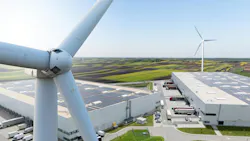
Grid resilience is the defining operational mandate for the power sector in 2026. Utilities face faster load growth, stricter reliability expectations, increasing adoption of distributed energy resources (DERs), and more grid volatility. At the same time, customers with critical operations like advanced manufacturing, logistics, and data centers are electrifying.
In this environment, the next phase of modernization will be shaped less by what we can build, and more by what we can reliably operate. That is why the themes taking center stage this year are focusing more on monitoring, control, and field performance.
Utilities and customers want resilient power systems that respond instantly, operate securely, and perform the same way in the field as they do on paper.
DER Growth Has Made Visibility and Control the New Priority
Distributed energy resources are now foundational to the grid’s evolution. Batteries, flexible loads, solar, and advanced power electronics are being deployed faster than traditional infrastructure can keep pace. But DERs do not automatically translate into resilience.
As more resources come online at the edge, utilities are managing bidirectional flows, localized congestion, and new power quality issues that show up first on feeders and at interconnect points. DER integration is increasingly defined by one question: can the grid monitor and control these resources in real time, under stressed conditions, without introducing risk?
Utilities cannot manage what they cannot see. Resilience starts with visibility. It requires consistent telemetry, predictable dispatch behavior, and secure communications that allow operators to rely on distributed assets as part of the system, not as isolated devices.
Resilience Requires Real-Time Response, Not Just Installed Capacity
Electrification is driving demand, but capacity alone is not the only constraint. The grid is also losing natural stability that was historically supplied by large inertial machines. As conventional assets retire and inverter-based resources increase, the system has less mechanical inertia, and disturbances can move faster than legacy infrastructure was designed to handle.
Frequency excursions, voltage sags, harmonic issues, and rapid ramps can cascade before traditional control systems respond. This is why utilities are prioritizing tools that respond in milliseconds, not minutes.
Grid resilience in 2026 is fundamentally a monitoring and control challenge. The industry needs resources that can be securely dispatched, measured continuously, and relied on during real events, not only during planned use cases.
A Practical Solution Is Modular Inertia and Storage at the Edge
A new class of modular flywheel-battery systems is emerging as a practical tool for distribution resilience, localized reliability, and demand-response support. These systems can be installed at substations or customer interconnect points and deployed on timelines that match load growth reality. Flywheel-battery hybrids respond in less than 250 milliseconds, absorbing or injecting real power while maintaining voltage and frequency. The flywheel delivers ultra-fast inertial response, and the battery sustains energy output for seconds to minutes.
This type of edge resource can reduce disturbances before they ripple across feeders, improve power quality for end users, and reinforce stability upstream. It also gives utilities a controllable asset that can support demand response portfolios with real-time monitoring and secure dispatch.
From the Field: Resilience Is Measured in Downtime Avoided
Grid resilience is often discussed at the system level. In the field, it shows up as downtime, scrapped production, and equipment stress.
American Packaging Corporation in Cedar City, Utah is a useful example. The facility opened in 2023 to support just-in-time production and runs laminators, oxidizers, and multi-motor presses, with planned expansion toward 24/7 operations. Those overlapping loads can create steep peaks that drive demand charges higher and make costs harder to predict.
The site has also experienced brownouts that trigger shutdowns across presses and laminators. Restarting production can take hours, turning brief voltage events into major operational losses. Power quality issues can also cause nuisance trips that halt packaging machines, forcing partial runs to be scrapped and restarted.
In environments like this, resilience isn’t theoretical. It comes down to whether facilities can ride through voltage sags, smooth peaks from equipment starts, and maintain stable conditions for sensitive industrial processes without transferring volatility into lost output.
That is what resilience looks like from the field: fewer disruptions, fewer restarts, and a more stable relationship between customer operations and grid performance.
DERs Must Behave Like Infrastructure
The next phase of DERs is not simply deploying more devices. It is coordinating distributed assets as dependable infrastructure. That means monitoring, control, and predictable performance under real conditions.
Utilities are building a grid that must react faster, operate more locally, and remain secure while serving growing loads. Solutions that improve visibility and controllability at the edge will play an increasingly important role in meeting reliability expectations at scale
About the Author
Nate Walkingshaw
Nate Walkingshaw is CEO and co-founder of Torus.