The Future of Vegetation Management: Building a Smarter, Safer, and More Resilient Grid with Predictive Intelligence
Key Highlights
- Vegetation encroachment is a leading cause of power outages, wildfires, and regulatory fines, costing utilities billions annually.
- Traditional reactive methods involve costly, unsafe crew dispatches after damage occurs, often playing catch-up with constant vegetation growth.
- Proactive strategies using scheduled inspections and aerial imagery improved efficiency but still relied heavily on manual review processes.
- AI-powered platforms automate imagery analysis, reducing review times by up to 70% and enabling faster risk detection and resource deployment.
- The future of vegetation management lies in predictive models that forecast growth and risks months or years in advance, enhancing prevention and grid resilience.
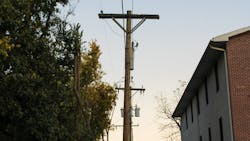
Vegetation encroachment is one of the most persistent and costly risks utilities face. Overgrown trees and brush do not just interfere with power lines; they represent one of the leading causes of outages, wildfires, and regulatory fines. In fact, nearly half of all weather-related power outages are linked to vegetation issues. In recent years, catastrophic wildfires tied to vegetation encroachment have cost utilities billions in fines and settlements. At a time when utilities are under pressure to ensure reliability, reduce wildfire risks, and meet stricter compliance standards, vegetation management has transformed from a periodic maintenance task into a mission critical priority. This shift aligns with broader industry trends: utilities face mounting regulatory scrutiny, accelerating digital transformation, and the urgent need to modernize outdated infrastructure in the face of climate-driven risks.
Today, we are at an inflection point. Utilities are evolving their vegetation management strategies from reactive to proactive and now, with the help of advanced AI and geospatial analytics, toward predictive. This transformation is not just about trimming trees more efficiently. It is about harnessing RGB, LiDAR, and multispectral aerial imagery, geospatial data, and artificial intelligence to anticipate risks, allocate resources smarter, and ultimately safeguard communities and critical infrastructure.
The Old Way: Reactive and Costly
Traditionally, vegetation management was reactive. Utilities would dispatch crews after outages or customer complaints, cutting back trees that had already caused damage or posed immediate threats. While necessary, this approach was expensive, inefficient, and unsafe. By the time a crew was deployed, the damage was already done, lines were down, outages were underway, and communities were at risk.
This reactive cycle strained budgets and field crews while failing to address the root of the issue: vegetation growth is constant, and without visibility across thousands of miles of transmission and distribution lines, utilities were always playing catch up.
The Shift to Proactive Strategies
Over the last decade, utilities began taking a more proactive approach, incorporating scheduled inspections and clearances. Crews followed a calendar-based cycle, often trimming on a three- to five-year rotation. While this reduced surprise outages, it remained inefficient. Many areas received unnecessary trimming, while fast-growing risk zones were sometimes overlooked.
To improve targeting, utilities began to embrace aerial imagery from helicopters, drones, and satellites. Instead of relying on routine trimming cycles, they could now visually assess vegetation encroachment at scale. Still, even with these improvements, imagery needed to be manually reviewed, an overwhelming task when utilities generate millions of images annually.
Enter AI Powered Vegetation Management
This is where the next evolution begins. AI-powered vegetation management platforms automate the analysis of aerial imagery. Instead of human reviewers painstakingly analyzing photos one by one, these platforms ingest and analyze massive volumes of data, accurately detecting vegetation encroachment near transmission and distribution assets.
For example, vegetation near a high-voltage transmission corridor is flagged and prioritized over low-impact areas. The result: smarter resource allocation and enhanced safety.
This approach is already proving its value. In recent deployments, utilities reduced inspection review times by up to 70% while improving detection accuracy. That means faster identification of risks, more efficient trimming schedules, and fewer missed hazards.
From Proactive to Predictive: The Future of Vegetation Management
The future is not just detecting where vegetation is today, it is predicting where it will be tomorrow. During conversations with utilities, one recurring theme is clear: they do not just want to know which trees are encroaching now, they want to forecast growth patterns and risks months or even years in advance.
This is where predictive growth models are headed. By layering vegetation analytics with weather, soil moisture, and topographic data, these models allow utilities to anticipate encroachment before it becomes a risk. Our machine learning pipeline leverages convolutional neural networks (CNNs) for vegetation detection and temporal forecasting models to predict growth cycles. Imagine a utility knowing not only which assets are at risk today, but also which will be at risk next spring due to growth cycles and weather forecasts. That is the power of predictive vegetation management. By preventing failures before they spark wildfires or outages, predictive intelligence is not just about efficiency, it is about protecting communities, safeguarding workers, and ensuring grid resilience.
Visualizing the Impact
Reactive: Crews respond after outages: damage, liability, and community risk already incurred.
Proactive: Scheduled cycles reduce outages but overspend resources, some assets are over-trimmed while critical growth zones are missed.
AI Powered: In recent deployments, Buzz’s AI cut vegetation review time by 70%, allowing utilities to identify high-risk encroachment zones and dispatch crews within days, not weeks.
Predictive: Buzz’s growth models can integrate aerial imagery, weather, and terrain data to forecast risk zones for vegetation growth, enabling utilities to shift from firefighting to prevention.
A Holistic Approach
At the core of this transformation is a commitment to solving utilities’ biggest vegetation challenges. Unlike point solutions that only detect encroachment, AI-powered platforms can deliver an end-to-end vegetation management workflow:
- Automated visual analysis at scale.
- Geospatial analytics with GIS integration.
- Prioritized risk reporting for smarter field operations.
- Audit-ready compliance documentation.
- A roadmap toward predictive growth forecasting.
This holistic approach ensures utilities are not just managing vegetation, they are mitigating risk, protecting communities, and building resilient grids.
Looking Ahead
Vegetation management will only grow more complex as climate change accelerates growth patterns and intensifies wildfire risks. Utilities can no longer afford to operate with outdated, reactive methods. The future belongs to those who can harness AI and predictive intelligence to stay ahead of the problem.
As CTO, I’ve seen firsthand that the hardest technical challenge in vegetation growth prediction was modeling growth rates in variable climates. Our breakthrough came from layering geospatial inputs with temporal learning models hence turning complexity into actionable foresight. Looking ahead, predictive vegetation management won’t exist in isolation. At Buzz, we’re integrating these models with broader utility asset health and wildfire mitigation systems. The future is an end-to-end grid resilience platform where vegetation, asset condition, and climate risk are modeled together.
By transforming vegetation programs from reactive firefighting to predictive intelligence, utilities can meet today’s challenges while preparing for tomorrow’s.
About the Author
Vikhyat Chaudhry
Chaudhry is CTO, COO and co-founder of Buzz Solutions.