Columbia Study: Load Growth Is Only One Piece of the Electricity Price Puzzle
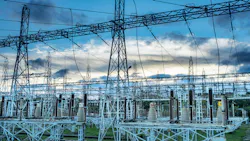
A new white paper from Columbia University's Center on Global Energy Policy argues that while AI-driven data center growth is putting unprecedented pressure on the U.S. power system, it is not the primary driver behind rising residential electricity prices. Instead, the report concludes that a combination of aging infrastructure, grid modernization, climate resilience investments, fuel price volatility and regulatory policies are playing a larger role.
The report, The Effects of Load Growth on Electricity Prices in the United States: A Literature Review, which says it was made possible with support from Google.org, finds that residential electricity prices rose more than twice the rate of inflation in 2025, breaking with the 2019-2024 period when electricity prices generally tracked inflation.
Key findings
The researchers conclude that rapid load growth, particularly from AI data centers, will significantly influence future electricity prices, but only if regulators fail to ensure that the costs of new infrastructure are assigned to the customers driving that demand.
Among the report's findings:
- National residential electricity prices increased more than twice the inflation rate in 2025.
- U.S. electricity demand increased 6% between 2019 and 2025, reaching 4,051 TWh.
- Commercial electricity demand grew 3% in 2024, largely reflecting increased data center activity, while industrial demand increased 2.5% and residential demand rose 2%.
- The U.S. Energy Information Administration projects electricity sales will exceed 4,230 TWh by 2027—roughly 10% above 2023 levels.
- Utility forecasts for new peak capacity requirements jumped from 24 GW in 2021 to 166 GW in 2024, reflecting accelerating expectations for future demand.
Data centers dominate future load growth
The report identifies AI data centers as the largest single contributor to projected load growth.
Researchers estimate:
- Data centers account for roughly 90 GW, or 55%, of projected new peak load through the next five years.
- Manufacturing and industrial expansion account for about 30 GW (20%).
- Residential and commercial electrification contribute another 30 GW (20%).
- Heavy industry electrification represents approximately 10 GW (5%).
Data center electricity consumption has already increased from 1.9% of total U.S. electricity use in 2018 to 4.4% in 2023, and is projected to reach 6.7% to 12% by 2028, consuming between 325 and 580 TWh annually.
The study notes that growth will be heavily concentrated in regions such as Northern Virginia, Texas and Ohio, increasing the likelihood of localized transmission constraints.
Grid investment—not demand alone—is raising rates
Rather than blaming data centers alone for higher bills, the authors point to several cost drivers already affecting utility customers.
Capital investment in distribution infrastructure reached $50.9 billion in 2023, up 160% since 2003, as utilities replace aging equipment and harden systems against severe weather.
Other notable metrics include:
- Distribution and transmission investments increased 50% between 2019 and 2023.
- Investor-owned utilities sought a record $18.2 billion in rate base increases during 2025, compared with $8.2 billion in 2019.
- About 70% of power transformers are at least 25 years old.
- 70% of transmission lines are also at least 25 years old.
- 60% of circuit breakers are more than 30 years old.
The report also highlights fuel costs, particularly natural gas—which supplies approximately 43% of U.S. electricity generation—as a continuing source of retail price volatility.
Cost allocation becoming central policy issue
A major focus of the report is who should pay for the infrastructure required to serve large new loads.
The authors note that regulators increasingly are adopting "beneficiary-pays" policies that require data centers to fund their own transmission upgrades, substations and generation rather than shifting those costs onto residential customers.
Examples include:
- Large-load tariffs under development in Delaware, Ohio and Oregon.
- PJM's new expedited interconnection process for data centers that provide their own generation.
- FERC actions requiring clearer rules for co-located data centers and protection against cost shifting.
- Federal legislative proposals requiring data centers to demonstrate they will not increase residential electricity prices.
Data centers could also reduce rates
The report also acknowledges research showing that large loads can reduce average electricity prices under the right regulatory framework.
One cited analysis found a typical 100-MW data center could generate approximately $3.4 million in surplus utility revenue in 2025, increasing to $6.1 million by 2030. Another estimate suggests that each additional 1 GW of data center load on PG&E's system could reduce average household bills by 1% to 2% if data centers pay the full incremental costs of connecting to the grid.
However, the authors emphasize those savings depend on rigorous rate design that prevents infrastructure costs from being socialized across other customer classes.
Utility takeaways
For electric utilities, the report offers several key conclusions:
- AI-driven load growth is real and accelerating, but demand alone is not responsible for recent electricity price increases.
- Aging transmission and distribution infrastructure, climate resilience investments and fuel costs remain major drivers of rate increases.
- Beneficiary-pays rate structures are emerging as the preferred regulatory approach to protect residential customers while enabling economic development.
- Faster interconnection reform, transmission expansion, grid-enhancing technologies, demand flexibility and virtual power plants will all be needed to align infrastructure buildout with rapidly growing electricity demand.
The report concludes that successfully accommodating AI data centers while maintaining affordability will require close coordination among utilities, regulators, grid operators, technology companies and policymakers. Without reforms to planning, permitting and cost allocation, the mismatch between rapidly growing demand and the slower pace of transmission and generation development could place additional financial pressure on residential customers.