Study: Rising Utility Bills Become an Election Issue as Rates Meet Resistance
Credit rating agency Fitch Ratings' revision to “deteriorating” from “neutral” of its mid-year 2026 sector outlook for North American utilities and power reflects intensifying pressure on regulators and politicians to maintain affordable consumer energy costs while supporting critical grid infrastructure investments.
The 2026 outlook identifies regulatory resistance to rate increases as a key watch point, but Fitch Ratings states developments around this risk are unfolding faster than anticipated. The report highlights that electricity demand through 2030 is expected to grow 2%–2.5% annually, driven by the expansion of data centers, electrification and industrial reshoring, accelerating domestic manufacturing opportunities.
However, the agency explains that this growth backdrop becomes more challenging as ratepayers continue to see spikes in their energy bills. Utility bills are reportedly emerging as a “front-and-center” campaign issue among the 36 states holding gubernatorial elections in November amid these U.S. residential electricity price increases.
The average residential electricity price reached 18.8 cents per kWh in March, up 10.2% from 17.1 cents per kWh the year prior, according to the U.S. Energy Information Administration (EIA). This comes as utilities are planning record-level investment spending this year of roughly $240 billion to support load growth and improve grid reliability required to interconnect these massive energy and infrastructure projects.
The EIA expects annual sector capex to rise by a low to mid-teens percentage between 2026 and 2030, increasing the pressure on the average ratepayer.
Fitch Ratings states that although these record-level investments would help support utilities’ modernization efforts of power lines, substations, and generation plants over the longer term, rising ratepayer bills may make timely cost recovery increasingly difficult.
PJM Interconnection, the largest grid operator in the U.S., remains an example of these pressures. According to Fitch Ratings, data center-driven demand growth has pushed capacity auction clearing prices, a uniform rate paid to electricity generators to ensure grid reliability, to more than $329 per MW-day, equating to over $16 billion.
This increase represents a significant spike from the 2024/2025 delivery year, when total regional capacity costs were at $2.2 billion with auction clearing prices averaging roughly $29 per MW-day.
As of June, 87% of North American power and gas utilities maintain stable rating outlooks. A return to “neutral,” Fitch Ratings adds, would require evidence that consumer affordability pressures are easing as utilities recover their investment needs without weakening their credit profile or materially increasing regulatory lag, which prevents utilities from immediately increasing their consumer rates to recover capital investments.
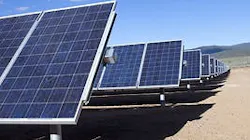
To mitigate these systemic grid strains and avoid centralized infrastructure investments that drive up consumer rates, some regional utilities are advancing the deployment of decentralized energy models.
Pacific Gas and Electric Company (PG&E) is among utilities matching these efforts, recently surpassing 1 million customer solar interconnections—the most of any U.S. utility. PG&E explains that solar has evolved as a major grid innovation in California's energy system, with more than 70,000 new solar installations added annually over the past two years across Northern and Central California.
Representing one of the largest concentrations of customer-sited, grid‑connected solar generation, this effort is helping eliminate millions of tons of greenhouse gas emissions over time and reducing grid strain in the process. The increase in clean energy aligns with political and regulatory advocates looking to limit the rising cost impact on retail ratepayers, while still encouraging grid infrastructure investment to welcome next-generation energy resources.
About the Author
 Eric Moody