Independent Analysis Highlights Grid as Critical U.S. Economic and National Security Asset
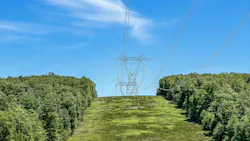
A new independent analysis by Concentric Energy Advisors finds that the U.S. electric grid functions as a high-value national asset that underpins the economy and supports national security by delivering reliable power across the country.
According to the report, continued investment in a modern, interconnected grid—along with the thoughtful integration of large-load customers—will be necessary to maintain these benefits as electricity demand increases.
“The electric grid is one of the country’s most valuable assets and economic engines,” said Drew Maloney, president and CEO of the Edison Electric Institute. “As electricity demand grows, we must continue investing in the grid to ensure it continues to deliver those benefits for customers, communities, and businesses across the country.”
America’s electric companies are projected to invest $239 billion this year to strengthen, modernize, and improve grid reliability. These investments are intended to support growing electricity demand while maintaining affordability for customers.
“The U.S. electric grid is a dynamic, continuously modernized system that underpins nearly every aspect of modern life,” said Meredith Stone, assistant vice president at Concentric Energy Advisors. “Our research makes clear that ongoing utility investment and integrated planning are fundamental to preserving reliability and enhancing resilience in the face of evolving demand.”
Key findings from the report
The analysis highlights several findings regarding the role and future needs of the U.S. electric grid:
The U.S. electric grid is critical to the economy, national security, and modern life, serving as the enabling platform for sectors including defense, emergency response, water systems, and communications.
Utilities continue steady investment in grid infrastructure while seeking to balance reliability improvements with affordability. The report notes that system-wide investments can deliver benefits more cost-effectively than smaller, standalone projects.
Utilities are also deploying new grid-enhancing technologies and innovative solutions designed to improve visibility, optimize existing infrastructure, and integrate new energy resources while maintaining reliability.
The report states that new large customers should be connected to the grid, noting that they expand the customer base for fixed cost recovery and support broader infrastructure investments, while avoiding duplicative infrastructure buildout.
It further concludes that a modern, interconnected grid remains the most scalable platform for reliable power delivery, and that reducing investment in the grid could jeopardize its role as an economic engine.
Additional data highlighted in the analysis
The report includes several supporting data points underscoring the value of continued grid investment:
- A recent Concentric analysis found that if large-load customers do not pay their share of fixed grid costs, nationwide cost shifts to other customers could total between $120 billion and $169 billion over 30 years.
- The National Laboratory of the Rockies found that every dollar invested in transmission infrastructure can save customers $1.60 to $1.80 in future system costs.
- The report notes that grid reliability and resilience help avoid significant economic losses associated with major disruptions.
- Off-grid customers may require 70 percent or more additional on-site generation and storage compared with grid-connected customers to ensure reliability.
- The grid has maintained an average reliability factor of 99.95 percent, with approximately 80 percent of outages from 2000 to 2023 linked to major weather events.
The report concludes that continued investment in an interconnected, modern grid—supported by integrated planning—remains foundational to U.S. economic growth and reliability.