SPP and Western Utilities Confirm Support for RTO’s April 1 Expansion
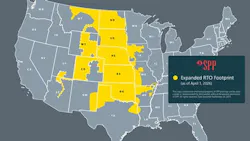
As Southwest Power Pool (SPP) expands its regional transmission organization (RTO) services into the Western Interconnection, leaders from participating organizations have confirmed their support to move forward.
“April 1 will be a milestone day for SPP when we become the first regional transmission organization to bridge the eastern and western electric grids,” said Lanny Nickell, SPP president and CEO. “We are excited to share the benefits of RTO participation with western utilities and their customers.”
During the RTO expansion between March 31 and April 1, the following organizations and their customers will become part of the broader, integrated regional system operated by SPP:
- Basin Electric Power Cooperative
- Colorado Springs Utilities
- Deseret Power Electric Cooperative
- Municipal Energy Agency of Nebraska
- Platte River Power Authority
- Tri-State Generation and Transmission Association
- Western Area Power Administration’s Upper Great Plains-West region, Colorado River Storage Project and Rocky Mountain region
As SPP members, the utilities will begin receiving the benefits of a multi-state operational model that:
- Strengthens Reliability Across the Region: SPP’s regional approach gives utilities access to a larger grid network, a broader set of energy resources, and enhanced 24/7 grid-monitoring. This broader access and regional coordination reduce electric service outage risks during unexpected system events and other circumstances that stress grid reliability.
- Keeps Wholesale Electricity Prices Low: SPP’s markets coordinate use of the lowest-cost available power to serve the demand for wholesale electricity across the RTO’s entire region, regardless of utility or state borders. SPP’s markets have delivered economic value to participating utilities. RTO expansion extends these efficiencies across a wider geography, helping participating utilities reduce their costs of acquiring power.
- Respects State and Local Decision-Making: SPP operates as a not-for-profit, independently governed grid operator that does not own generation or transmission and does not set retail policy. States and local jurisdictions retain authority over infrastructure construction and electricity rates. SPP helps inform those decisions and manage their outcomes across a shared grid better than any single state or utility could on their own.
- Supports Economic and Industrial Growth: States, utilities, developers, and consumers are all in need of solutions to challenges associated with ever-increasing energy demand. By coordinating transmission planning and ensuring speed to power for new load, SPP’s RTO approach helps communities stay competitive in attracting and retaining large economic developers while working to maintain the balance between reliability and affordability.
SPP and its new member utilities are focused on the disciplined, methodical work for a smooth transition, including rigorous testing, training, simulations and other preparatory activities. The benefits of operating as one coordinated system will expand, as regional planning, shared operations, and collaborative decision‑making will help position communities and businesses for a more resilient and competitive energy future.