Data Centers and Utilities: Aligning Incentives with Customer Value, Affordability and Resilience
Key Highlights
- ORNL's MEGA-DC platform helps utilities and regulators evaluate data center growth through the lenses of affordability, reliability, resilience, and economic impact.
- Research shows strategically managed data center investments can generate 3,000–5,000 jobs, more than $100 million in annual tax revenue, and significant regional economic growth.
- About 30% of new data center projects are considering behind-the-meter (BTM) generation or storage to reduce grid constraints and limit ratepayer-funded infrastructure costs.
- ORNL's affordability modeling finds rising electricity rates threaten to offset recent household income gains, underscoring the need for customer-focused planning.
- The study concludes utilities, regulators, and hyperscalers can better manage rapid load growth through performance-based regulation, cross-sector planning, and innovative utility-customer partnerships.
Electric utilities, regulators, and state energy offices face a shared opportunity. A surge of growth, led largely by data centers and technology companies such as Nvidia, Apple, AWS, Meta, Google, Microsoft, and Oracle, is accelerating investment in electric infrastructure. At the same time, state commissions and energy offices are exploring regulatory reforms that emphasize tangible customer outcomes: affordability, reliability, and resilience.
However, existing regulatory frameworks are centered on traditional, proven capital recovery and do not always consistently connect utility earnings to customer outcomes. As a result, a gap is emerging between the expansion of utility electricity infrastructure to meet surging large load demands and the expressed concerns of customers regarding rising electricity bills, water usage, and other environmental factors. The delivery of tangible customer benefits like recurring state/local tax revenues, new job creation, and new business creation is under renewed scrutiny. Key questions emerging for utilities and state agencies include how to plan for and manage this load growth in ways that align infrastructure expansion with customer outcomes.
Numerous studies have documented that electricity demand is rising sharply across the country, and interconnection queues are expanding rapidly in markets including Pennsylvania-New Jersey-Maryland Interconnection (PJM), Midcontinent Independent System Operator (MISO), and Electric Reliability Council of Texas (ERCOT). Since load forecasts are being revised upward, the traditional cost-of-service regulatory framework is perceived to be less effective in distributing the benefits and costs appropriately. Large and concentrated loads such as data centers introduce challenging dynamics in system planning.
To address the challenges of balancing costs and benefits while maintaining overall system resilience, Oak Ridge National Laboratory (ORNL) has spent years developing data-driven methods to support the transition to tangible customer outcomes through state-level planning assistance. Based on ORNL’s research, data center-driven load growth presents a pathway to align strategic utility expansion with affordability, reliability and resilience.
ORNL’s Modeling the Energy Growth Associated with Data Centers (MEGA-DC) project, funded by the U.S. Department of Energy (DOE), integrates a multicriteria decision-support platform that evaluates infrastructure feasibility, siting readiness, economic impacts and customer affordability within a single analytical framework. The platform has been deployed across ten states to date and is being extended to additional regions to support planning for data center-driven load growth. MEGA-DC enables stakeholders to assess how investments in large loads, associated generation resources (all modalities including gas, coal, nuclear, distributed energy resources [DER], batteries and supporting infrastructures such as gas, water and fiber) and supporting infrastructure interact with grid resilience, reliability and customer affordability.
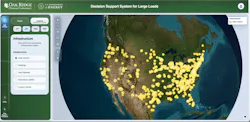
This national situational awareness view is core to MEGA-DC’s multicriteria decision-support platform. Within it, state energy offices, economic development organizations, regulators, and regulated utilities can choose the parameters they care about in their unique local context to support decision-making across the paradigm of affordability, infrastructure feasibility, and ease of doing business—including permitting, sentiment analysis, and traditional siting criteria around actual parcels and sites for these large loads.
The MEGA-DC platform offers robust multi-criteria tradeoff analysis by seamlessly integrating carefully curated data sources — including Energy Information Administration (EIA), Federal Energy Regulatory Commission (FERC) Form 1, American Community Survey (ACS) data, data center forecasts, grid capacity models, utility rates, and more — for electricity, gas, water, and fiber in a robust, AI-enabled platform. Secure access is granted via role-based privileges.
Measuring the Cost of Growth
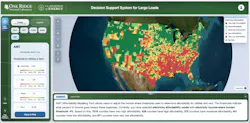
MEGA-DC developed detailed affordability models that evaluate electricity, water, gas and rent burdens at the county and census block group level, including detailed threshold modeling at a county and state level for the entire nation. These models build on DOE’s definition of energy burden and draw on data from the Energy Information Administration, American Community Survey (ACS), Homeland Infrastructure Foundation Level Data (HIFLD), and published utility rates. Energy burden is the percentage of household income spent on energy costs, and an energy burden over 6% is considered high.
Affordability is the share of income that a household can spend toward essential expenses such as electricity, gas, water, and rent. The model indexes affordability as a ratio of costs to income with a threshold that sets the “affordable” share of income, and the threshold is varied for each household expense and by locality. The model balances the “pain” experienced by households due to essential costs, such as electricity, with the potential “gain” of growing incomes potentially associated with economic growth generated by new data centers and other large load industries.
Additional work is underway to incorporate fiber/internet and cellular service costs, and future enhancements will expand this framework into a full household budget model that includes transportation, insurance, groceries, pharmacy expenses and other essential costs. The “pain vs gain” approach helps state decisionmakers understand how large load growth affects affordability for different income groups and balance the cost burden experienced by low-income groups with the benefits of jobs, increased wages, and new business.
Key Findings
ORNL’s spatiotemporal modeling, based on more than 10 years of data, shows:
- ‘Electricity’ affordability has generally improved since 2010, particularly in urban areas.
- ‘Electricity’ affordability improved in rural counties beginning around 2020.
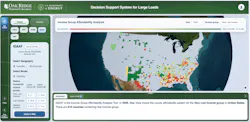
- Rising electricity rate increases threaten to negate recent gains in median household income.
- When affordability includes additional essential costs (e.g., rent), significant variation appears, and some gains are masked.
- Nearly 1 in 5 U.S. households struggled to pay an energy bill last year, underscoring the need for affordability metrics that reflect real household experiences.
Economic Impact of Data Center Investments
Economic impacts of large loads like data center investments are central to utility and regulatory decision-making because they determine how system costs are recovered and how benefits are distributed across customers and regions. Large investments influence infrastructure requirements, load growth patterns, and revenue streams, all of which affect rate design and cost allocation.
‘Electricity’ affordability has generally improved since 2010, particularly in urban areas.
Such investments also shape local economic activity and tax revenues, which are often considered in siting and permitting decisions. For utilities and state regulators, assessing these impacts is necessary not only to quantify economic activity, but to evaluate whether infrastructure expansion linked to large loads results in outcomes that are consistent with affordability, reliability, and system performance objectives.
ORNL research has developed a preliminary regional economic footprint of data center investment. MEGA-DC assessed economic impacts using an input-output (IO) framework as a preliminary method to trace how data center investment propagates through the economy across sectors and regions. This approach captures flow of money and ripple effects from the on-site data center activity as well as supply chain and household effects.
Using the IMPLAN tool to analyze the IO model, MEGA‑DC evaluated the economic ripple effects of data center investments for various counties in the US. MEGA-DC applied a standard investment allocation for data center projects, under which 68% of total spending is attributed to IT equipment, 20% to construction, and 12% to operations. Within construction, 40% of commodity costs are allocated to transmission and distribution infrastructure upgrades.
Our benefit modeling work indicates that a hypothetical $1B data center investment at the county level:
- Generates between 3,000–5,000 jobs.
- Yields an economic output multiplier of 1.3–1.7.
- Contributes $450M–$800M to local gross domestic product locally within the state.
- Generates >$100M in tax revenues/year.
Additionally, data center investments generate economic activity beyond the host location through supply chain linkages and labor income effects that extend across regions. To capture these cross-regional impacts, we applied multi-regional input-output (MRIO) analysis. The MRIO approach traces how economic activity propagates across jurisdictions through supply chain and household spending. For example, applying MRIO to a $1 billion investment in Culpeper County, Va., increases total economic output across Virginia from $1.33 billion under an isolated county analysis to $1.66 billion when cross-regional effects are included.
The IO model provides an initial estimate of economic impacts. ORNL is developing computational general equilibrium (CGE) models to enable more detailed analysis by capturing price, resource, and behavioral adjustments across the economy. By relaxing the fixed-coefficient assumptions of IO models, CGE frameworks can better represent substitution across inputs and sectors, accounting for estimates under changing prices, wages, resource availability and household behavior.
In addition to these broader economic linkages, county-level data from the U.S. Census Bureau’s Business Dynamics Statistics, accessed for 2013, 2018, and 2023, indicate rising startup formation over the past decade, with higher levels in areas associated with data center investments. This increase is concentrated in computer-related goods and services, including peripherals, storage, and software services.
Comprehensive findings from the economic analysis of data center installation (construction of building, installation of servers, and operations) indicate that economic gains are measurable and contribute to regional economic activity, and they can be assessed alongside cost impacts to evaluate affordability outcomes.
Behind-the-Meter Trends and Implications
Behind-the-meter (BTM) energy allows data centers to generate power on-site or nearby, bypassing capacity-constrained utility grids with long interconnection timelines. As data center demand outpaces grid expansion timelines, BTM is being adopted to accelerate deployment, ensure reliability, and maintain cost control. From an affordability perspective, BTM can potentially reduce reliance on grid-funded infrastructure expansion, helping avoid upward pressure on electricity rates for other customers while maintaining local supply reliability.
These outcomes vary by region, regulatory design, and site-specific considerations. As data center-driven electricity infrastructure capital investment accelerates and raises concerns around rate-payer affordability, BTM is being considered as one alternative. MEGA-DC tracking indicates that about 30% of new data center projects are considering BTM generation or storage. These developments illustrate the range of approaches emerging across states, rather than representing recommended strategies.
Recent announcements indicate a trend toward BTM adoption for large data center projects. Several developments across the U.S. illustrate this trend. For example, Microsoft has explored pairing data centers with nuclear energy, Amazon Web Services (AWS) has announced projects co-located with dedicated generation and is evaluating on-site power solutions, Google has entered into agreements for firm and continuous energy supply, including advanced geothermal and other arrangements tied to its data center operations. In addition, developers in states such as Texas are pursuing gas-fired generation and battery storage co-located with data centers. This trend reflects a shift toward self-supplied energy models to ensure reliability and maintain deployment timelines.
BTM assets such as gas turbines, batteries, nuclear microreactors, and flexible compute have the potential to:
- Lower total system costs by limiting the need for ratepayer-funded grid expansion
- Improve grid resilience through on-site and dispatchable capacity
- Provide grid services when integrated with system operations
- Shift costs away from residential customers
A recent Lawrence Berkeley National Laboratory (LBNL)/Brattle study finds that recent electricity rate increases are primarily driven by aging grid infrastructure and the associated costs of maintenance and upgrades, rather than by data center–related load growth. This finding indicates that adding new large loads to an already aging grid can create reliability risks, and BTM configurations can help manage these risks by reducing dependence on constrained grid infrastructure. Market trends in BTM adoption suggest that data center–driven load growth may be managed with limited electricity rate impacts and reduced reliability risks.
However, realizing these potential benefits requires careful management of technical, regulatory, and financial risks.
Stakeholder interviews and MEGA‑DC analyses reveal several recurring factors that influence successful BTM deployments, including:
- Interoperability with grid systems and phased deployment strategies
- Vendor performance guarantees and contractual safeguards
- Regulatory sandboxes to test integration and operational frameworks
- Diversified funding structures and partnership models
- Clear regulatory treatment to avoid stranded assets
These elements are the necessary conditions under which BTM configurations may successfully support affordability and system reliability without creating additional cost or system risks.
Affordability Findings Relevant to Policy Discussions
Traditional regulatory models reward Investor-Owned Utilities (IOUs)) primarily for capital investments. This approach has delivered reliability but struggles to adapt to rapid load growth and technology change. Mark Browning, an industry veteran who chairs ORNL’s program-level advisory board for private utilities and industry, has noted the potential impact of BTM resources, based on ORNL research findings. “For 35 years I’ve worked at the intersection of utility operations and customer expectations, and the message in this ORNL work is unmistakable: behind-the-meter solutions are one of the most powerful levers we have to improve affordability and resilience,” Browning says. “ORNL’s research demonstrates that behind-the-meter resources—when orchestrated effectively—can lower system costs, reduce risk, unlock new earnings pathways, and improve customer outcomes simultaneously.”
A successful transition to make privately funded BTM part of a utility’s core generation portfolio requires a structured roadmap informed by data. ORNL is partnering with utilities, regulators and state energy offices to develop such a roadmap, built on our affordability and resilience research. Our ongoing conversations with officials and stakeholders from partner states regarding how they are navigating the BTM discussions with some data center customers indicate that integrating BTM resources and appropriate grid services into a grid stability and required regulatory framework could:
- Reduce peak demand and defer grid upgrades
- Improve resilience at critical facilities
- Create performance‑based earning pathways
- Avoid stranded assets and improve credit metrics
- Enhance customer satisfaction and regulatory trust
The literature review also indicates States like California, New York, and Hawaii already operate pay-for-performance frameworks, including market participation, advanced rate design, and DER integration.
Utility–Hyperscaler Agreements
New forms of utility customer partnerships are emerging, such as:
- Reliability-as-a-Service contracts with performance metrics
- Flexible load arrangements allowing utilities to shift non‑critical compute
- Feeder level support programs where data center batteries provide voltage or contingency support
- Community benefit compacts funding other infrastructure like grey water, microgrids, resilience hubs, broadband or lifeline affordability programs
- These agreements align the capabilities of large loads with broader system goals.
Cross-Sector Infrastructure Coordination
One of the biggest challenges the MEGA-DC team hears clearly from stakeholders is the need to convene a diverse group of stakeholders who often have differing priorities and challenges. Resilience and affordability depend on coordination across electric, water, wastewater, fiber, broadband and gas utilities. States are convening cross-sector planning discussions to:
- Align pumping and treatment loads
- Develop microgrids for critical facilities
- Improve communications for DER dispatch and outage restoration
- Plan hybrid gas/electric heating strategies
- Reduce stranded costs and permit delays
Regulatory and Utility Models
MEGA‑DC states are exploring mechanisms such as:
- Performance incentives for affordability, reliability, and resilience
- TOTEX frameworks that treat capital and operating expenditures equally
- BTM portfolio procurement standards
- Cloud and cybersecurity investments as mission-critical
- Grants tied to BTM adoption at utilities
- Standardized hosting capacity and flexibility‑contracting practices
These mechanisms are being explored to understand whether they could align utility earnings with customer outcomes.
The next decade may reshape the role of electric utilities as data center–driven load growth accelerates. With hyperscaler investment, public funding, and evolving regulations, IOUs are exploring a historic opportunity to:
- Improve affordability to the rate payer leveraging the large loads as a rate-stabilizing customer
- Strengthen grid resilience by utilizing data centers as a grid stabilizing asset
- Reduce cross-system resilience risk for states and funds to proactively address other systemic vulnerabilities
- Modernize utility earnings models to incorporate BTM data centers with co-located generation
- Build trust with regulators and communities
ORNL’s research findings indicate several areas in which utility business models may evolve as load growth accelerates. Large, concentrated loads can influence affordability by contributing to revenue stability when costs are allocated appropriately. At the same time, revisiting utility incentive structures coupled with BTM configurations can support improved system reliability. Managing the cost-benefit allocation and aligning infrastructure investment with affordability and reliability objectives can facilitate closing the gap between infrastructure expansion for large loads and customer outcomes. From this perspective, data center integration, when strategically managed, has the potential to play a role in this evolution.
Editor's Note: Data center growth is influencing nearly every aspect of utility planning. This research perspective from Oak Ridge National Laboratory complements T&D World's recent coverage, also from ORNL, of data centers as grid assets by examining the planning tools, policy frameworks and affordability considerations needed to support long-term growth.
About the Author
Giri Iyer
Giri Iyer is senior program manager of the critical infrastructure resilience group and PI on the MEGA-DC project at ORNL.
Supriya Chinthavali
Supriya Chinthavali is a group leader for the Geoinformatics Engineering and Scalable Computing group at ORNL. Over the last nine years, she has served as a principal investigator on several projects related to the energy sector’s situational awareness, policy analysis, and smart grid; and in understanding cascading impacts on critical infrastructures during extreme events. She is the datalead for DOE’s EAGLE-I (Energy Sector Real-Time Situational Awareness Tool) project and is serving as the project manager for DOE’s Outage Data Initiative Northwest (ODIN) effort. As a certified scrum master, she is contributing toward the multi-lab effort, “North American Energy Resilience Model.” She has a master’s degree in computer science and engineering and in automotive embedded systems.
Joy Ditto
Joy Ditto is the founder and CEO of Joy Ditto Consulting and expert in critical infrastructure industries.
Annetta Burger
Annetta Burger, Ph.D., is a R&D scientist in the location intelligence group at ORNL.
Archana Ghodeswar
Archana Ghodeswar, Ph.D., is a R&D associate in the integrated building performance group at ORNL.
Viswadeep Lebakula
Viswadeep Lebakula, Ph.D., is a R & D Associate Scientist in the human geography group at ORNL.