Are Lake Tahoe Residents Really Losing Electricity Supply to Data Center Hyperscalers?
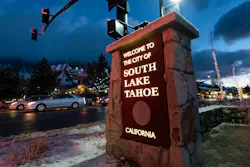
Some 49,000 customers in the Lake Tahoe region are concerned they may lose their electricity supply in favor of utilities powering data centers owned by Meta, Amazon and Google, according to a widely shared report by Fortune.
NV Energy supplies Lake Tahoe with about 75% of its electricity through the California-based Liberty Utilities. In response to the coverage, NV Energy says it will keep servicing the area until Liberty has its own transmission access ready.
Further, NV Energy says the deal with Liberty Utilities dates to 2009, before the data center boom, and was always intended to be temporary.
Katie Nannini, NV Energy spokesperson, told T&D World that the original reporting was “incomplete or misleading,” adding that NV Energy has worked cooperatively with Liberty Utilities for more than 15 years to ensure reliable service in the Lake Tahoe region. This includes extending a temporary transition arrangement to support continued reliability.
“From the outset, NV Energy’s long-term resource planning assumed Liberty would ultimately secure its own transmission access and energy supply, consistent with the original 2009 asset sale agreement. These planning assumptions were established many years before data center growth became part of NV Energy’s long-term planning considerations,” Nannini said.
NV Energy did not plan to serve Liberty’s load beyond the current agreement, regardless of future load growth or the development of data centers. Claims suggesting otherwise are inaccurate, Nannini said.
It is important to note that no customers will lose power as a result of this transition, and reliable service for the Lake Tahoe Basin remains the utility’s commitment, Nannini said.
“To be clear, the decision for Liberty to move to its own power supply is based on long-standing agreements and planning assumptions that date back more than a decade—well before data center growth became a factor,” she said. “Data centers did not influence this decision. While both issues are happening simultaneously and might lead people to think they are connected, they are in fact separate and not connected.”
Further, NV Energy is required to serve customers who meet state requirements, including data centers, under terms set by regulators in the public interest, she said.
“We must balance that obligation with our responsibility to protect existing customers—making sure new demand doesn’t drive up costs, affect reliability, while also delivering on Nevada’s clean energy requirements,” she said.
The utility is planning to require large customers to pay for the infrastructure needed to serve them. This ensures existing customers aren’t left covering those costs and reliability and affordability are protected, she said.
As it prepares for a transition in how it gets its electricity, customers’ reliable electric service will not change, according to a statement on Liberty Utilities’ website.
Under the current setup, Liberty used a mix of power generation sources, including about 60 MW of solar power generated through solar systems the utility owns, with additional power coming from NV Energy.
Starting in 2028, NV Energy will no longer supply Liberty. To achieve a seamless transition, the utility said it would form new energy partnerships to make up for what it will lose from NV Energy. It will use the existing transmission lines in the same fashion as today to deliver this electricity. Liberty will also continue to use the same solar power assets to meet demand.
Toward the goal of finding a new energy partnership, Liberty filed a request with the California Public Utilities Commission to begin the search. A formal bidding process will follow, with the utility expecting to start this in summer of 2026.
“This process allows us to find more diverse and affordable energy sources while maintaining our high standards for reliability. We will focus on sustainable and affordable solutions,” according to Liberty Utilities’ website.
After the bidding process, Liberty should have providers selected by winter 2026/2027, with newly approved supplemental power agreements in spring or summer of 2027.
The official transition will happen in 2028, with the entry into service of the Greenlink Nevada transmission project. NV Energy expects this to occur December 31, 2027. NV Energy is, and will remain, Liberty’s transmission provider.
NV Energy’s Greenlink is made up of Greenlink West and Greenlink North. Greenlink West will be a 525 kV line that spans about 350 miles from Las Vegas, to Yerington, Nev. Construction on Greenlink recently began. Greenlink West is expected to be in service by May 2027.
Greenlink North will be a 525 KV line that spans about 235 miles from Ely to Yerington. Greenlink North is expected to be in service by December 2028, according to a section of NV Energy’s website on the project.
“Most utilities in the West use the most electricity during the hot summer months for air conditioning. Because our region is winter-peaking—meaning our highest demand is during the cold winter months—we are an attractive partner for energy suppliers who have extra power available during the off season for the rest of the grid,” according to the Liberty website.
About the Author
Jeff Postelwait
Managing Editor
Jeff Postelwait is a writer and editor with a background in newspapers and online editing who has been writing about the electric utility industry since 2008. Jeff is senior editor for T&D World magazine and sits on the advisory board of the T&D World Conference and Exhibition. Utility Products, Power Engineering, Powergrid International and Electric Light & Power are some of the other publications in which Jeff's work has been featured. Jeff received his degree in journalism news editing from Oklahoma State University and currently operates out of Oregon.