T&D World's Top 5 Stories of 2025

Why Transformer Shortages Signal Bigger Challenges for U.S. Reshoring Efforts

Our top story of the year was a special report by Managing Editor Jeff Postelwait on the supply chain issue in the industry. As talk of “reshoring” intensifies, the article examines how new tariff policies and rising electricity demand are colliding with long-standing supply chain constraints in the U.S. power sector. While tariffs under President Trump aim to spur domestic manufacturing, they are also increasing costs and complexity for utilities already facing long lead times for critical grid components like transformers and switchgear.
Manufacturers are responding with billions of dollars in new U.S. investments, but workforce training, raw material processing, and global supply dependencies remain major bottlenecks. The piece concludes that reshoring will be a long-term effort, requiring coordinated policy, sustained investment, and continued reliance on global supply chains to meet surging grid demand. Read here.
Grid Inertia: Good or Bad?

A sweeping blackout in Spain this spring has reignited debate over grid inertia, but early findings point less to a simple lack of inertia and more to gaps in visibility and control of inverter-based resources. This commentary by long-time T&D World contributor Doug Houseman argues that as inverter-heavy grids become the norm, outdated models and incomplete system data are leaving operators blind to fast-moving dynamics that can trigger cascading failures. With multiple “blue-sky” blackouts already recorded globally in 2025, Houseman calls for more rigorous dynamic modeling, real-time control of distributed resources, and stronger interconnection and performance standards to ensure grid stability in a zero-carbon future. Read here.
Modernizing the Grid: PG&E's Approach to Aging RTUs and Next-Gen Substation Systems
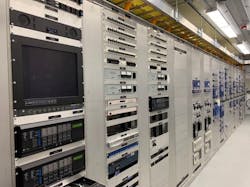
Coming in third place, this feature was contributed by PG&E and covers its undertaking of a major modernization of its substation automation systems, replacing decades-old RTUs with more flexible, secure, and future-ready platforms to support an increasingly complex grid. Using a “Four Ps” framework—system function, application usability, financial strategy, and future expansion—PG&E is balancing reliability, cost, cybersecurity, and long-term scalability. The effort is aimed at improving grid resilience, integrating distributed energy resources, and preparing for digital substations, offering a potential roadmap for utilities nationwide facing similar aging infrastructure challenges. Read here.
The 3000-GW Waiting List for a Modern Grid

Renewable generation is now outpacing the grid’s ability to connect and use it, leaving more than 3,000 GW of wind and solar projects stalled in interconnection queues worldwide, according to the IEA. The article contributed by Philippe Piron of GE Vernova argues that aging, unidirectional transmission and distribution systems are the primary bottleneck to the energy transition, with grid investment stuck far below what is needed. To meet electrification and net-zero goals, utilities must rapidly expand transmission, modernize distribution networks, and deploy digital, AI-enabled grid management tools—because without major grid upgrades, there will be no clean energy transition. Read here.
How Eversource Energy Is Cutting Costs for Ratepayers with Advanced Transmission Technologies
And coming in at No. 5 is a commentary contributed by Jacob Lucas of Eversource and Dan Berkowitz of Bekaert. This op-ed outlines how Eversource Energy is using advanced transmission technologies and high-performance conductors to reduce line losses and lower long-term costs for ratepayers. By prioritizing conductor designs optimized for low-temperature operation and carefully matching capacity to average system loads, Eversource shows that minimizing energy losses can outweigh slightly higher upfront costs. Its analysis concludes that steel-core conductors like ACSS/TW often deliver the best overall value, offering higher capacity and lower losses while supporting reliability, affordability, and sustainability on the transmission grid. Read here.
About the Author
T&D World Staff
Content Team
Nikki Chandler
Group Editorial Director, Energy
[email protected]
Jeff Postelwait
Managing Editor
[email protected]
Christina Marsh
Senior Editor
[email protected]
Ryan Baker
Associate Editor
[email protected]
Amy Fischbach
Electric Utility Operations
[email protected]
Rich Maxwell
Community Editor
[email protected]
Gene Wolf
Technical Editor
[email protected]