Why the U.S. Grid Needs More Transmission
Key Highlights
- A strong transmission backbone helps balance supply and demand and supports grid stability.
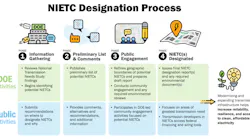
- The DOE canceled the last three National Interest Electric Transmission Corridors, despite earlier plans for ten corridors spanning more than 3,500 miles.
- Grid-enhancing technologies, distributed resources, and advanced conductors are valuable but do not replace new interregional and intraregional lines.
When I was in grad school, I took a class on computer modeling of the power grid. I thought it was going to cover electrical elements like frequence, VAR flow, voltage levels, etc. It did, but the prof added environmental influences. Once each of us had our models up and working the fun began. The object was to keep our power grids stable, which meant keeping the supply in balance with the load. That sounded simple enough, but our crafty prof was known for making students think. Initially it was pretty straightforward, until it wasn’t.
He hit us with real-world system demands including storms followed by lost generation mixed with varying loads due to weather and subsequently transmission lines tripping. Keep in mind, this was before climate change and data centers. I’d hate to see one of his tests today. His tweaks continued until there was no way to keep our model grid stable and then it crashed. It turned out this was a setup, there was no way we could keep it from instability. There wasn’t enough transmission capacity or transmission lines. Proving it’s almost impossible to balance on this three-legged stool!
What got me thinking of this exam was the Department of Energy (DOE) announcement that it was cancelling the last three remaining National Interest Electric Transmission Corridors (NIETC). Years ago the DOE identified the need for ten NIETCs covering more than 3,500 miles and now there are none. One of the most important factors in system-wide stability is a strong backbone transmission grid. It was a key element in that grad school exam, and it still is!
Technology Helps
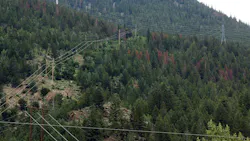
Granted, today we have GETs (grid-enhancing technologies) and DERs (distribution energy resources) adding gigawatts behind-the-meter. And don’t forget advanced conductors for adding capacity to existing lines. Those important assets are extremely important, but without interregional and intraregional transmission lines that backbone transmission network is weak. Back in the day it was said there’s no substitute for wire in the air. It’s still true today. That’s why the DOE’s cancellation of the NIETCs is so shocking!
The DOE said, “Transmission policy must serve the American people, not special interests or a climate-alarmist agenda,” which is why the NIETC was cancelled. If that’s true, then why cancel a policy that can speed up the permitting process for adding new interregional and intraregional transmission lines? That got me wondering: who are these special interest groups? I can think of several such as consumer groups who are upset over electricity affordability. With the ever-raising prices of all commodities, having power superhighways would enable cross-regional energy trading between remote, resource-rich areas with high-demand urban load centers. That would provide customers with affordable electricity.
Utilities, regional transmission operators, and independent system operators would fit into a special interest group. One seeking a strong backbone transmission network to make it more reliable, resilient, and robust. As a utility engineer and a consulting engineer I worked for utilities throughout North America and they were all committed to providing the most reliable service at the lowest price. Heck, it’s in our DNA. They don’t like blackouts that could have been prevented with a more diversified and balanced electric power grid. As for the climate-alarmist group, I think that after the summer of 2026 the ranks of groups concerned with the increasing climate crisis is growing exponentially.
Local and Regional
Actually, the DOE is another special interest group I can think of who supported NIETCs. Prior to the termination, there were several DOE technical studies and reports that made it abundantly clear that the U.S. needs additional national-scale approaches to adding transmission infrastructure. DOE estimated that something like 7,500 miles of new high-voltage transmission needed to be added by 2030. They also highlighted the need for replacing about 4,000 circuit-miles of aging transmission each year for the next few decades.
That’s a lot of transmission that’s going to require interregional approaches without the benefit of the NIETC policy. The September “Charging Ahead” featured three new interregional transmission projects that were energized during the first six months of 2026. These projects delivered 5,450 megawatts from areas rich in renewable energy into high-demand urban areas. Mileage wise, these three projects added a little over 1,000 miles to the transmission grid, but each had taken ten or more years from planning to energization. With electrification and hyperscale datacenters, can the national grid afford to add ten plus years for each new transmission line project? It’s doubtful!
About the Author
Gene Wolf
Technical Editor
Gene Wolf has been designing and building substations and other high technology facilities for over 32 years. He received his BSEE from Wichita State University. He received his MSEE from New Mexico State University. He is a registered professional engineer in the states of California and New Mexico. He started his career as a substation engineer for Kansas Gas and Electric, retired as the Principal Engineer of Stations for Public Service Company of New Mexico recently, and founded Lone Wolf Engineering, LLC an engineering consulting company.
Gene is widely recognized as a technical leader in the electric power industry. Gene is a fellow of the IEEE. He is the former Chairman of the IEEE PES T&D Committee. He has held the position of the Chairman of the HVDC & FACTS Subcommittee and membership in many T&D working groups. Gene is also active in renewable energy. He sponsored the formation of the “Integration of Renewable Energy into the Transmission & Distribution Grids” subcommittee and the “Intelligent Grid Transmission and Distribution” subcommittee within the Transmission and Distribution committee.