vPAC: Utilities Explore a Software-Defined Approach to Modernizing the Grid
The electric grid is being asked to change faster than ever, and utilities increasingly are looking beyond individual pieces of equipment to rethink how substations are designed.
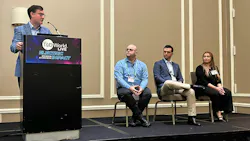
That was the central message of a T&D World Live session on Virtual Protection Automation and Control (vPAC), where engineers from Southern California Edison, Pacific Gas and Electric and Salt River Project shared their experiences testing and deploying software-defined protection and control systems.
Moderated by Russell Boyer of Dell Technologies, the session focused on a fundamental question: Can utilities continue to modernize the grid using an architecture built around long-lived, hardware-specific equipment, or is it time to separate protection, automation and control functions from proprietary hardware?
For the panelists, the answer increasingly points toward virtualization.
“We're asking utilities to grow faster than they've ever grown in the past and to deploy technology at an increasing rate,” Boyer said. “It's not just about what device you need to buy or which piece of equipment we need to buy. It's really about thinking about the overall design and architecture to support the future.”
What is vPAC Alliance?
The vPAC Alliance is an industry collaboration focused on advancing a more open, software-defined approach to substation protection, automation and control.
The term vPAC stands for virtual protection, automation and control. Rather than relying exclusively on dedicated hardware for each protection and control function, vPAC architecture moves these functions into software that can run on standardized computing platforms.
The goal is to create a more flexible, interoperable and vendor-neutral substation architecture. With functions separated from proprietary hardware, utilities could have greater flexibility to deploy, update and scale applications while reducing dependence on purpose-built equipment.
The approach builds on the evolution from traditional substations to digital substations, taking the next step toward software-defined grid infrastructure. It also could provide a foundation for incorporating advanced analytics, artificial intelligence and other computing-intensive applications closer to the edge of the grid.
The Alliance brings together utilities and technology companies to help establish the architecture, standards and interoperability needed to make virtualized protection, automation and control practical for utility applications.
A Grid Under Pressure
The need for a different approach is being driven in part by unprecedented load growth, the panelists said.
Utilities are facing new demands from data centers, electrification and other large loads while also preparing for more distributed energy resources and inverter-based resources.
At Southern California Edison, Nicole Rexwinkel said the challenges can be distilled into three priorities: building substations faster, fitting more infrastructure into constrained spaces and creating protection systems that can adapt to a changing grid.
“We need to be able to build and commission new substations more quickly, faster than we have historically,” said Rexwinkel, a senior engineer at SCE. “We know that in the future our approach to protection needs to be more flexible.”
Virtualization can address those needs by moving functions traditionally tied to individual pieces of hardware onto shared computing platforms.
Instead of building a substation around a collection of dedicated devices, vPAC allows protection and other applications to run as software on a common platform.
Rexwinkel compared the concept to the evolution of smartphones.
“My kind of future vision with virtual protection is very much the iPhone and the App Store,” she said. “Being able to go and download your favorite applications, whichever is the best for your use case, whatever fits the needs of that substation, and having these different applications running side by side on the same hardware platform.”
From Boxes to Software
For utilities accustomed to dedicated protection equipment, the transition represents a significant change in thinking.
Adam Kampa, with PG&E's automation engineering group, described vPAC as the latest step in a longer evolution from electromechanical relays to microprocessor-based equipment and now software running on centralized computing platforms.
“It's really the evolution we've seen as well: electromechanical, microprocessor, consolidation of microprocessors, and now our next step,” Kampa said.
The shift isn't simply about reducing the number of boxes in a substation. It also could make it easier for utilities to access and use the growing volume of data coming from their systems.
Kampa said PG&E is seeing increasing demand for information related to everything from post-event analysis and regulatory compliance to equipment performance.
“Data has just been a huge topic the last couple of years at our company,” he said. “We get so much more data from a software-based system.”
That data can support applications such as monitoring breaker cycles and identifying equipment issues, while a modern computing platform could also provide a foundation for future analytics and artificial intelligence applications.
Boyer pointed to that future capability as another reason to think beyond individual hardware purchases.
“Where is the AI model supposed to land in the substation today? On what platform?” he asked. “In most cases, there's not a platform that's modern enough for that AI model to even run.”
Testing the Concept
The panelists' experiences suggest that the technology is moving beyond the conceptual stage.
SCE completed a laboratory demonstration in 2025 designed to determine whether virtual protection applications could meet the performance requirements of traditional protection equipment.
“We did a lot of rigorous testing around that to make sure that even under very abnormal conditions, things would still operate with the timing that we required,” Rexwinkel said.
The testing gave SCE what Rexwinkel described as a baseline confirmation that virtual protection works. The next challenge is determining how and where to deploy it in the field.
SRP is further along in that process.
Joshua Manski, an engineer with the Phoenix-based utility, said SRP has an active pilot protecting 24 breakers at a 69-kV substation with approximately 70 MW of load. The utility also plans a second pilot to test line-differential applications, followed by a larger project involving a NERC medium site.
Interestingly, Manski said the virtual relays in SRP's testing have performed more consistently and faster than traditional equipment.
“The virtual relays are actually performing more consistently and faster than the traditional ones,” he said.
The pilots also have revealed capabilities beyond basic protection.
During one event, Manski said an underground distribution cable fault was preceded by anomaly indications from the virtual relay.
“Maybe in the future we can start looking at those anomalies and see if we have an approach from the fault ranges, et cetera, being a little more predictive, more proactive and improving restoration,” he said.
The Technology isn't the Hardest Part
While the panel discussed computing platforms, communications and protection performance, they repeatedly returned to a less technical challenge: getting people and organizations ready for the change.
Kampa said PG&E's experience has shown that people, processes and standards may prove more difficult than the technology itself.
“A lot of the hurdles, like you said, weren't technology-based. It's 100% people, process and change management,” he said.
Utilities also need to rethink their standards so that they can support a more standardized architecture across a large number of substations.
Kampa said that work requires substantial upfront testing, laboratory work and organizational support.
The human side of the transition is equally important.
“We've got six people on our vPAC team, but we had 200-plus technicians and engineers,” Kampa said. “A lot of them are kind of old school. They don't really want to change. They don't see the benefits.”
Education and hands-on experience have helped ease those concerns, he said.
For Kampa, getting engineers into the lab and allowing them to work with the technology is particularly important.
“I started as a skeptic,” he said. “Still maybe sometimes a skeptic, depending on the day. But once you really get in there, you can kind of visualize how it works out, your whole way of thinking changes.”
Cybersecurity Becomes Part of the Architecture
Cybersecurity was another major consideration.
Boyer called it the “number-one objection” he hears when discussing software-defined substations.
The answer, he said, is to make cybersecurity part of the architecture from the beginning rather than treating it as an add-on.
At SCE, cybersecurity teams were involved in laboratory testing and monitored network traffic during demonstrations.
“We actually have a tie-in between our lab and their cybersecurity lab, so we have them actually monitoring our network traffic while we're doing testing,” Rexwinkel said.
Kampa similarly emphasized the importance of bringing cybersecurity and IT/OT stakeholders into the project early.
“If you bring it to a server that has a demarcation point and can be patched continuously without interrupting your protection system, you're able to put that wall in between,” he said.
But he cautioned that the benefits depend on getting the architecture and processes right.
“Everything I said has an asterisk: If you do it correctly, it's better. If you do it worse, you're going to be in a lot of trouble,” Kampa said.
Start Small, Then Build
The panelists did not suggest that utilities need to replace their existing protection systems overnight.
Instead, they recommended starting with targeted applications, pilots and laboratory testing.
Kampa said utilities can select individual functions to virtualize rather than trying to tackle an entire substation at once.
“When I first heard about vPAC, it always seemed like this monumental, huge ship,” he said. “You don't need to eat the elephant all at once.”
That incremental approach also gives utilities time to address standards, training and change management before attempting broader deployments.
Manski said the transition can feel fundamentally different at first because engineers accustomed to physical wiring are suddenly dealing with digital signals and software.
But the underlying protection objectives remain familiar.
“It looks and feels like a different system, but at the end of the day, I'm still running protection,” he said. “The way that you test it might be different ... but you're still looking at the same signals at the end of the day.”
For the panelists, that may ultimately be the most important point. vPAC isn't about changing the purpose of substation protection and control. It's about creating an architecture that can adapt more quickly as the grid itself changes.
As utilities confront accelerating load growth, new resources, increasing data requirements and rapidly evolving technology, the architecture underneath those systems may become just as important as the equipment running on top of it.
About the Author
 Nikki Chandler
Nikki Chandler
Group Editorial Director, Energy
Nikki is Market Content Director for the Endeavor Business Media Energy group, which includes T&D World, EnergyTech and Microgrid Knowledge media brands. She has 30 years of experience as an award-winning business-to-business editor, with 24 years of it covering the electric utility industry. She started out as an editorial intern with T&D World while finishing her degree, then joined Mobile Radio Technology and RF Design magazines. She returned to T&D World as an online editor in 2002, and took over as managing editor in 2017, then market content director in 2023. She has contributed to several publications over the past 30 years, including Waste Age, Wireless Review, Power Electronics Technology, and Arkansas Times. She graduated Phi Beta Kappa with a B.S. in journalism from the University of Kansas.